

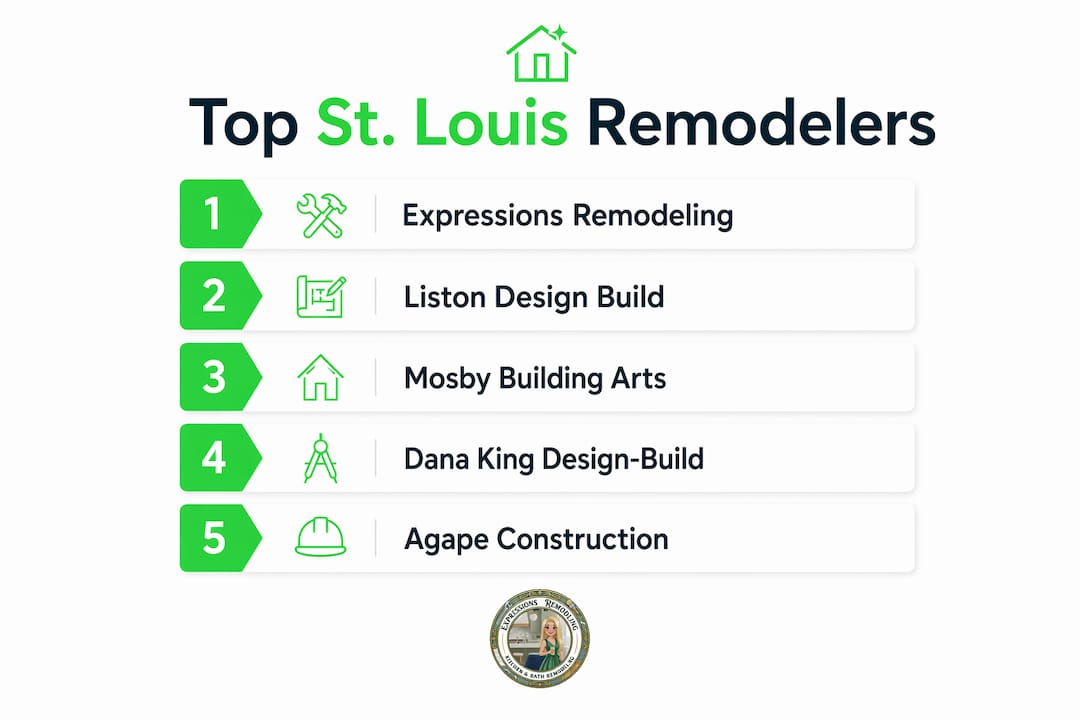
If you’re searching for agapeconstruction.com alternatives in St. Louis, the short answer is this: Expressions Remodeling, Liston Design Build, Mosby Building Arts, and Dana King Design-Build Remodeling are the strongest local options, each suited to a different type of project and budget. Agape Construction itself rounds out the picture as a known local name but these four alternatives cover more ground across design-build, historic masonry, high-end bespoke, and full-service remodeling.
St. Louis renovation costs run about 12% below the national average, which is good news for your budget. The catch is the city’s high concentration of solid-brick homes, which demand masonry-experienced contractors. Hire the wrong firm and you risk mortar damage that costs far more to fix than the original project.
Quick shortlist by specialty:
- Design-build (full-service, single contract): Expressions Remodeling, Liston Design Build
- Historic masonry and older-home specialists: Mosby Building Arts
- High-end bespoke remodeling: Dana King Design-Build Remodeling
- Budget-conscious updates: Expressions Remodeling (kitchen, bath, basement finishing)
Every firm on this list offers free estimates. Expressions Remodeling also includes complimentary 3D design, which is rare at this price point and makes scope alignment much easier before a contract is signed.
Table of Contents
- What you need to know about each alternative
- How do these alternatives compare side by side?
- How do you choose the right remodeler from this shortlist?
- Why Expressions Remodeling stands out as a local alternative
- How to request estimates and compare bids from your shortlist
- Key Takeaways
- What actually matters when you hire a St. Louis remodeler
- Expressions Remodeling: get a free estimate with complimentary 3D design
What you need to know about each alternative
Expressions Remodeling
Expressions Remodeling handles kitchen, bathroom, and basement remodeling across St. Louis and surrounding communities including Maplewood, Bridgeton, and Town and Country. Their design-build approach means one team manages design, permitting, and construction, which cuts the coordination headaches that come with hiring a designer and a contractor separately.

Best for: Homeowners who want a single point of contact, complimentary 3D design, and clear written scope before breaking ground.
Pros:
- Complimentary 3D design included
- Kitchen, bath, and basement under one roof
- Strong local reputation with documented client testimonials
- Free on-site estimates with written scope
Cons:
- Not a historic-masonry specialist for exterior tuck-pointing projects
- Focused on residential interiors rather than large additions
Trust signals: BBB-listed, licensed and insured, portfolio available on site, workmanship warranty offered.
Liston Design Build
Liston Design Build operates as a full design-build firm in the St. Louis metro, handling projects from kitchen renovations to whole-home remodels. They bring architectural design and construction under one contract, which reduces change orders and scope creep compared to the traditional design-bid-build model.

Best for: Homeowners planning a whole-home renovation or a project that involves structural changes, layout shifts, or additions.
Pros:
- Integrated design and construction team
- Strong portfolio of mid-to-high-end projects
- Handles permitting and subcontractor management in-house
Cons:
- Typically higher starting budgets than single-trade remodelers
- Lead times can stretch longer during peak season
Trust signals: Local portfolio, in-house designer, references available on request.
Mosby Building Arts
Mosby Building Arts has been operating in St. Louis for decades and is particularly well-regarded for projects involving older homes. Their crews understand lime-based mortar and tuck-pointing techniques critical for historic solid-brick homes, where using modern Portland cement mortar can trap moisture and cause long-term damage to the brick.
Best for: Owners of pre-1960s brick homes who need exterior masonry work, window replacement, or interior remodels that touch load-bearing brick walls.
Pros:
- Deep experience with St. Louis historic housing stock
- Full-service: kitchens, baths, additions, and exterior work
- Long local track record and strong community reputation
Cons:
- Premium pricing reflects their specialization and experience level
- Scheduling can be tight; book early for spring and summer projects
Trust signals: Decades in business, photo gallery, licensed and insured, written warranties.
Dana King Design-Build Remodeling
Dana King Design-Build Remodeling positions itself at the higher end of the St. Louis market, with a focus on bespoke interiors and custom finishes. The projects tend to involve detailed millwork, custom cabinetry, and high-specification materials.
Best for: Homeowners with a higher budget who want a heavily customized result and expect a premium design-led process from concept through completion.
Pros:
- High-end custom finishes and millwork
- Design-led process with detailed 3D visualization
- Strong attention to material specification and sourcing
Cons:
- Not the right fit for budget-conscious or mid-range projects
- Longer design phases before construction begins
Trust signals: Portfolio of completed luxury projects, in-house design team, client references.
Agape Construction
Agape Construction is the baseline for this comparison. They handle residential remodeling in the St. Louis area with a focus on kitchens, bathrooms, and general home improvements.
Best for: Homeowners already familiar with Agape who want to understand what else is available locally before committing.
Pros:
- Established local presence
- General residential remodeling services
Cons:
- Less publicly documented design-build capability than alternatives
- Limited information on masonry specialization for historic homes
Trust signals: Local business listing, general contractor licensing.
Pro Tip: Before your first call with any firm, pull three photos of your space and write a two-sentence description of what bothers you most about it. Contractors who ask follow-up questions about your daily habits and priorities are almost always better project managers than those who jump straight to a price.
How do these alternatives compare side by side?
| Contractor | Core specialties | Design services | Pricing model | Service area | Typical timeline | Best for |
|---|---|---|---|---|---|---|
| Expressions Remodeling | Kitchen, bath, basement | In-house, complimentary 3D design | Fixed bid, free estimate | St. Louis metro (Maplewood, Bridgeton, Town and Country) | 6–10 weeks depending on scope | Full-service design-build at mid-range budgets |
| Liston Design Build | Whole-home, additions, kitchen | Architectural design included | Design-build contract | St. Louis metro | 12–18 weeks | Structural or whole-home projects |
| Mosby Building Arts | Historic homes, exterior masonry, full remodel | Design services available | Premium fixed bid | St. Louis metro and surrounding counties | 10–20 weeks | Pre-1960s brick homes, masonry-sensitive projects |
| Dana King Design-Build | Bespoke interiors, custom cabinetry | Full design-led process, 3D renderings | Premium, custom bid | St. Louis metro | 18–30 weeks | High-end custom interiors |
| Agape Construction | Kitchen, bath, general remodeling | Limited public information | Bid-based | St. Louis area | Varies | General residential remodeling |
When to favor a design-build firm: Any project that moves walls, changes plumbing locations, or spans multiple rooms benefits from having design and construction under one contract. Design-build firms reduce surprises by aligning goals, scope, and cost before a single tool is picked up.
When to prioritize masonry experience: If your home was built before 1960 and has solid-brick exterior walls, masonry expertise is non-negotiable. Using modern Portland cement mortar on historic brick traps moisture and can cause spalling damage that costs significantly more to repair than the original remodel.
Trust-signal checklist for any firm you vet:
- Valid Missouri contractor license (verify at the state licensing board)
- General liability and workers’ compensation insurance certificates
- Photo portfolio of completed projects similar to yours
- At least three references from projects in the past 18 months
- Written warranty covering both materials and workmanship
- Clear change-order policy in the contract
How do you choose the right remodeler from this shortlist?
Getting from a shortlist to a signed contract takes about one to two weeks if you move deliberately. Here is a practical sequence.
1. Define your project type first. Kitchen, bath, basement finishing, and whole-home remodels each attract different specialists. Knowing your category narrows the list immediately.
2. Set a realistic budget band. Financial advisors commonly recommend spending 5–15% of your home’s value per room as a starting range. The 30% renovation rule (total improvements not exceeding 30% of home value) is a useful sanity check, but it is a guideline, not a formula. Structural or systems work often justifies going higher.
3. Use a three-bucket budget framework. Split your total into scope (the actual work), contingency (typically 10–15% for surprises), and finish allowances (materials and fixtures). This three-bucket approach makes it much easier to compare bids that use different pricing models.
4. Request estimates from at least three firms. Ask each one to provide a line-item scope, not a lump sum. A lump-sum bid makes it impossible to compare apples to apples.
5. Run each firm through the trust-signal checklist from the section above before you schedule an on-site visit.
Interview questions to ask on the phone:
- Who is the project manager, and will they be on-site daily?
- Do you use in-house crews or subcontractors for the primary trades?
- How do you handle change orders, and what triggers one?
- Can you provide two references from projects completed in the last year?
- What does your warranty cover, and for how long?
Interview questions to ask during the on-site estimate:
- What permits will this project require, and who pulls them?
- What is your current lead time from signed contract to start date?
- Have you worked on homes of this age and construction type before?
- What is your payment schedule, and what milestone triggers each payment?
Red flags that should stop a hire:
- No written scope or a contract that references only a lump sum
- Contractor cannot provide proof of insurance on the spot
- Pressure to sign before permits have been discussed
- Bid that is dramatically lower than the others (usually signals missing scope or unlicensed subcontractors)
- No references, or references who cannot be reached
Pricing and timeline expectations for St. Louis:
Because St. Louis runs below the national average on renovation costs, your budget goes further here than in most major metros. That said, masonry-intensive work on older homes can push costs back toward or above national averages. Rough ranges for planning:
- Kitchen remodel: $25,000–$80,000+ depending on layout changes and finish level
- Bathroom remodel: $12,000–$40,000 for a full gut and remodel
- Basement finishing: $20,000–$55,000 for a livable, code-compliant space
- Whole-home remodel: Varies widely; use the three-bucket framework to set a ceiling
Timeline milestones to expect: estimate (week 1), contract and design (weeks 2–4), permit submission (weeks 4–6), construction start (weeks 6–10), final walkthrough and punch list (varies by scope).
Pro Tip: Ask every contractor how they handle a situation where a permit is delayed by the city. Their answer tells you a lot about how they manage risk and communicate with clients when things do not go to plan.
Why Expressions Remodeling stands out as a local alternative
Expressions Remodeling covers the full range of residential remodeling that most St. Louis homeowners actually need: kitchen remodeling, bathroom remodeling, and basement finishing. Their complimentary 3D design offer is a genuine differentiator: most firms at this price point charge separately for design services, which means you are already ahead before the first nail is pulled.
What sets them apart on the shortlist:
- Complimentary 3D design included with every project
- Single-team design-build model (no handoff between designer and contractor)
- Documented client testimonials and a photo portfolio
- Written workmanship warranty
- Free on-site estimate with a detailed written scope
- BBB-listed and fully licensed and insured in Missouri
What to expect when you work with them: After your initial contact, you get an on-site estimate and a design consultation. The 3D design phase lets you see the finished space before any work begins, which is where most scope surprises get caught and resolved cheaply. From there, a written scope and contract lock in the work, timeline, and payment schedule.
How to request estimates and compare bids from your shortlist
Getting comparable bids requires giving every contractor the same project brief. Copy and adapt this template when you reach out:
| Project brief element | What to include |
|---|---|
| Scope summary | Rooms affected, what is being removed/replaced, any layout changes |
| Materials preference | Budget, mid-range, or premium finishes; specific brands if you have them |
| Target budget | Your total ceiling, split into scope / contingency / allowances |
| Permit needs | Whether you expect structural, electrical, or plumbing permits |
| Target timeline | Desired start date and any hard deadline (sale, event, season) |
| Special conditions | Historic brick, low ceilings, existing water damage, HOA restrictions |
Every bid you receive should include:
- Line-item scope (not a lump sum)
- Material and fixture allowances with dollar amounts
- Stated start and estimated finish dates
- Payment schedule tied to project milestones
- Change-order policy in writing
- Warranty terms for both labor and materials
Walkthrough prep list:
- Take photos of every wall, ceiling, and floor in the affected space
- Note any existing damage, water stains, or areas of concern
- Have your HOA rules or condo association documents ready if applicable
- Write a ranked list: must-haves vs. nice-to-haves, so the estimator knows where you can flex
- Know your permit history for the home (prior additions, electrical upgrades)
For smaller updates that do not require a full remodel, modular door and closet upgrades can refresh a space with far less disruption. Worth considering if your timeline is tight or your budget is limited to one room.
Key Takeaways
Expressions Remodeling is the strongest all-around alternative to Agape Construction for St. Louis homeowners who want design-build capability, complimentary 3D design, and a single team managing kitchen, bath, and basement projects.
| Point | Details |
|---|---|
| Match specialty to project type | Design-build firms suit structural or multi-room projects; masonry specialists are non-negotiable for pre-1960s brick homes. |
| St. Louis costs run below average | Renovation costs here are roughly 12% below the national average, but masonry work on older homes can push costs back up. |
| Use the three-bucket budget | Split your total into scope, contingency (10–15%), and finish allowances before requesting any bid. |
| Vet every firm the same way | Require a license, insurance certificate, photo portfolio, references, and a written warranty before signing anything. |
| Expressions Remodeling | Offers complimentary 3D design, free on-site estimates, and full kitchen, bath, and basement remodeling across the St. Louis metro. |
What actually matters when you hire a St. Louis remodeler
Most homeowners spend too much time comparing brand names and not enough time comparing project management styles. The contractor who shows up on time for the estimate, asks about your daily routine, and explains the permit process without being asked is almost always the better hire, regardless of which firm they work for.
St. Louis has a specific wrinkle that most national remodeling guides ignore entirely: the brick. A huge portion of the housing stock here is solid-brick construction from the early-to-mid 20th century. That brick is beautiful and durable, but it requires contractors who understand lime-based mortar and the difference between repointing and patching. I have seen homeowners end up with spalling brickwork two winters after a remodel because the contractor used standard Portland cement mortar on a 1920s home. That mistake costs more to fix than the original project.
The other thing worth saying plainly: the 30% renovation rule is not a law. It is a rough sanity check. If your home needs a new electrical panel, updated plumbing, and a kitchen remodel, the percentage math is not going to tell you anything useful. Budget for what the house actually needs, use the three-bucket framework to stay organized, and get at least three written bids before you commit.
Expressions Remodeling: get a free estimate with complimentary 3D design
Choosing a remodeler is easier when you can see the finished space before construction starts. Expressions Remodeling gives you exactly that: a complimentary 3D design as part of your free on-site estimate, so you walk into the contract phase knowing what you are getting.
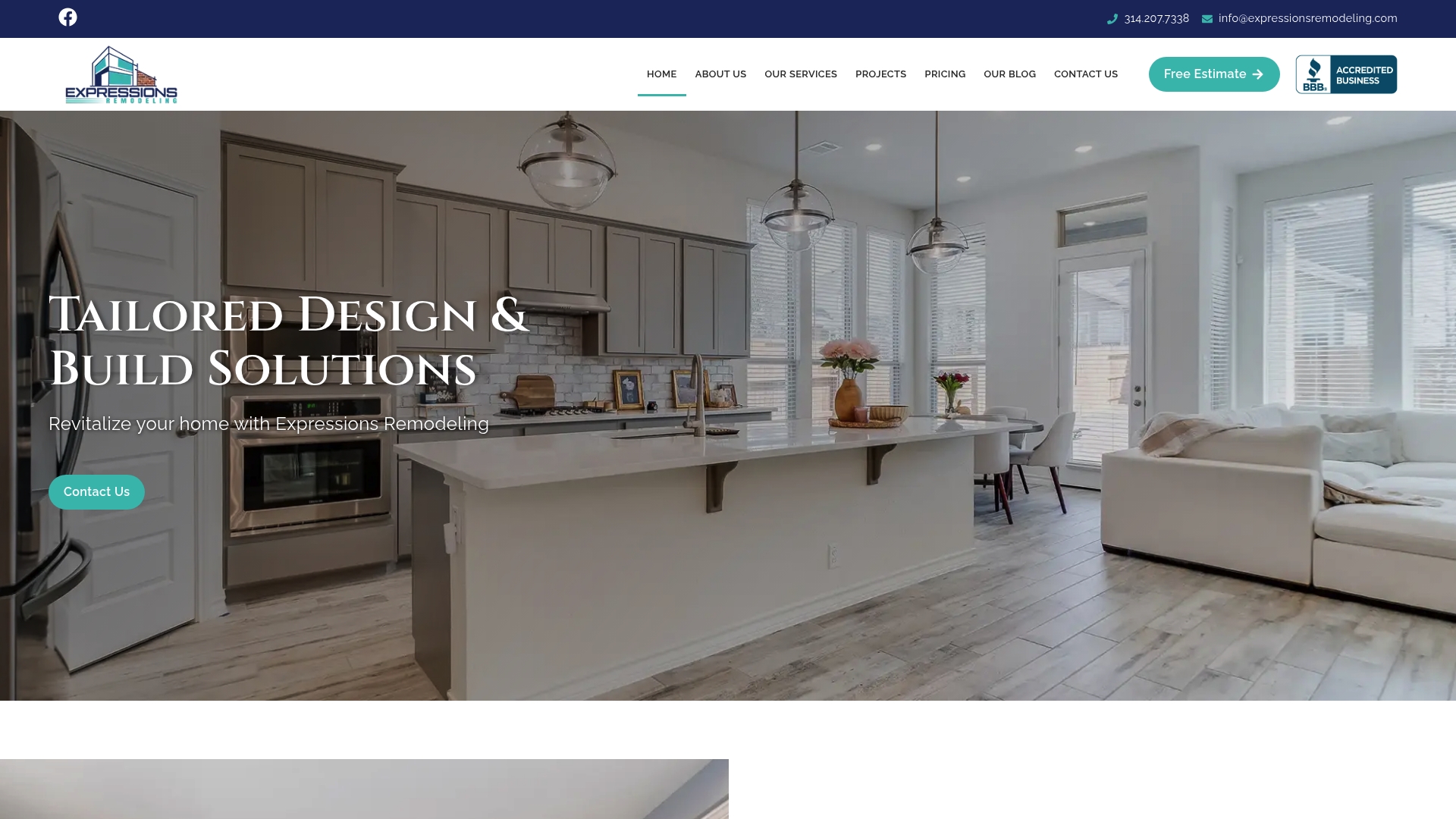
Their team handles kitchen upgrades, bathroom remodels, and basement finishing across the St. Louis metro, with a written scope and workmanship warranty on every project. No guessing about what is included, no surprise change orders from a vague contract. You can also check their pricing page to get a sense of what your project might cost before the first conversation.
Ready to compare? Request your free on-site estimate at expressionsremodeling.com and see your finished space in 3D before a single wall comes down.