For many homeowners in St. Louis, a basement represents one of the most practical opportunities to add usable square footage without the expense of a full home addition. Whether your goal is a family room, home office, fitness area, guest space, man cave, storage solution, or multi-purpose entertainment zone, a properly finished basement can increase comfort, functionality, and long-term value.
The key is to approach affordability the right way. A low-cost basement project that relies on generic materials, rushed installation, or poor planning can quickly become expensive if moisture problems, layout limitations, code issues, or premature wear appear later. A quality-first approach focuses on smart design decisions, durable materials, and professional installation while still respecting your budget.
Expressions Remodeling helps homeowners throughout the St. Louis area make informed decisions before construction begins. That includes a free estimate and a complimentary 3D design layout, allowing you to visualize the finished space clearly before committing to the project. This planning step is especially valuable in basement finishing because every square foot matters. Support posts, mechanical systems, windows, stairs, storage needs, and lighting all influence how the space should function.
A 3D design can help determine where to place a family room, bathroom, wet bar, office, gym, or media space. It can also reveal ways to create an open, comfortable layout without unnecessary demolition or costly redesigns. By planning carefully from the start, homeowners can reduce surprises, prioritize the most important features, and make budget-conscious choices that still support a polished, lasting result.
Moisture, Insulation, and Code Considerations in the St. Louis Climate
Basement finishing in Missouri requires attention to local climate conditions. St. Louis homeowners are familiar with humidity, heavy rain, seasonal temperature changes, and occasional groundwater concerns. Before walls, floors, and ceilings are finished, it is essential to address moisture control. Ignoring this step can lead to mold, odors, damaged flooring, warped trim, and costly repairs.
A quality basement finishing plan should begin with a careful review of existing conditions. This may include checking for signs of water intrusion, foundation cracks, condensation, poor drainage, or inadequate ventilation. In some cases, improvements such as sealing, sump pump evaluation, vapor barriers, or drainage corrections may be recommended before finishing begins. These steps may not be the most visible part of the project, but they are among the most important.
Insulation is another major factor in comfort and efficiency. A basement that is not properly insulated may feel cold in winter, damp in summer, and uncomfortable year-round. Choosing appropriate insulation methods helps regulate temperature, improve energy performance, and create a more inviting living area. It can also reduce noise transfer between floors, which is beneficial when the basement will be used as a media room, playroom, office, or guest area.
Code compliance is equally important. Depending on the scope of the project, basement finishing may require consideration of ceiling height, electrical standards, smoke and carbon monoxide detectors, stair safety, bathroom ventilation, and emergency egress. If a bedroom or sleeping area is part of the plan, an egress window or approved exit may be required. These requirements are not merely technical details; they are designed to protect your household and support the long-term usability of the space.
Professional installation helps ensure these considerations are addressed correctly. Expressions Remodeling emphasizes craftsmanship, reliable materials, and careful execution so that the finished basement is not only attractive but also safe, durable, and appropriate for everyday living.
Smart Cost-Saving Choices That Still Support High-Quality Results
Affordable basement finishing does not have to mean choosing the cheapest materials. In many cases, the best way to control cost is to make thoughtful choices about layout, finishes, and project priorities. The goal should be to invest where quality matters most while identifying areas where cost-effective alternatives can still perform well.
One of the most effective ways to manage cost is to work with the existing basement footprint. Keeping plumbing close to existing lines, minimizing structural changes, and designing around support columns or mechanical equipment can reduce labor and material expenses. Instead of viewing these elements as obstacles, a skilled remodeling team can integrate them into the design. For example, a support post can be incorporated into a bar area, shelving feature, or room divider.
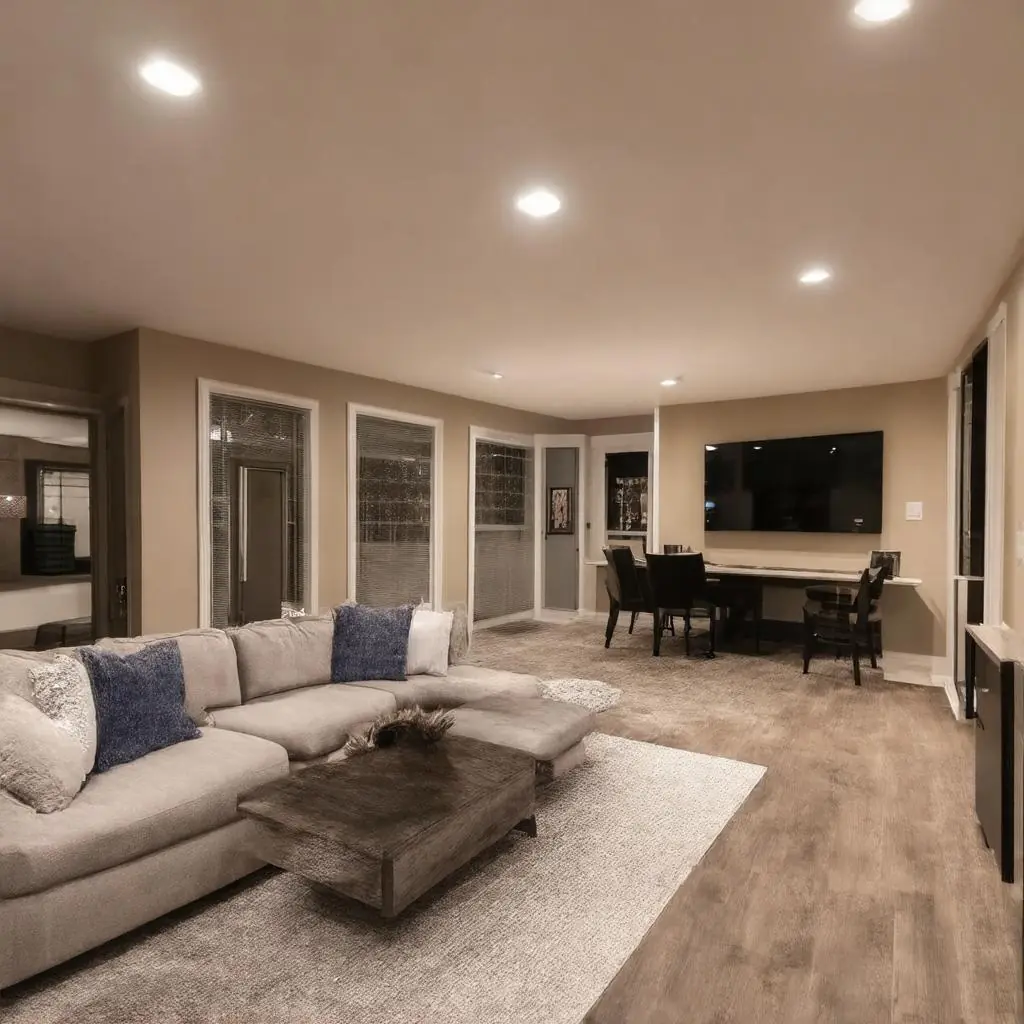
Flooring is another important decision. Basements require materials that can handle moisture fluctuations and heavy use. Durable options such as luxury vinyl plank, tile, or other basement-appropriate flooring can offer the appearance of wood or stone while providing practical benefits. These materials are often easier to maintain and better suited to below-grade spaces than traditional hardwood.
Wall and ceiling finishes can also be selected strategically. Access to plumbing, wiring, and mechanical systems should be considered before everything is enclosed. In some basements, a combination of finished ceilings and access panels may be appropriate. Lighting should also be planned carefully, since basements often have limited natural light. Recessed lighting, accent fixtures, and layered lighting zones can make the space feel brighter, larger, and more refined without unnecessary extravagance.
Built-in storage is another cost-conscious upgrade that can significantly improve function. Many homeowners want to finish a basement while still preserving space for seasonal items, tools, sports equipment, or household supplies. A well-planned storage room, closet system, or concealed shelving area can keep the basement organized and prevent the finished space from becoming cluttered.
Phasing the project can also help align the remodel with your budget. For example, you may begin with the main living area, flooring, lighting, and walls, then add a bathroom, wet bar, custom cabinetry, or entertainment features in a later phase. A complimentary 3D design makes this easier because the full vision can be planned from the beginning, even if construction is completed over time.
Designing Multi-Use Basement Spaces for Modern Living
Today’s homeowners often need rooms that serve more than one purpose. A finished basement can provide the flexibility that the main level of the home may not offer. With thoughtful design, one basement can support relaxation, productivity, fitness, entertainment, and storage without feeling crowded or disorganized.
A family room may include comfortable seating, durable flooring, built-in media storage, and warm lighting. A home office can be positioned in a quieter corner with appropriate electrical access, task lighting, and privacy. A gym area may require resilient flooring, ventilation, mirrors, and open space for movement. A man cave or entertainment room may include a bar, media wall, game area, or custom shelving. For families, a children’s play area can be designed with easy-to-clean surfaces and nearby storage.
The most successful basement layouts use zones. These zones can be defined through flooring transitions, lighting, partial walls, furniture placement, ceiling details, or built-ins. This approach allows the basement to remain open while still feeling organized. It is especially useful for homeowners who want the basement to function differently throughout the day: an office in the morning, a workout area in the afternoon, and a family entertainment space in the evening.
Durability should remain a priority in every zone. Basements are high-use areas, particularly when they become the preferred gathering space in the home. Quality trim, moisture-conscious flooring, dependable electrical work, proper insulation, and professional installation all contribute to a finished result that looks good and performs well over time.
Expressions Remodeling serves homeowners across St. Louis and surrounding communities, including Chesterfield, Ballwin, Clayton, Creve Coeur, Ladue, Olivette, Overland, St Charles, Maryland Heights, Wildwood, Valley Park, Sunset Hills, Webster Groves, Maplewood, and University City. For homeowners in these areas, a basement remodel can be tailored to the character of the home, the needs of the household, and the desired budget.
Moving Forward With a Free Estimate and a Clear Design Vision
An affordable basement finishing project begins with clarity. Before selecting finishes or setting a construction schedule, it is important to understand the condition of the existing basement, the intended use of the space, the required code considerations, and the best layout for your goals. A free estimate provides a practical starting point, while a complimentary 3D design helps turn ideas into a clear visual plan.
This process allows you to compare options, prioritize features, and make confident decisions. You may discover that your basement can accommodate more than you expected, or that a simpler layout will deliver the function you need at a better value. You may also identify opportunities to phase the project while still maintaining a cohesive finished design.
Expressions Remodeling’s quality-first approach is designed for homeowners who want affordability without sacrificing craftsmanship. By using reliable materials, experienced installation professionals, and personalized design guidance, the company helps transform unfinished or outdated basements into comfortable, stylish, and functional living spaces.
For St. Louis homeowners seeking more room to live, work, relax, or entertain, the basement is often the most efficient place to start. With smart planning, moisture-conscious construction, durable finishes, and a clear budget strategy, your basement can become one of the most valuable and enjoyable areas of your home.