

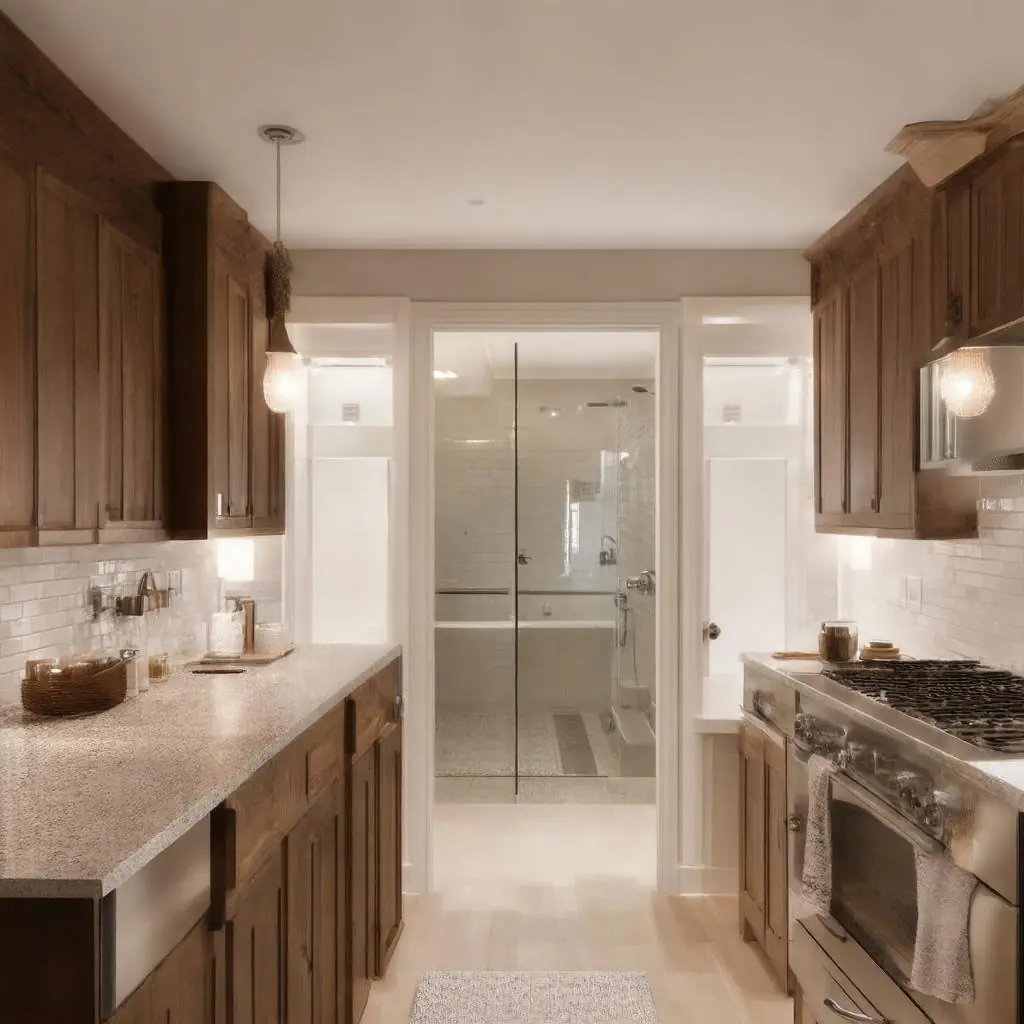
A successful remodel balances aesthetics, performance, and longevity—especially in a four-season climate like St. Louis. Whether you are updating a kitchen in Clayton, finishing a basement in Ballwin, modernizing a bathroom in Webster Groves, or reorganizing a garage in Wildwood, true quality shows up in what you see and what you do not: straight, clean lines; solid cabinet joinery; level, lippage-free tile; dry, well-insulated walls; and electrical and plumbing work that is orderly, code-compliant, and clearly labeled.
Expressions Remodeling serves homeowners across St. Louis, Chesterfield, Ballwin, Clayton, Creve Coeur, Ladue, Olivette, Overland, St. Charles, Maryland Heights, Wildwood, Valley Park, Sunset Hills, Webster Groves, Maplewood, and University City with a practical, craftsmanship-first approach. Our complimentary 3D design and no-cost estimates help you make informed choices before any demolition begins, aligning style and function to your budget with clarity.
The homeowner’s checklist below will help you evaluate proposals, compare contractors, and inspect ongoing work—so you know your project is being built right.
The Homeowner’s Checklist: Kitchens, Baths, Basements, and Garages
Kitchen quality indicators
- Cabinet construction: Look for plywood boxes with full back panels (ideally 1/2"–3/4"), solid-wood or plywood dovetail drawers, and full-extension, soft-close hardware. Face frames and doors should be aligned with consistent reveals; finishes should be even, without orange peel or drips.
- Installation details: Shimmed, leveled cabinets that are securely fastened into studs; scribe fillers at walls to eliminate gaps; continuous scribe at floors for a clean toe-kick line; anti-tip brackets for tall units.
- Countertops: Verify templates are made after cabinet install. Seams should be tight and well-placed; undermount sinks need mechanical fasteners and proper silicone seal. For natural stone, ask about sealing and edge profiles; for quartz, confirm heat-clearance guidance near ranges.
- Backsplash and tile: Balanced layout with centered focal points, full tiles at exposed edges, and clean terminations with trim profiles. Grout joints are uniform; lippage meets standards. Outlets should be planned into the layout, not as an afterthought.
- Ventilation and lighting: Proper CFM hood vented outdoors, not recirculating, when feasible. Layered lighting—general, task, and under-cabinet—on dimmers. Verify electrical circuits and GFCI/AFCI protection per current code.
Bathroom quality indicators
- Waterproofing: Continuous, manufacturer-approved membrane on shower pans and walls, with pre-slope under the pan, properly wrapped corners, and a documented 24-hour flood test before tile. Niches and benches fully waterproofed.
- Tile execution: Straight, plumb walls with flat substrates; layout that avoids slivers; expansion joints where required. Shower glass measured after tile; anchoring respects waterproofing.
- Plumbing: Clean, secure piping with accessible shutoffs. Correct drain slopes, venting, and pressure-balanced or thermostatic valves. Properly sealed penetrations to prevent moisture intrusion.
- Ventilation: Quiet, exterior-vented bath fan sized appropriately (commonly 1 CFM per square foot minimum for standard ceiling heights) with a timer or humidity control.
Basement quality indicators
- Moisture management: Before finishing, address water entry with exterior or interior drain tile, sump pump with check valve and battery backup, crack injection where needed, and a continuous vapor barrier behind framed walls (with proper detailing to avoid trapping moisture).
- Framing and insulation: Pressure-treated bottom plates on slab, thermal breaks where appropriate, and insulation suited to the assembly (e.g., rigid foam against concrete, then framed wall). Dehumidification plan for summer months.
- Egress and safety: For any sleeping room, confirm egress window sizing and well specifications meet local code; ensure smoke/CO alarms are interconnected as required. Verify stair headroom and handrails.
- Sound and comfort: Resilient channels or sound-attenuating insulation for theater or office areas. Thoughtful zoning for HVAC; supply and return placement that avoids stale air pockets.
Garage quality indicators
- Safety and fire separation: Fire-rated drywall between garage and living spaces; self-closing, solid-core or rated man-door; sealed penetrations. GFCI protection for receptacles; dedicated circuits for heavy equipment.
- Flooring and storage: Moisture-tested concrete before epoxy or polyaspartic coatings; proper surface prep (grinding, crack repair, and moisture mitigation if needed). Anchored storage systems, ceiling racks installed into structure, and adequate lighting.
Cross-trade essentials that signal craftsmanship
- Subfloor prep: Flatness matters—expect corrections to meet tile and flooring tolerances (commonly 1/4" in 10′ for large-format tile; tighter for hardwood). Use of uncoupling membranes where appropriate.
- Tile standards: Cuts are clean; edges protected with profiles; inside corners caulked, not grouted; movement joints installed per tile manufacturer and ANSI guidelines.
- Electrical and plumbing neatness: Straight runs, labeled circuits, secured piping, and organized panels. Penetrations fire-stopped; boxes are flush to finished surfaces; fixtures centered and level.
- Paint and drywall: Proper substrate repair, taped and feathered joints, crisp corners, caulked trim, dust control during sanding, and consistent sheen. In high-visibility spaces, ask for a Level 5 finish.
- Site protection and cleanliness: Floor protection, dust barriers, negative air where necessary, daily cleanup, and safe material storage. A clear staging plan limits disruption to the rest of the home.
Questions to Ask Every Contractor Before You Sign
- Who will do the work day to day? Are subcontractors vetted, insured, and supervised? Request certificates of insurance (general liability and workers’ compensation).
- What permits are required, and who pulls them? Confirm inspections are included and that the final close-out is documented.
- Can you provide a detailed scope, drawing set, and material specifications? Request a line-item proposal that separates labor, materials, and allowances so you can see what drives cost.
- How are changes handled? Ask about a written change-order process, pricing method, and impact on schedule.
- What is the anticipated timeline and milestone payment schedule? Payments should track completed work and special-order materials, not be front-loaded.
- What warranty do you provide? One-year minimum workmanship is typical; verify manufacturer warranties on finishes, tile membranes, flooring, and mechanicals.
- How will you protect my home? Look for dust control, floor protection, lockbox protocol, daily cleanup, and a designated site lead for communication.
- Can I see recent, local references and a project gallery? Ask to speak with clients in St. Louis or nearby municipalities such as Creve Coeur, Ladue, or Maryland Heights with projects similar to yours.
- For basements: What is your moisture management and radon plan? How will you insulate and detail walls against concrete? How will you meet egress requirements?
- For kitchens and baths: How do you handle cabinet lead times, appliance coordination, and template sequencing? Will the shower be flood-tested and photographed before tile?
- For garages: What moisture testing method will you use before applying floor coatings, and what is the prep process?
Expressions Remodeling provides free estimates and a complimentary 3D design to formalize scope and selections up front, reducing uncertainty and aligning expectations before a contract is signed.
How Complimentary 3D Design Clarifies Choices, Costs, and Trade-offs
A high-quality 3D design is more than a pretty rendering—it is a decision engine. When leveraged properly, it saves time, money, and rework.
What 3D design should include
- Scaled layouts and elevations that respect appliance clearances, door swings, and circulation paths.
- Cabinet schedules, finish palettes, and tile patterns that can be reviewed at life-like perspectives.
- Lighting plans that show fixture types, locations, and switching, revealing shadows and task-lighting gaps.
- Options with cost ranges: alternate cabinet lines, countertop materials, tile formats, or shower systems, each with realistic pricing.
- Coordination notes: venting routes, plumbing stack locations, and soffit impacts visible before demolition.
How it improves budgeting
- Accurate takeoffs: With dimensions and product selections established, allowances shrink and surprises decrease.
- “Good, better, best” comparisons: You can see how moving from a framed cabinet to a frameless box, or from ceramic to porcelain slab, affects the bottom line and function.
- Value engineering without compromise: Swap a tile format to cut waste, select stock cabinet sizes for efficiency, or adjust a wall by an inch to avoid a custom solution.
How it protects quality
- Sequence clarity: Renderings help plan which surfaces and trades occur in what order—minimizing damage and rework.
- Clash detection: Spot conflicts early, like a range hood intersecting a beam, a door hitting a vanity, or a duct competing with a soffit.
- Permitting support: Clean drawings streamline plan review with St. Louis County or municipalities like Chesterfield, Clayton, or University City.
Expressions Remodeling bundles 3D design with your free estimate so you can visualize, compare, and commit with confidence before any materials are ordered.
St. Louis–Specific Considerations: Moisture, Codes, and Community Standards
Basement moisture and climate
- Rain events and river proximity can elevate hydrostatic pressure. Address water entry first with drain tile, sump systems, crack repair, and exterior grading. Then build wall assemblies that allow drying, with continuous vapor control and dehumidification.
- Seasonal humidity swings mean hardwoods and other hygroscopic materials must acclimate properly and be installed with manufacturer-recommended expansion gaps.
- Radon is present in parts of the region; test before finishing and plan mitigation if needed.
Egress and safety
- If adding a basement bedroom, confirm emergency escape and rescue opening (egress) requirements with your local building department. As a general reference, many jurisdictions based on the International Residential Code require a minimum net clear opening of 5.7 square feet (5.0 square feet at grade-floor openings), minimum opening height of 24 inches, minimum width of 20 inches, and a sill not more than 44 inches above the floor. Window wells often must provide at least 9 square feet of clear area with a minimum dimension of 36 inches and require ladders if deeper than 44 inches. Always verify current local code.
Mechanical and electrical
- Vent kitchen hoods and bath fans to the exterior; do not terminate in attics or soffits. Insulate ducts to avoid condensation.
- Confirm panel capacity for new appliance loads or EV chargers; bring receptacles up to current GFCI/AFCI requirements as applicable.
- Balance HVAC in finished basements and garages; consider dedicated dehumidification in summer months.
Exterior and envelope
- In older homes across areas like Maplewood, Webster Groves, and Ladue, expect plaster, balloon framing, and nonstandard dimensions that require careful planning and finish-matching.
- For detached garages and additions, address frost-depth footings and slab reinforcement; seal and insulate the thermal boundary between garage and living spaces.
Permits and community expectations
- St. Louis County and St. Charles County permitting processes differ by municipality. Historic or design-review communities (for example, Clayton, Ladue, or University City) may require architectural board approvals for exterior changes.
- Coordinate early with utilities (Ameren, Spire) and the Metropolitan St. Louis Sewer District (MSD) when relocating meters or modifying drainage.
Choosing a partner
- Seek a team known for quality, integrity, and innovation—and that is transparent about materials, methods, and schedules. Insist on top-tier suppliers and professional installers, not generic low-cost substitutions.
- Expect proactive communication backed by drawings, specifications, and daily updates—so decisions are made once and documented.
Expressions Remodeling is committed to these standards across St. Louis, Chesterfield, Ballwin, Clayton, Creve Coeur, Ladue, Olivette, Overland, St. Charles, Maryland Heights, Wildwood, Valley Park, Sunset Hills, Webster Groves, Maplewood, and University City. With high-quality materials, expert craftsmanship, and a complimentary 3D design, we help you balance style, function, and budget—so your remodel is done right the first time and built to last.