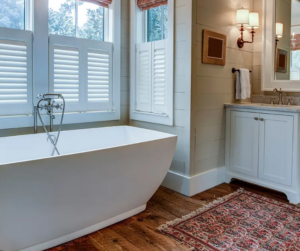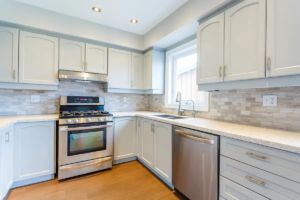


Homeowners across Clayton, Webster Groves, and Kirkwood face the same question when multiple rooms need updating: tackle everything at once or spread projects across years. Bundling your kitchen, bathroom, and basement remodels under one contractor: and one timeline: offers tangible cost savings and eliminates the coordination headaches that come with hiring three separate teams over three different years.
The answer isn't always "bundle everything." But for St. Louis homeowners planning multiple updates within 12-24 months, a coordinated approach delivers measurable advantages: 5-10% cost reductions through consolidated labor and permitting, streamlined timelines that minimize disruption, and design cohesion across your entire home.
The Real Numbers: What Bundled Projects Cost in St. Louis
Understanding cost ranges helps you evaluate whether bundling fits your budget and timeline. Here's what we see across the metro area for 2026 projects:
- Kitchen remodeling in St. Louis: $65,000-$120,000 for mid-range updates including new cabinetry, countertops, appliances, and lighting. Basic refreshes: cabinet refacing, updated hardware, new countertops: start at $20,000-$80,000.
- Full bathroom remodel: $35,000-$45,000 in St. Louis County suburbs for complete gut-and-rebuild projects with premium tile, custom vanities, and upgraded fixtures.
- Basement remodeling St. Louis MO: $50,000-$100,000 average for finished living space including egress windows, moisture management, HVAC extensions, and quality finishes. Fully appointed basements with kitchenettes and full bathrooms range $65,000-$140,000+.
Total bundled investment: $150,000-$265,000+ depending on scope and finish levels. That's not small: but compare this to sequential projects spread over three years, where you'd pay three separate design fees, three permitting cycles, and absorb price increases between phases. Bundling typically saves 5-10% through shared overhead, single permitting processes, and coordinated material ordering.
Timeline Reality: How Bundling Actually Speeds Things Up
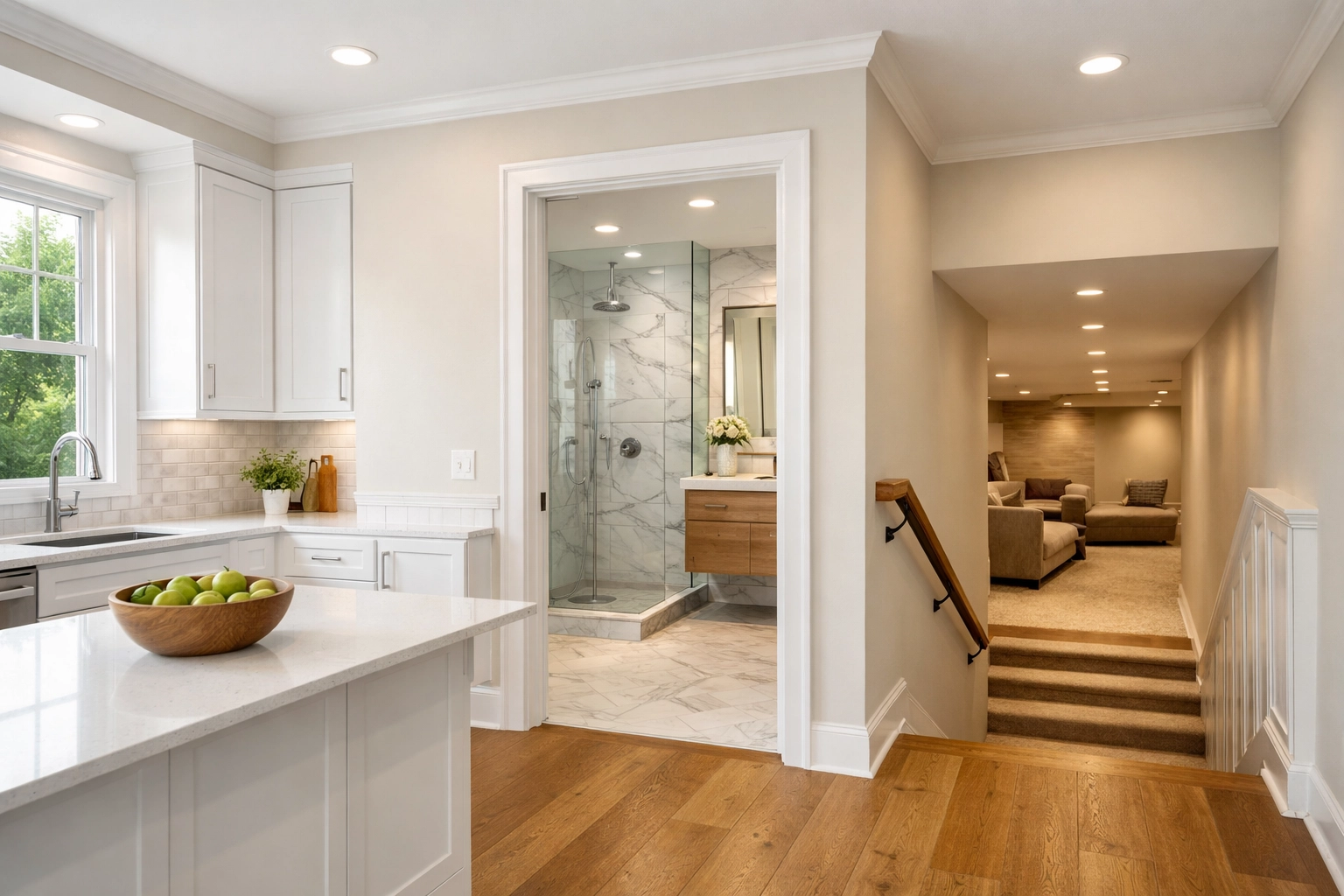
The misconception: bundling triples your timeline. The reality: parallel workflows compress what would be 12-18 months of sequential work into 4-6 months of coordinated construction.
Here's how timelines break down for individual projects:
- Kitchen remodels: 2-3 months for standard cabinet-and-countertop updates; 9-12 months if you're moving plumbing or removing walls
- Bathroom renovations: 4-8 weeks for full gut jobs with tile, fixtures, and vanity work
- Basement finishing: 6-12 weeks total: 1 month for design and permitting, 2-3 months for construction including framing, electrical, HVAC, and finishes
A coordinated St. Louis remodeling contractor manages these timelines simultaneously. Your basement remodeling begins while your kitchen is in the demo phase. Bathroom work happens during either project's mid-stage. The result: 4-6 months from first demo to final walkthrough, versus a year or more tackling each space separately.
This matters for families living through renovations. Four months of controlled chaos beats three separate 6-8 week disruptions spread across three years: each requiring its own adjustment period, temporary kitchen setup, and household upheaval.
Why Single-Contractor Coordination Changes Everything
Hiring separate contractors for kitchen, bath, and basement work creates coordination gaps you'll manage yourself. Different timelines. Competing subcontractor schedules. Three permitting cycles with three inspection sequences. Material deliveries arriving for the wrong phase at the wrong time.
Bundling with one St. Louis remodeling contractor eliminates these friction points:
Single permitting process: One submittal covers all three spaces. Inspections happen in sequence rather than stacked across months. This cuts 2-4 weeks off your overall timeline and reduces administrative back-and-forth with St. Louis County or municipal building departments.
Coordinated subcontractors: The same electrician wires your kitchen, bathroom, and basement. Your plumber rough-ins all three spaces in one mobilization. HVAC extensions and ductwork modifications happen system-wide, not piecemeal. This reduces mobilization fees: the cost contractors charge each time they show up: and ensures your systems integrate properly.
Unified material ordering: Cabinetry, tile, and fixtures ordered together often qualify for bulk pricing or priority scheduling with suppliers. More importantly, finish selections stay consistent. Your paint colors, trim profiles, and flooring transitions create visual continuity rather than looking like three different projects from three different decades.
Staging and logistics: Construction materials, debris removal, and equipment access get managed holistically. Your contractor establishes protective pathways, schedules dumpsters efficiently, and coordinates deliveries so your driveway isn't constantly blocked.
Design Cohesion: The Underrated Advantage
Separate contractors produce separate design visions. Your kitchen feels modern-minimalist, your bathroom trends traditional, and your basement walks the line between both: creating visual confusion rather than intentional style progression.
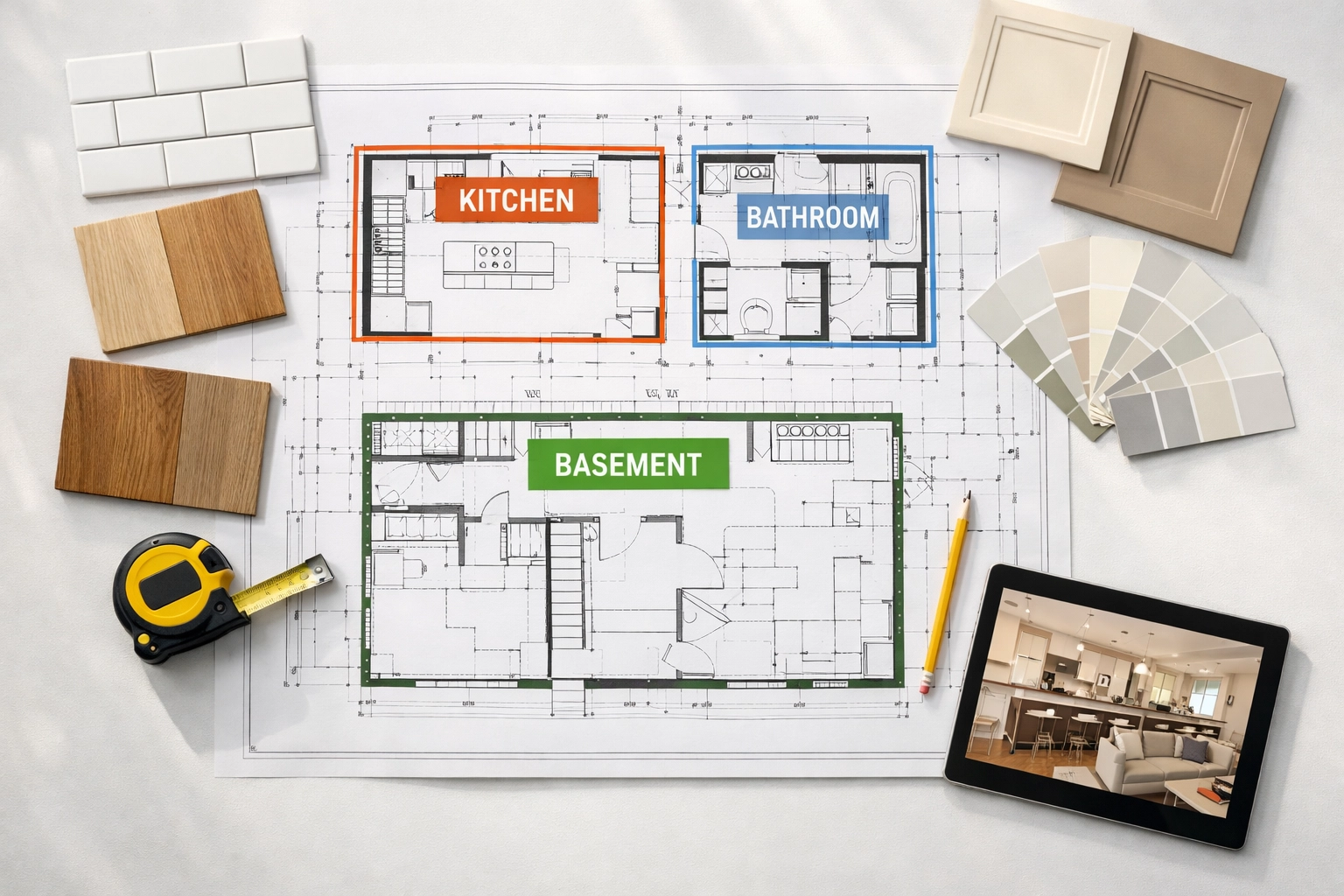
A bundled approach with one design team ensures architectural elements repeat purposefully across spaces. Wide-plank luxury vinyl flooring flows from your kitchen through your hallway into your finished basement. Your kitchen's white shaker cabinets inform your bathroom vanity selection. Lighting temperatures match room-to-room: no jarring shifts from warm 2700K bulbs in one space to cool 5000K LEDs in another.
This isn't about making everything identical. It's about creating deliberate relationships between spaces so your home feels curated rather than assembled from separate project portfolios.
When Bundling Doesn't Make Sense
Honest answer: bundling isn't always the right move. Consider a phased approach if:
-
Budget constraints require spreading costs: Breaking a $200,000 bundled project into three $65,000 phases over 18-24 months makes financing more manageable. Start with your basement (Phase 1: waterproofing, egress, rough-ins), then tackle kitchen and bathroom as cash flow allows.
-
You need to test-drive a contractor: If you're uncertain about committing to one remodeling team for 4-6 months, starting with a single bathroom gives you a low-stakes way to evaluate communication, quality, and timeline management before scaling up.
-
Only one space needs immediate attention: A flooded basement requires urgent action; your kitchen can wait. In these cases, addressing the crisis first makes more sense than forcing bundled timelines.
-
You're planning to sell within 12 months: Focus renovation dollars on the 2-3 highest-ROI updates rather than comprehensive whole-home work.
Questions to Ask Before You Bundle
Before committing to a bundled home remodeling St. Louis MO project, verify your contractor can actually manage coordinated work:
- How do you sequence kitchen, bath, and basement projects to minimize household disruption and keep crews productive?
- What's your typical bundled-project timeline compared to separate projects, and where do efficiencies actually appear?
- How do you handle unexpected issues in one space: plumbing surprises, structural concerns: without derailing the other two projects?
- Do you employ dedicated project managers for multi-space renovations, or will I coordinate between different crew leads?
- What does your permitting process look like when combining three major remodels under one application?
Quality St. Louis kitchen remodelers and basement specialists should answer these specifically: referencing actual project examples, not generic reassurances.
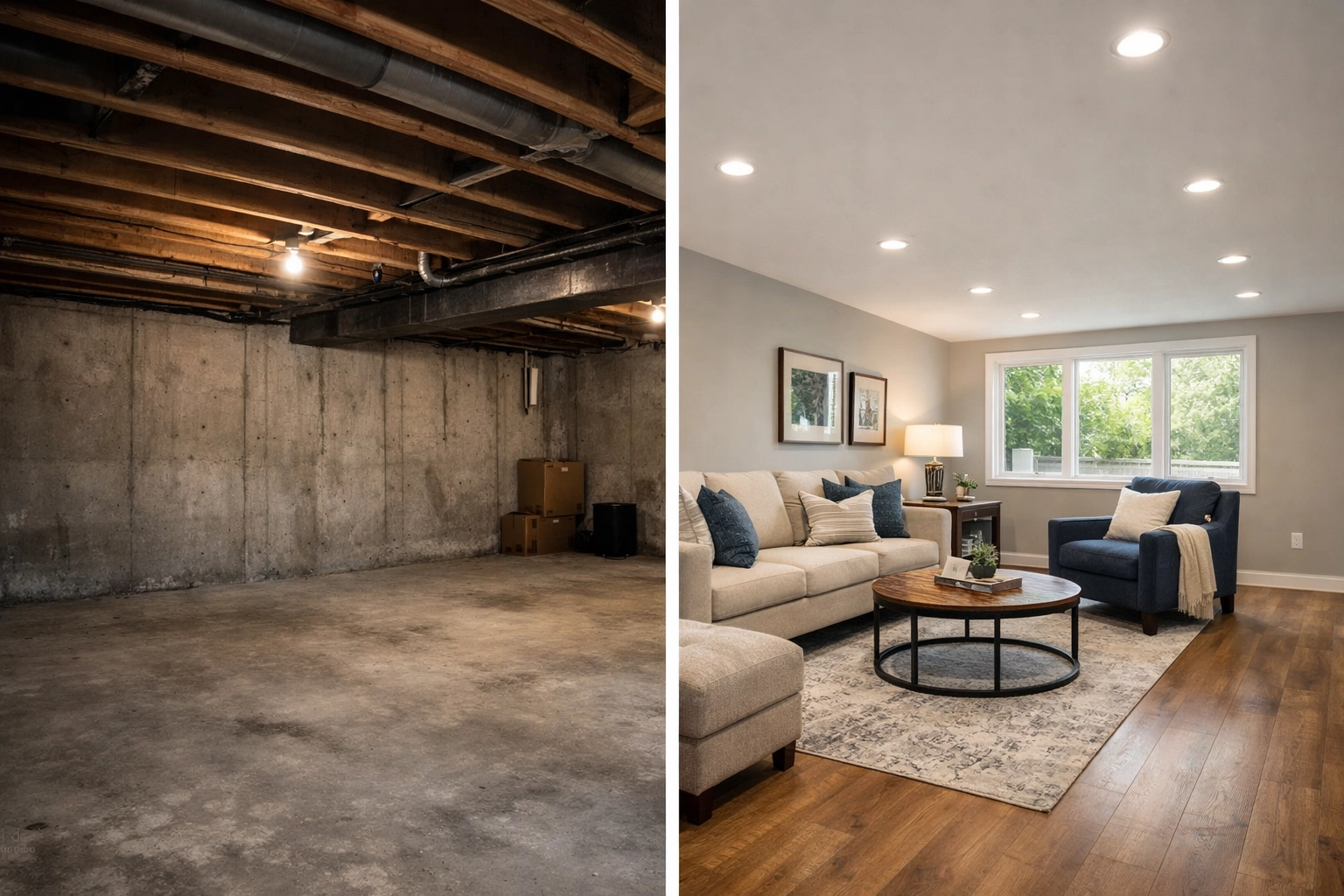
What Bundled Projects Look Like in Practice
Scenario 1: Clayton Ranch Home
A 1960s three-bedroom ranch needed kitchen upgrades, primary bath expansion, and basement finishing. By bundling, the homeowners saved $18,000 in duplicate permitting fees, design consultations, and mobilization costs. Timeline: 5 months from demolition to final certificate of occupancy. The coordinated approach allowed basement ceiling work and kitchen soffit removal to happen simultaneously: sharing scaffolding and equipment rentals.
Scenario 2: Webster Groves Two-Story
Young family wanted updated kitchen, second-floor hall bathroom, and functional basement playroom. Phasing made more sense: they completed the kitchen first ($85,000, 10 weeks), lived with it for six months, then bundled bathroom and basement ($92,000 combined, 12 weeks). This approach gave them breathing room between major disruptions while still capturing coordination benefits for the final two spaces.
Local Considerations for St. Louis Bundled Projects
St. Louis-area renovation work involves specific considerations that affect bundled timelines and costs:
-
Municipal variation: Permitting requirements differ between Clayton, Ladue, University City, and unincorporated St. Louis County. Experienced St. Louis basement remodeling and kitchen contractors navigate these variations without delays.
-
Seasonal scheduling: Basement waterproofing and exterior egress window installation work best April-October. Kitchen and bathroom interior work happens year-round. Bundling allows your contractor to sequence weather-dependent tasks appropriately.
-
Older home challenges: Many St. Louis homes date to the 1950s-1970s and require electrical panel upgrades, asbestos testing, and knob-and-tube replacement. Bundling lets you address these system-wide updates once rather than discovering issues incrementally across three separate projects.
Making Your Decision
Bundling kitchen, bathroom, and basement remodels makes financial and logistical sense when you're planning multiple updates within a 12-24 month window, you want design continuity across spaces, and you're working with a contractor capable of managing coordinated timelines and multiple crews.
Phasing makes sense when budget constraints require spreading costs, you need to validate contractor quality on a smaller project first, or only one space demands immediate attention.
Either approach works: the key is matching your strategy to your timeline, budget, and household tolerance for disruption.
We coordinate bundled remodeling projects across Clayton, Ladue, Webster Groves, Kirkwood, University City, Creve Coeur, Town and Country, Frontenac, Des Peres, Ballwin, Chesterfield, and throughout St. Louis County. If you're weighing whether to bundle multiple spaces or tackle them sequentially, we'll walk through your specific situation: budget, timeline, household needs: and show you what both approaches look like for your home. Contact our team to start the conversation.