
For homeowners across St. Louis, establishing a remodel that is as durable as it is beautiful means paying close attention to both materials and methods. From kitchens and bathrooms to basements, garages, home offices, and whole-home renovations, longevity is shaped by three fundamentals: the quality of the products you select, the skill of the installation, and a process that clarifies scope before work begins. Expressions Remodeling has built its approach around these pillars—quality, integrity, and innovation—so that your investment performs for years, not just the first season.
In our region, material selection and craftsmanship must account for humidity swings in summer and freeze–thaw cycles in winter. These conditions place extra stress on subfloors, tile assemblies, grout, exterior-adjacent walls, and below-grade spaces. A remodel that lasts is the product of experienced planning, reliable suppliers, and professional crews who understand St. Louis homes—whether you live in a mid-century ranch, a historic brick two-story, or a newer build. This holds true throughout St Louis, Chesterfield, Ballwin, Clayton, Creve Coeur, Ladue, Olivette, Overland, St Charles, Maryland Heights, Wildwood, Valley Park, Sunset Hills, Webster Groves, Maplewood, and University City.
Our role is to help you balance style and function within a clear budget, using a complimentary 3D design and a transparent, free estimate to set expectations before a single tile is set or cabinet is hung. The result: fewer surprises, stronger performance, and spaces you will enjoy every day.
Materials and Methods That Outlast Midwest Climate
Quality starts beneath the surface. Long-term performance in St. Louis homes depends on assemblies that address moisture, movement, and temperature swings from the subfloor up.
-
Subfloors and underlayments:
- In kitchens and baths, moisture-resistant subfloors and cement backer boards or uncoupling membranes (e.g., an anti-fracture membrane) help tile resist cracking when the structure expands and contracts.
- In basements, consider raised subfloor panels or a vapor-managing underlayment to isolate finished floors from cool, damp slabs. This reduces the risk of cupping, mold, and cold-to-the-touch surfaces.
-
Flooring choices:
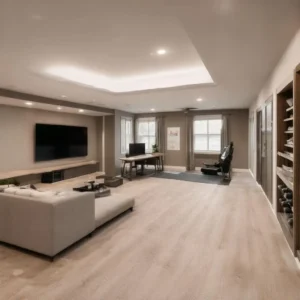
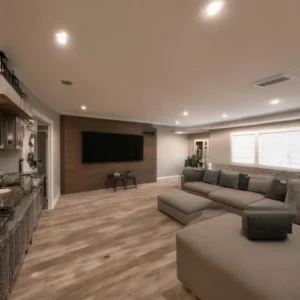
- Basements: Luxury vinyl plank/tiles or porcelain tile are highly stable choices. If you prefer a wood look, engineered hardwood with a robust wear layer outperforms solid hardwood below grade.
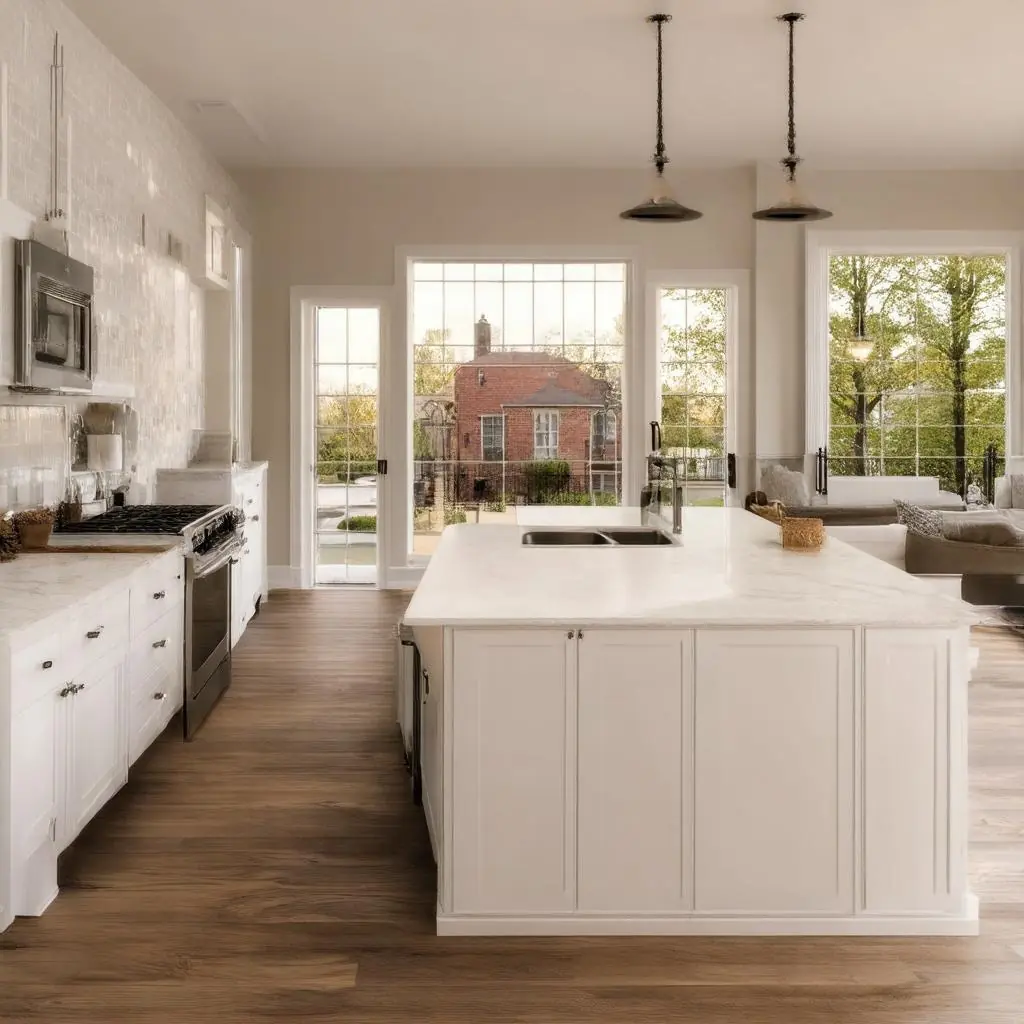
- Kitchens and living areas: Engineered hardwood acclimated on site and installed with proper expansion gaps handles humidity better than solid planks. For tile, porcelain with a high PEI rating and rectified edges provides durability and clean lines.
-
Wet-area assemblies:
- Showers and tub surrounds perform best with a continuous waterproofing system behind or beneath tile (such as a sheet membrane) paired with corrosion-resistant fasteners and properly sloped pans or linear drains.
- Epoxy or high-performance grout resists staining and shrinkage, critical for long-term water resistance and easy maintenance.
-
Cabinets and countertops:
- Furniture-grade plywood cabinet boxes, solid wood face frames, and dovetail drawer boxes with soft-close hardware withstand daily use and humidity variations better than particleboard alternatives.
- Quartz countertops offer stain and scratch resistance with minimal maintenance; if choosing natural stone, proper sealing and edge detailing are essential.
-
Exterior-adjacent details:
- On walls facing the exterior or foundation, air sealing and strategically placed vapor control layers reduce condensation risk. In some applications, closed-cell foam can improve resilience against moisture drive.
- For mudrooms, entries, and garage conversions, use freeze–thaw-rated tiles and flexible thinset to mitigate stress from temperature swings and road salts.
-
Mechanical and plumbing considerations:
- High-quality valves, shutoffs, and supply lines are worth the investment; they are inexpensive compared to the cost of water damage.
- Local code-compliant ventilation in baths and kitchens (appropriately ducted to the exterior) protects finishes and indoor air quality.
Every selection—down to the fasteners—matters. We source from top-tier suppliers and install with the right adhesives, sealants, and expansion details for our climate, avoiding the false economy of low-cost, generic materials.
Permits, Historic Details, and the Professional Process
A remodel that lasts is as much about process as it is about product. In the St. Louis region, permitting and inspections protect your home’s safety and market value. Expect permits for structural changes, electrical and plumbing work, window alterations, and egress modifications—especially common in basement finishing. Historic properties and conservation districts may require design reviews that influence materials, window profiles, masonry details, and sometimes even color palettes. These reviews can affect lead times and costs but preserve the architectural integrity that makes our neighborhoods distinctive.
Because many St. Louis homes predate today’s codes, opening walls can reveal outdated wiring, cast-iron or galvanized piping, or past DIY fixes. A transparent estimate should outline reasonable contingencies for concealed conditions and describe the change-order process if something unexpected appears. This clarity helps prevent scope and budget drift.
What you should expect from a professional crew:
- A single point of contact—project manager or site superintendent—responsible for schedule, quality checks, and communication.
- Jobsite protection: floor protection, dust walls, negative-air filtration with HEPA, safe material staging, and daily cleanup to minimize disruption.
- Licensed, insured trade professionals performing work to current codes and manufacturer specifications, preserving product warranties.
- Clear milestones aligned with inspections and a payment schedule tied to progress, not time alone.
- Respect for your household: predictable work hours, background-checked team members, and a tidy site at day’s end.
Expressions Remodeling integrates these standards into every project—from kitchens and baths to basement suites, garages, storage solutions, man caves, and home offices—so your remodel is built to code, built to last, and built around you.
A Practical Checklist for Vetting Your Remodeler
Use the following checklist to evaluate any contractor before you sign:
-
Credentials and coverage:
- License appropriate to the jurisdiction and current general liability and workers’ compensation insurance.
- Proof of permits pulled under the contractor’s name, not the homeowner’s, when necessary.
-
Portfolio and references:
- Recent, local projects similar in scope (kitchen, bath, basement, whole-home).
- Willingness to provide references and allow you to speak with past clients.
-
Written scope and specifications:
- Detailed line-item estimate with allowances clearly defined.
- Named brands and product specs for key materials (e.g., cabinetry construction, countertop material, waterproofing system, underlayment type, grout type).
- Inclusions and exclusions listed to avoid ambiguity.
-
Schedule and logistics:
- Project timeline with dependencies (lead times for cabinets, counters, special-order tile).
- Site protection and dust-control plan in writing.
- Communication cadence (weekly updates, milestone check-ins).
-
Craftsmanship standards:
- Installation methods aligned with manufacturer instructions and ANSI/TCNA or equivalent standards for tile, flooring, and waterproofing systems.
- Warranty terms in writing for both materials and labor.
-
Financial safeguards:
- Payment schedule tied to milestones and/or inspections.
- Lien release process for subcontractors and suppliers.
-
Design and preconstruction:
- Complimentary 3D design that includes space planning, finish selections, and realistic renderings.
- A transparent, free estimate that reflects the agreed design and selections before any work begins.
- Clear change-order policy for anything that alters scope or cost.
A remodeler who welcomes these questions and documents the answers demonstrates the integrity and professionalism you want in your home.
Designing with Confidence: Style, Function, and Budget
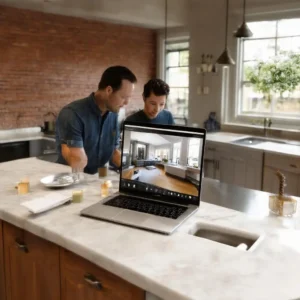
Great design is not an upsell—it is the roadmap that safeguards your investment. Our complimentary 3D design helps you visualize cabinet layouts, appliance clearances, shower niches, lighting layers, and traffic flow before materials are ordered. It allows you to compare options—such as a larger pantry versus a beverage center, or a walk-in shower versus a tub/shower combo—so aesthetic choices are made with full awareness of functional trade-offs and costs.
Guidance for a remodel that looks great and lives even better:
-
Balance permanence and personality:
- Invest in permanent elements that do the heavy lifting—cabinets, waterproofing systems, plumbing valves, subfloors, and ventilation.
- Express personality with easier-to-update items—paint, hardware, mirrors, and light fixtures.
-
Choose durable finishes from subfloor to grout:
- Underlayment and membranes appropriate for your substrate and tile size.
- Porcelain tile with rectified edges for crisp lines; epoxy or high-performance grout for stain resistance.
- Engineered hardwood or LVP in moisture-prone or lower-level spaces.
- Quartz countertops for low maintenance; sealed natural stone where desired—with a care plan.
-
Value engineering without compromise:
- Use standard cabinet sizes strategically and reserve custom work for focal points.
- Simplify tile patterns in secondary spaces while reserving artisanal details for feature walls or niches.
- Leverage open shelving or glass inserts selectively to reduce costs and add visual relief.
-
Plan for storage and flow:
- In kitchens, prioritize drawer bases over door cabinets for ergonomic access.
- In basements, include mechanical access panels, dehumidification strategy, and durable flooring transitions at exterior doors.
- In home offices and specialty spaces (studies, man caves), integrate wire management, task lighting, and acoustics from the outset.
-
Budget clarity:
- Establish a target budget with realistic allowances for cabinets, tops, tile, plumbing fixtures, and lighting.
- Keep a contingency for older-home surprises and for meaningful upgrades you may choose during design development.
By pairing a complimentary 3D design with a transparent, free estimate, Expressions Remodeling sets clear expectations, aligns selections with your budget, and prevents scope creep. The process is designed to reduce surprises, improve communication, and deliver kitchens, baths, basements, and whole-home remodels that stand up to St. Louis weather and everyday life—beautifully and reliably.
If you are considering a project in St Louis, Chesterfield, Ballwin, Clayton, Creve Coeur, Ladue, Olivette, Overland, St Charles, Maryland Heights, Wildwood, Valley Park, Sunset Hills, Webster Groves, Maplewood, or University City, our team is ready to help you evaluate options, finalize materials, and build a space that performs for the long term. Quality craftsmanship is not a slogan; it is a standard measured in fit, finish, and years of worry-free living.