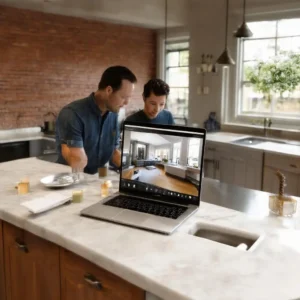

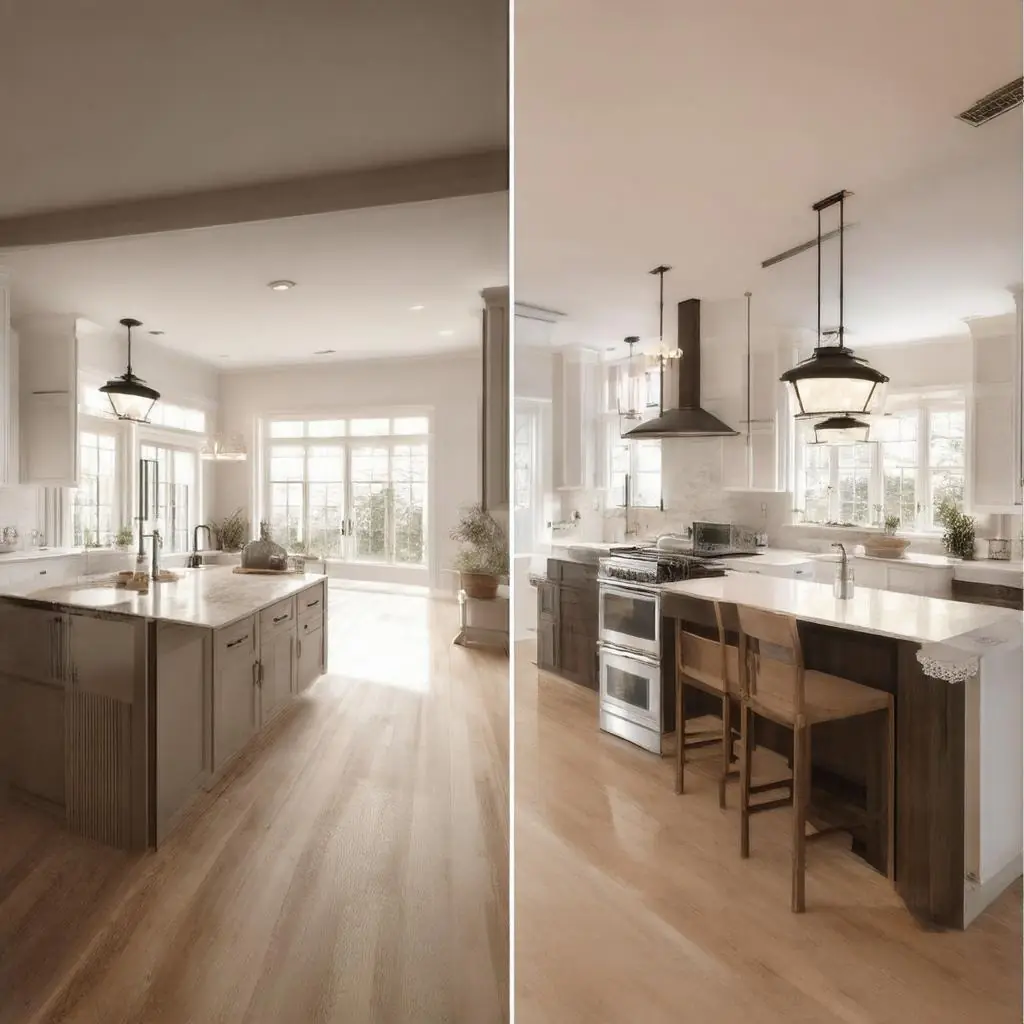
For many St. Louis homeowners, the biggest hurdle in remodeling is not selecting tile or choosing a cabinet door profile—it is confidently understanding how the finished space will look and function before any demolition begins. Expressions Remodeling solves this with a complimentary estimate and a free 3D design service that turns your ideas into a clear, buildable plan. You see real layouts, elevations, and materials represented in scale so you can make informed decisions and avoid costly surprises.
This approach is designed for homeowners across St. Louis and neighboring communities—St Louis, Chesterfield, Ballwin, Clayton, Creve Coeur, Ladue, Olivette, Overland, St Charles, Maryland Heights, Wildwood, Valley Park, Sunset Hills, Webster Groves, Maplewood, and University City—who want to balance style with performance and invest wisely. By pairing top-tier materials with professional installation and transparent planning, our team helps you move from vision to reality with confidence, quality, and integrity.
From Vision to Plan: A Step-by-Step Process You Can Trust
1) Discovery and Complimentary Estimate
- Initial consultation: We listen to your goals, style preferences, wish-list items, and budget parameters.
- Free in-home assessment: Measurements, photos, and an evaluation of existing conditions (plumbing, electrical, structure).
- Transparent estimate: A preliminary scope and price range based on your goals and constraints.
2) Free 3D Design and Tailored Layouts
- Scaled layouts: We create options to test traffic flow, appliance clearances, work zones, and storage strategies.
- Visual selections: Finishes and fixtures from vetted, top-tier suppliers are modeled in 3D so you can compare looks and costs.
- Iteration and refinement: We meet to review renderings, adjust layouts, and align the design with your priorities.
3) Curated Materials and Specification
- Quality-first sourcing: We avoid generic, low-cost products that compromise durability. Expect reliable cabinetry, resilient flooring, and code-compliant fixtures.
- Midwest-ready choices: Recommendations account for the region’s humidity, freeze–thaw cycles, and temperature swings.
- Final spec book: A unified document containing product selections, finishes, and technical details to keep everyone aligned.
4) Scheduling, Permitting, and Pre-Construction
- Permit preparation: 3D drawings inform accurate construction plans, helping streamline approvals.
- Calendar clarity: A proposed timeline with milestone dates, lead times, and inspection checkpoints.
- Site readiness: Protection plans for floors and furnishings, dust control, and staging logistics.
5) Professional Installation and Quality Assurance
- Skilled trades: Licensed, experienced installers execute to specification with an emphasis on craftsmanship.
- Progress reviews: Regular check-ins, photo updates, and documented change orders if you pivot midstream.
- Final walkthrough: A detailed inspection and orientation for care, maintenance, and warranty information.
This framework promotes predictability: you approve a design you can see, you select materials you can trust, and you receive workmanship that stands the test of time.
How 3D Design Solves Room-by-Room Challenges
-
Kitchens: Function-first layouts and finish cohesion
- Islands and clearances: Evaluate seating overhangs, aisle widths, and appliance doors in the 3D model to prevent crowding.
- Work zones: Test a cook-centered layout with a prep sink or shift to a pantry-forward design for families who bulk shop.
- Lighting layers: Place task, ambient, and accent lighting virtually to ensure balanced illumination over sinks, islands, and ranges.
- Material swaps: See quartz vs. butcher block, slab vs. shaker doors, or matte vs. satin hardware finishes in context before buying.
-
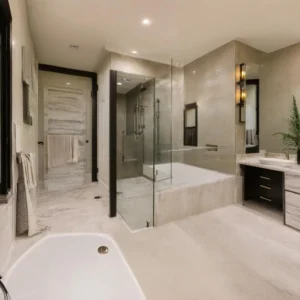
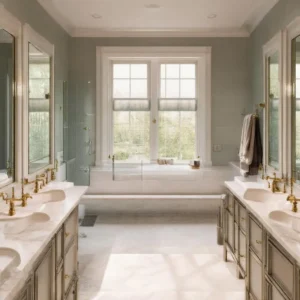
Bathrooms: Smart space planning, moisture control, and comfort
- Wet zone decisions: Compare a barrier-free shower vs. a tub-shower combo and confirm door swing clearances.
- Storage and power: Place recessed niches, vanity drawers, and outlets for hair tools precisely where they are needed.
- Ventilation and finishes: Model porcelain tile patterns, grout colors, and shower glass to set the tone and manage maintenance.
-
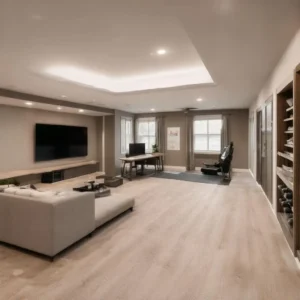
Basements: Multi-zone living with moisture-savvy materials
- Family rooms and media: Visualize sightlines to TVs, sound isolation options, and lighting control for a flexible, comfortable space.
- Guest suites and offices: Place egress windows, closets, and desk alcoves to meet code and maximize function.
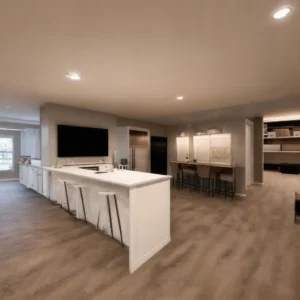
- Bars and gaming areas: Use 3D to define circulation, stool spacing, and the relationship between seating, storage, and appliances.
-
Garages: Storage, workspace, and durability
- Zoning: Lay out racking systems, workbenches, and ceiling storage with safe clearances for vehicles.
- Floor systems: Compare epoxy, polyaspartic, or high-build coatings for slip resistance and chemical durability.
- Utility considerations: Integrate improved lighting, power for tools and EVs, and insulation to moderate seasonal temperature swings.
Aligning Style, Function, and Budget—With Midwest-Smart Materials
-
Start with priorities and protect the long-term investments
- Identify non-negotiables (e.g., adding a second oven, creating a walk-in shower, waterproofing a basement wall) before allocating funds to aesthetics.
- Invest in infrastructure: electrical upgrades, proper ventilation, moisture mitigation, and subfloor prep save money over the life of the remodel.
-
Right-size your material tiers
- Cabinets and vanities: Choose sturdy construction (e.g., plywood box, soft-close hardware) with a modest door style to control costs.
- Countertops: Quartz often balances durability and maintenance; consider heat pads and cutting boards to extend lifespan.
- Flooring: Luxury vinyl plank or engineered hardwood suits variable humidity; porcelain tile excels in baths and entries.
-
Design with Midwest climate in mind
- Moisture: In basements, include vapor barriers, drainage where needed, and mold-resistant drywall.
- Freeze–thaw cycles: For garage thresholds and entry transitions, use products rated for temperature swings and road salts.
- UV and heat: Near windows, consider fade-resistant finishes and window treatments to protect surfaces.
-
Spend where it counts, save where it is smart
- Splurge: Cabinets, mechanicals, waterproofing, and labor-quality deliver long-term value.
- Save: Choose cost-savvy decorative lighting, stock-size tile, and standard appliance finishes instead of custom variants.
- Phase if needed: If a full renovation strains the budget, the 3D plan can guide staged updates without rework.
-
Keep allowances and contingencies transparent
- Align on allowances for tile, plumbing fixtures, and hardware; your 3D selections help set realistic numbers.
- Hold a contingency (often 10–15%) for unforeseen conditions—especially in older homes—to protect your timeline and finish level.
Permits, Timelines, and Communication for a Smooth Experience
-
Permits and local requirements
- Municipalities across St. Louis—such as Chesterfield, Ballwin, Clayton, Creve Coeur, Ladue, Olivette, Overland, St Charles, Maryland Heights, Wildwood, Valley Park, Sunset Hills, Webster Groves, Maplewood, and University City—may have distinct codes, submittal requirements, and inspection schedules.
- The 3D design informs accurate construction drawings, which can help expedite review and clarify scope for inspectors.
- Plan for lead times on inspections and special-order items so permitting and procurement run in parallel.
-
Realistic timeframes (scope-dependent)
- Bathrooms: Often 3–6 weeks once materials are in hand, with extra time for custom glass.
- Kitchens: Commonly 6–10 weeks, depending on cabinetry lead times, countertop templating, and appliance schedules.
- Basements: Typically 6–12 weeks, influenced by framing complexity, egress installation, and moisture mitigation.
- Garages: Varies by electrical upgrades, storage systems, and floor coatings (which require proper cure times).
These ranges are illustrative; your detailed 3D plan and final scope will determine the precise schedule.
-
Communication that keeps everyone aligned
- Single point of contact: Know who to call for updates, decisions, and site coordination.
- Weekly check-ins and documented changes: Short meetings or messages keep approvals moving and prevent delays.
- Site readiness and respect for your home: Dust control, floor protection, and secured tool storage reduce disruption.
- Neighbor and access planning: Clarify parking, dumpster placement, delivery windows, and work hours.
-
Preparing your household
- Set up temporary zones: A kitchenette during a kitchen remodel or alternate bathing options during a bath renovation.
- Protect valuables and sensitive electronics from vibration and dust.
- Plan for pets and children with safe boundaries and daily routines.
With Expressions Remodeling, you see the design, confirm the details, and understand the path to completion before any demolition starts. The complimentary estimate and free 3D design service transform your remodel from an abstract idea into a precise plan—supported by curated materials, professional installation, and a commitment to quality and integrity across St Louis, Chesterfield, Ballwin, Clayton, Creve Coeur, Ladue, Olivette, Overland, St Charles, Maryland Heights, Wildwood, Valley Park, Sunset Hills, Webster Groves, Maplewood, and University City. Seeing it first is how you build it right.