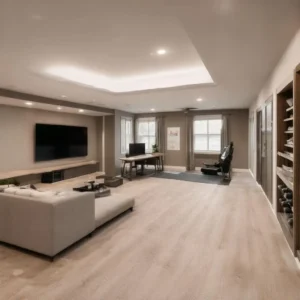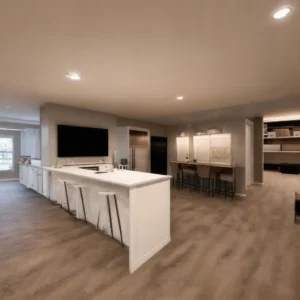

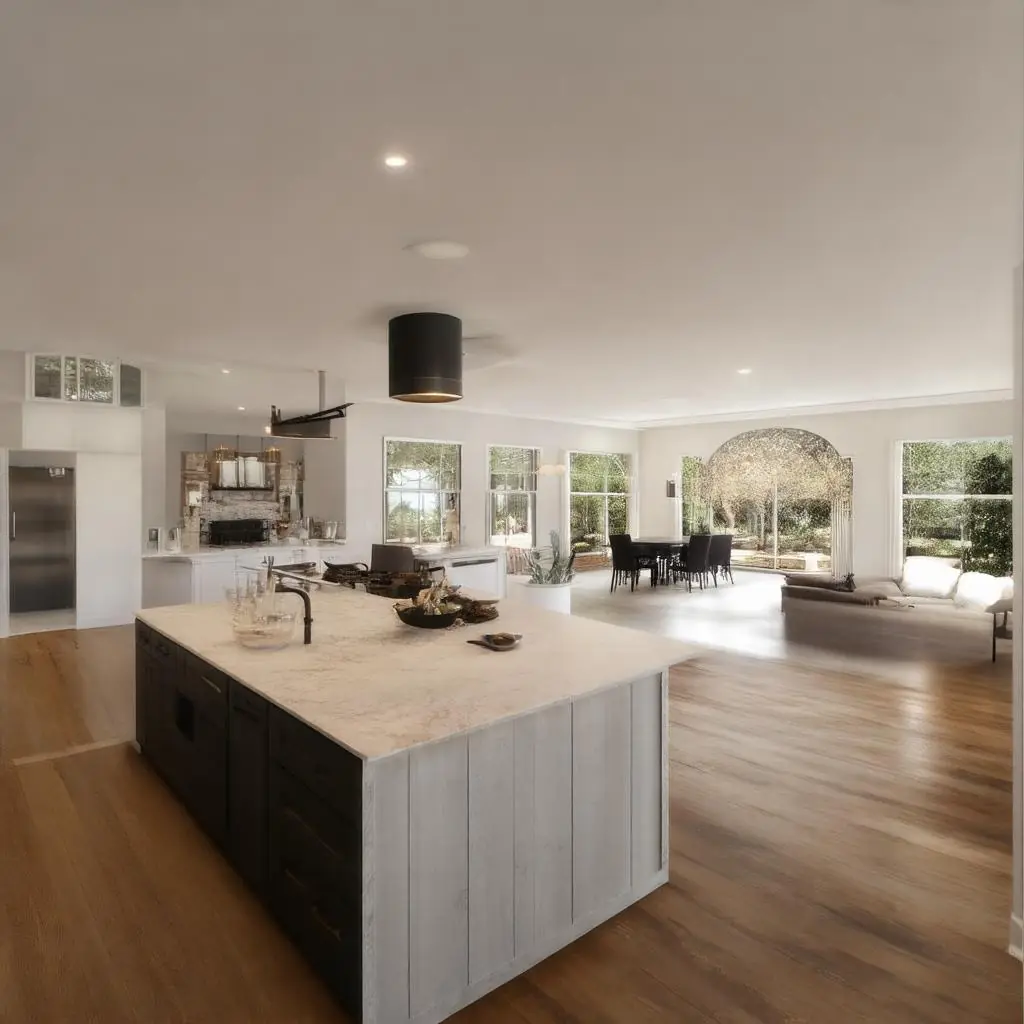
For homeowners, the hardest part of a remodel is not choosing a paint color or a tile—it is committing to a plan you cannot fully picture. Expressions Remodeling’s complimentary 3D design eliminates that uncertainty. By visualizing your new kitchen, bath, or basement before work begins, you reduce guesswork, prevent costly change orders, and align your style aspirations with a realistic budget and timeline.
This approach is especially valuable across the St. Louis region, where homes range from historic brick classics to newer suburban builds. Whether you are reimagining a Clayton condo kitchen, modernizing a Ballwin bath, or converting a Wildwood basement into a multi-purpose living area, a shared 3D model brings clarity to every decision. Service areas include: St Louis Chesterfield Ballwin Clayton Creve Coeur Ladue Olivette Overland St Charles Maryland Heights Wildwood Valley Park Sunset Hills Webster Groves Maplewood University City.
At Expressions Remodeling, our reputation is built on quality, integrity, and innovation. The free 3D design and estimate are practical tools that reflect these values—helping you finalize a design you love, choose durable materials from top-tier suppliers, and set a clear path to a flawless installation by seasoned craftspeople.
What to Bring to Your 3D Design Consultation
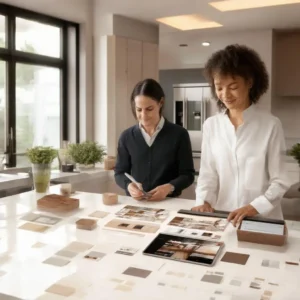
Arriving prepared ensures your design session is efficient and productive. Consider gathering the following:
- Inspiration
- Photos, links, or saved boards that capture your desired look
- Examples of kitchens, baths, or basements you admire—cabinet profiles, tile patterns, lighting, hardware, and color palettes
- Must-haves
- Non-negotiables such as a larger island, a walk-in shower, a double vanity, a dedicated home office, or a code-compliant egress window in a basement
- Nice-to-haves
- Features you would love if the layout and budget allow—heated floors, a beverage center, a soaking tub, a mudroom bench with built-ins
- Room data
- Smartphone photos of existing spaces, rough measurements if available, and notes on problem areas (poor storage, traffic bottlenecks, insufficient lighting)
- Appliances and fixtures
- Model numbers or sizes for ranges, refrigerators, washers/dryers, and plumbing fixtures you already own or plan to purchase
- Lifestyle and use
- How you cook, entertain, work from home, or plan to use the space over time; number of household members; accessibility considerations
- Budget and priorities
- A realistic range plus what you value most—material quality, custom features, or timeline; this helps us tailor options without compromising craftsmanship
- Timing and logistics
- Desired start date, any events to plan around, and whether you will live at home during construction
By defining must-haves and nice-to-haves up front, the 3D design can explore variations before a single material is ordered—protecting your budget while preserving your vision.
From First Call to Final Design: A Step-by-Step Path
Expressions Remodeling’s process is structured to create clarity early and maintain it throughout.
1) Initial consultation and free estimate
- We discuss goals, budget range, timeline, and scope (kitchen, bath, basement, garage, storage, flooring, or bespoke spaces such as man caves and home offices).
- You receive a free estimate based on preliminary scope and features.
2) In-home visit and measurements
- Our team documents existing conditions with precise measurements and photos.
- We evaluate structural elements, plumbing/electrical locations, and code considerations, so the 3D model reflects reality.
3) Conceptual 3D space planning
- We translate your wish list and room data into layouts that solve for flow, storage, and ergonomics.
- You will see clearances for islands and walkways, appliance door swings, shower footprints, and fixture placements rendered to scale.
4) Material selections from top-tier suppliers
- We guide you through cabinetry, counters, tile, flooring, lighting, and fixtures from trusted brands that meet our quality standards.
- Our design team shows “good, better, best” options, explaining the trade-offs in performance, aesthetics, and lead times—without resorting to low-cost, generic materials.
5) Iteration and refinement
- We adjust layouts, finishes, and details in the 3D model based on your feedback—moving a pantry door, enlarging a shower niche, widening a stair landing, or tweaking a soffit to conceal ductwork.
- Because each revision is visual, approvals are confident and well-informed.
6) Transparent scope and pricing
- The final 3D design anchors a detailed scope of work and line-item estimate, with allowances clearly noted for items such as tile or lighting.
- You understand precisely what is included, minimizing surprises and change orders.
7) Pre-construction planning
- We order materials with known lead times, coordinate permits as needed, and create a realistic schedule.
- A pre-construction meeting reviews site protection, access, dust control, and communication protocols so installation proceeds smoothly.
How 3D Visuals Protect Your Timeline and Budget
- Fewer change orders
- The model exposes issues early—insufficient clearance around an island, a door swing conflict, a vanity that encroaches on circulation, or a shower that needs a different drain layout.
- Catching these conflicts on screen avoids mid-project redesigns and costs.
- Cost clarity through visual comparisons
- Seeing tile patterns at full scale or side-by-side countertop options helps you decide what to invest in and where to economize.
- We can value-engineer without sacrificing design intent—porcelain that mimics stone, a semi-custom cabinet line with upgraded hardware, or luxury vinyl plank in a lower level where moisture performance matters.
- Lead-time and schedule planning
- The final design locks in material selections early, allowing us to sequence work around items like custom cabinetry, stone fabrication, or special-order fixtures.
- When materials arrive on schedule, crews remain productive, and the project stays on track.
- Code and compliance built in
- For basements, we confirm egress and ceiling height; for kitchens, clearances and ventilation; for baths, waterproofing details and proper slopes.
- Aligning design with local codes from the outset supports faster approvals and smoother inspections.
- Transparent communication
- A shared 3D model gives everyone—from homeowners to installers—a single source of truth. Elevations and perspectives guide layout, tile coursing, lighting placement, and trim details.
- With clear visuals, questions are answered before they become delays.
The result is a remodel that adheres to plan: a defined scope, controlled costs, and a timeline that reflects real material lead times and on-site realities.
Kitchens, Baths, and Basements: Examples and the Role of Craftsmanship
- Kitchens
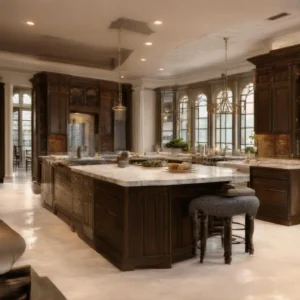
- What the 3D design solves: workable traffic paths, island sizing, seating counts, hood placement, and storage solutions such as pull-outs, tray dividers, and pantry systems. It also previews lighting layers—recessed, under-cabinet, and pendants—so brightness and ambiance are tuned before fixtures are purchased.
- A common St. Louis scenario: opening a kitchen to a dining or family room in homes across Webster Groves or Maplewood while respecting architectural character. The model shows where to insert beams, how to center pendant lighting, and how cabinet heights relate to existing windows.
- Bathrooms
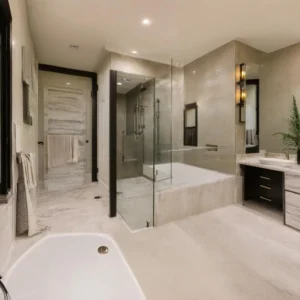
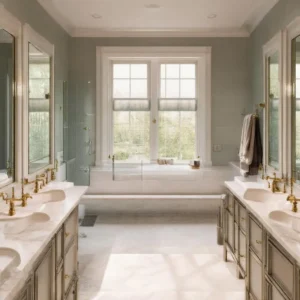
- What the 3D design solves: shower dimensions, niche locations, bench size, glass heights, and tile patterns that align at corners. It clarifies the relationship between vanity, mirror, sconce spacing, and outlets.
- A frequent request in Clayton, Ladue, or Creve Coeur: converting a tub to a curbless shower. The model reveals slope requirements and tile transitions, anticipating substrate work so waterproofing and drainage are flawless.
- Basements
- What the 3D design solves: framing around beams and ductwork, soffit placement, door clearances, and zoning for media, fitness, guest suites, or playrooms. For St Charles, Maryland Heights, or Valley Park homes, it often includes planning for egress windows, a wet bar, and durable flooring.
- For multi-use spaces—home office plus media room or a man cave with a workshop area—the model helps partition space visually while preserving openness and light.
Why craftsmanship still defines success on install day:
- Substrate and prep
- A level floor, plumb walls, and square corners are the foundation of a quality result. Our professionals prepare surfaces to meet the standards your finishes deserve, ensuring cabinets align, tile patterns track true, and doors operate smoothly.
- Waterproofing and durability
- Behind the beautiful bath is properly detailed waterproofing, correct backer boards, and tested membranes. Attention to these unseen steps guards against leaks and guarantees longevity.
- Precision layout
- The 3D model informs exact on-site layout: tile coursing, grout joint uniformity, fixture centering, and symmetry that the eye reads as “right.”
- Cleanliness and respect for your home
- Site protection, dust control, and daily cleanup preserve livability during construction—particularly important when families remain in place during kitchen or bath remodels.
- Professional installation and materials
- We partner with reliable, certified installers and use materials from trusted, top-tier suppliers. This combination turns your approved design into a refined finished space that endures daily use.
Expressions Remodeling’s blend of complimentary 3D design, transparent planning, high-quality materials, and meticulous craftsmanship is designed to meet the expectations of discerning homeowners throughout the region—from Chesterfield and Overland to Sunset Hills and University City. When you can see your remodel before you build it, you make better decisions faster—and on install day, those decisions translate into a home that functions beautifully and reflects your style with integrity.