
For Clayton homeowners planning a whole home remodel, hiring a local design-build remodeler is the most reliable way to finish on budget and on schedule. A firm that handles design, permitting, and construction under one roof removes the finger-pointing that happens when separate vendors miss handoffs. Expressions Remodeling operates this way locally, and the next right move is a on-site consultation with a written scope and estimate before anything else gets decided.
TL;DR:
- Homeowners should verify that the remodeler has current Missouri licensing, liability insurance, and recent local project references within the last 18 months.
- A detailed scope and contingency budget of 10 to 15 percent are essential before demolition begins to prevent budget overruns and delays.
- Consistent questions about permit management, change-order policies, and handling structural surprises can differentiate reliable contractors from those likely to cause issues.
- Red flags include bids far below competitors, vague allowances, evasive communication, and requests for large upfront cash deposits.
Table of Contents
- Why a Local Design-Build Remodeler Beats Hiring Separately
- What Does a Whole Home Remodel Actually Cover?
- What Should a Whole Home Remodel Cost in Clayton and St. Louis?
- Pre-Construction Checklist: What to Lock In Before Demolition Starts
- How Do You Evaluate Bids and Pick the Right Contractor?
- What Happens During Construction: A Phase-by-Phase Walkthrough
- What Should Closeout and Warranty Coverage Include?
- What Clayton Homeowners Say About Their Remodeling Experience
- What Exact Questions Should You Ask Before Hiring?
- What Red Flags Should Make You Walk Away?
- Local Practice and What Actually Matters for Clayton Homeowners
- Ready to Start Planning Your Clayton Remodel?
- Sources
Why a Local Design-Build Remodeler Beats Hiring Separately
Hiring an architect, then a general contractor, then subcontractors means three separate parties with three separate incentives. When the design doesn’t match the budget or a permit gets flagged, nobody owns the fix. Design-build collapses that chain into one team, one contract, and one point of accountability from the first sketch to the final walkthrough.
Local knowledge matters more than people expect. A remodeler who works in Clayton and the surrounding St. Louis area already knows the permit office’s turnaround times, which inspectors flag which issues, and how older brick homes in the area typically need extra structural attention. Expressions Remodeling brings that local footprint along with complimentary 3D design visualization, a documented project portfolio, and client testimonials that back up its process from consult to closeout.
Before signing with any design-build firm, confirm:
- They carry current Missouri contractor licensing and liability insurance
- They provide references from projects completed in the last 12 to 18 months
- Their contract spells out who pulls permits and manages inspections
- They offer a warranty period in writing, not just verbally
Pro Tip: Ask to see a completed project within a few miles of your home. A remodeler with real Clayton-area work can show you finishes that survived actual St. Louis humidity and seasonal shifts, not just showroom samples.
What Does a Whole Home Remodel Actually Cover?
A true whole-home remodel touches nearly every system and surface in the house, not just paint and countertops. Understanding the full scope helps you compare bids apples to apples instead of getting surprised by what one contractor included and another left out.
Typical scope includes:
- Kitchen and bathroom reconstruction, including layout changes
- Basement finishing or refinishing
- Mechanical, electrical, and plumbing (MEP) updates or full replacement
- Structural changes like wall removal or room additions
- Flooring, trim, paint, and fixture replacement throughout
Some items are line-item scope, meaning the exact product and cost are locked in the contract. Others are allowances, which is a budgeted placeholder for items you’ll pick later, like cabinetry, countertops, or light fixtures. In a design-build contract, the remodeler typically supplies labor, project management, and trade coordination, while you make final selections on allowance items within the budget range you agreed to upfront.
What Should a Whole Home Remodel Cost in Clayton and St. Louis?
A whole house remodel in the St. Louis market runs $70,053 to $186,808, with most homeowners landing around $124,538. That range reflects finish-level tiers: budget-conscious updates sit near the low end, while high-end custom work with premium materials and structural changes pushes toward the top.
By the numbers: Labor and materials typically split close to 50/50 on a St. Louis whole-house remodel. If a bid shows materials eating 80% of the budget with almost nothing allocated to labor, that’s often a sign of missing scope or an underbid labor line that will surface later as a change order.
Older Clayton homes with brick or masonry construction can push costs higher still. Structural modifications to masonry walls or foundations often add several thousand dollars beyond a standard frame-construction remodel, so factor your home’s age and construction type into any comparison.
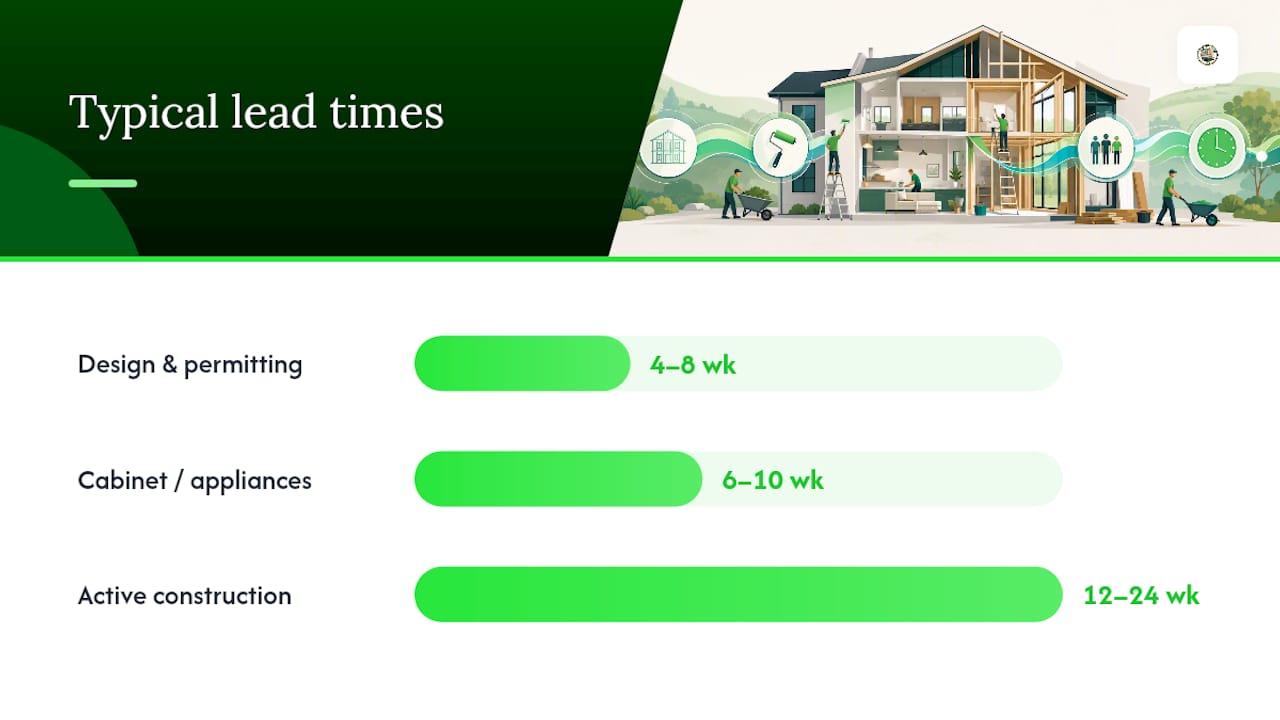
Timeline runs in parallel with cost. Design and permitting typically take four to eight weeks, depending on scope and how quickly you finalize selections. Active construction on a full-house remodel generally spans three to six months. The most common delay causes are custom material lead times and inspection scheduling gaps, both of which a good general contractor manages proactively rather than reactively.
Pre-Construction Checklist: What to Lock In Before Demolition Starts
The planning phase before demolition is the single most important stretch of the entire project. Skip steps here and you risk stop-work orders, code violations, or a budget that unravels by month two.
- Document the full scope in writing, including every room and system touched, so nothing gets assumed.
- Set a contingency budget of 10 to 15% above your target cost for unexpected findings behind walls or under floors.
- Lock long-lead selections during design, especially custom cabinetry, specialty appliances, and windows, since these often carry the longest order-to-delivery windows.
- Confirm who pulls permits and get a list of expected inspection points before the crew shows up.
- Establish a payment schedule tied to construction milestones, not arbitrary calendar dates, along with a written change-order policy.
Pro Tip: Order your long-lead items the same week you finalize design drawings, not after demolition begins. A cabinet order placed on day one of construction can still delay your kitchen install by six to ten weeks if the manufacturer runs behind.
For a deeper primer on scoping and budgeting before you sign anything, Axenia Construction’s planning guide walks through the same groundwork from a broader construction-industry lens.
How Do You Evaluate Bids and Pick the Right Contractor?
Comparing three bids side by side rarely means picking the lowest number. It means picking the lowest risk, and that requires asking the right questions upfront.
Ask every prospective contractor:
- Are you licensed and insured in Missouri, and can you provide proof?
- Can I speak with two or three references from projects completed in the past year?
- Who on your team manages permitting and inspection scheduling?
- What does your warranty cover, and for how long?
- What’s your change-order process, and how is markup calculated?
- What’s your typical payment schedule?
| Red flag | What it usually means |
|---|---|
| Bid far below competitors | Missing scope, underbid labor, or corners cut on materials |
| Vague allowances with no dollar figures | Room for the price to balloon after you sign |
| Large cash deposit requested upfront | Poor cash flow management or lack of legitimacy |
| No proof of insurance offered | Real liability exposure if someone gets hurt on your property |
A milestone-tied payment schedule paired with a clear change-order policy is the strongest contract protection homeowners have against runaway costs. Verify licensing through the Missouri contractor lookup, check Better Business Bureau records, and ask to see photos of past projects with dates attached, not just polished portfolio shots.
What Happens During Construction: A Phase-by-Phase Walkthrough
Knowing the sequence helps you plan your living situation and know when to expect noise, dust, and inspectors on site.
- Design and permitting (four to eight weeks): drawings finalized, permits submitted and approved.
- Demolition and structural work (one to two weeks): old materials removed, framing changes made.
- Rough MEP (two to three weeks): plumbing, electrical, and HVAC roughed in before anything gets covered.
- Inspections (timing varies by permit office): rough MEP must pass inspection before drywall goes up.
- Insulation and drywall (one to two weeks): walls closed up only after inspections clear.
- Finishes (six to ten weeks): flooring, cabinetry, paint, fixtures, and trim.
- Punch list and final walkthrough (one to two weeks): remaining touch-ups addressed before final payment.
Sequencing failures like installing flooring before rough MEP is complete are a common source of rework, and they’re exactly what a general contractor’s coordination is meant to prevent. During construction, expect your GC to set up dust barriers, protect flooring paths, and help you plan a temporary kitchen setup if the whole first floor is involved.
What Should Closeout and Warranty Coverage Include?
Before you release final payment, the project isn’t actually finished until you have the paperwork to prove it. A rushed closeout is how small defects turn into unresolved headaches six months later.
Expect and request:
- A documented final walkthrough with a punch list of remaining items and a firm date for fixes
- Written warranty terms covering both labor (typically one to two years from the contractor) and manufacturer warranties on appliances and fixtures
- Copies of all permits, final inspection sign-offs, and as-built notes for any structural or MEP changes
- Operation manuals for new HVAC systems, appliances, and any smart-home installations
Once you’re moved back in, protect your investment with basic maintenance: reseal grout annually, service HVAC systems twice a year, and address any settling cracks in drywall before they widen. A remodel done right should hold up for decades, not just look good on move-in day.
What Clayton Homeowners Say About Their Remodeling Experience
Local reputation carries more weight in a market like Clayton than in a big anonymous metro, because word travels between neighbors, and a botched remodel doesn’t stay quiet for long. Homeowners in this area tend to ask around before signing anything, comparing notes with people who’ve already been through a kitchen gut or a full basement finish.
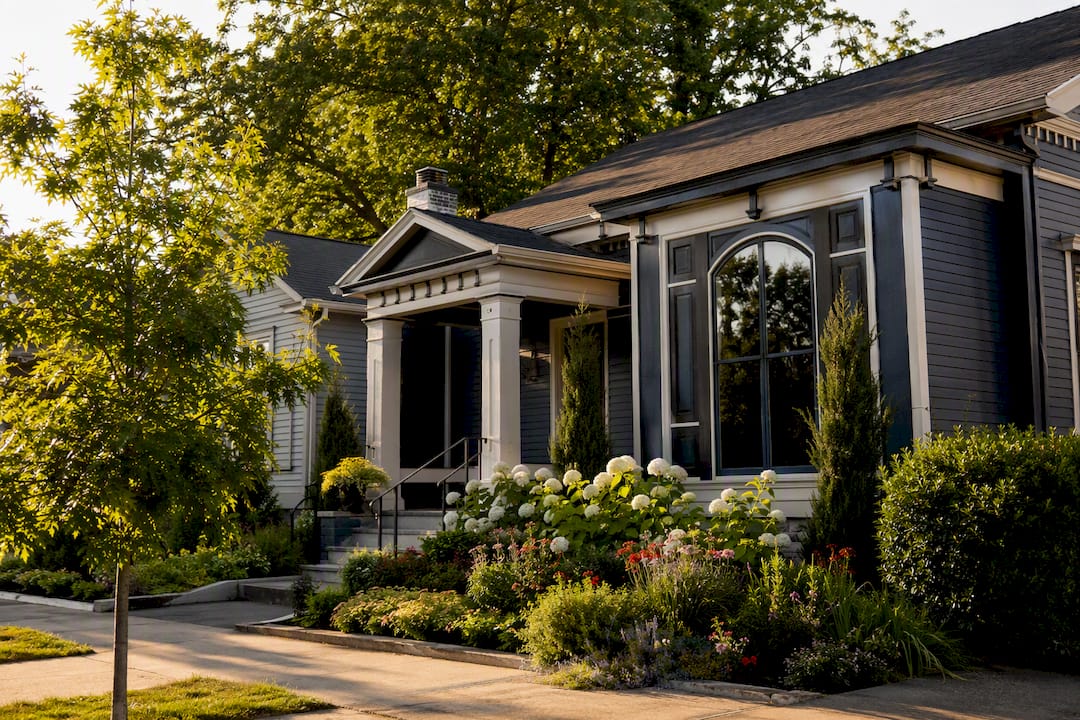
Expressions Remodeling has built its reputation on that kind of neighbor-to-neighbor trust, backed by documented client testimonials tied to real completed projects rather than generic marketing copy. That distinction matters in a market where homeowners can and do drive past a past project to see how the exterior finishes have held up.
What separates a contractor worth trusting from one that isn’t usually comes down to consistency across reviews. A single glowing testimonial means little. A pattern of homeowners describing the same things, clear communication during construction, accurate timelines, and a responsive team after the final walkthrough, tells you far more about what to expect on your own project.
When you’re vetting a remodeler, don’t just read the testimonials on their website. Ask for two or three references you can call directly, and ask those homeowners specific questions: Did the project finish close to the original timeline? Did change orders come with clear explanations? Would they hire the same team again for a different project? The answers to those questions matter more than any five-star rating pulled from a review aggregator.
What Exact Questions Should You Ask Before Hiring?
Beyond the basics of licensing and insurance, the questions that separate a smooth remodel from a stressful one tend to be more specific and more uncomfortable to ask. Most homeowners skip them because they feel awkward, and that’s exactly why they matter.
Ask each contractor you’re considering:
- How many active projects will your crew be juggling at the same time as mine, and how does that affect my schedule?
- Who is my single point of contact once construction starts, and how quickly do they typically respond?
- What happens if we uncover a structural issue, like old masonry or outdated wiring, once demolition starts?
- Can you walk me through exactly how allowances work in this contract if I want to upgrade a selection midway through?
- What’s included in your warranty versus what falls under the manufacturer’s warranty for appliances and fixtures?
- How do you handle scheduling around permit inspections, and what happens if an inspection fails?
Pay attention not just to the answers but to how specific they are. A contractor who says “we’ll figure it out as we go” on structural surprises hasn’t managed enough older Clayton homes to know what’s common in this area. One who can describe a specific past example, like discovering unpermitted electrical work behind a wall and how they resolved it without blowing the timeline, has actually done this before.
It’s also worth asking how they handle disagreements over design choices mid-project. Every remodel involves a moment where the homeowner wants something the contractor advises against, whether for cost, code, or structural reasons. How that conversation happens tells you a lot about whether you’ll feel heard or steamrolled for the next several months.
What Red Flags Should Make You Walk Away?
Some warning signs are obvious. Others are subtle enough that homeowners miss them until they’re already three weeks into a project that’s falling apart.
The obvious ones include a contractor who can’t produce proof of insurance, a bid that comes in dramatically lower than every other quote you received, and a request for a large cash deposit before any work begins. Missouri does not require a statewide contractor license for most residential work, but Clayton and surrounding municipalities often require local permits and inspections, so a contractor who seems evasive about permit handling is a serious concern regardless of licensing status.
The subtler flags show up in how a contractor communicates before you’ve even signed anything. If a salesperson pressures you to sign on the first visit without giving you time to review the contract, that’s a pressure tactic, not a good deal. If the written scope uses vague language like “update kitchen as needed” instead of itemized specifics, expect disputes later over what was actually promised. If a contractor can’t or won’t name specific past clients in Clayton or nearby St. Louis suburbs, that absence of local proof should raise questions.
Watch for contracts that leave change-order markup undefined or that bury payment terms in dense legal language rather than a simple milestone schedule. A remodeler confident in their own process will walk you through the contract line by line without getting defensive about questions. One who rushes you past the fine print is telling you something important about how they’ll handle disputes once the walls are already open.
Local Practice and What Actually Matters for Clayton Homeowners
The design-build model isn’t a trend, it’s a practical fix for a coordination problem that’s plagued residential remodeling for decades. Homeowners who split design and construction into separate contracts often end up absorbing the risk that a single accountable team would otherwise carry. has consistently pointed to the same pattern across: projects fail less on craftsmanship and more on missed handoffs.
— Kierin
Ready to Start Planning Your Clayton Remodel?
Expressions Remodeling gives Clayton homeowners a shortcut past the vendor-juggling that sinks so many whole-home projects: one team handling design, permitting, and construction from the first sketch to the final walkthrough.
A free consultation starts with a scope review of your home, a rough cost range based on your goals, and a clear path toward a fixed bid, not a vague estimate that shifts once demolition starts. Every project includes a complimentary 3D design session so you can see layout changes and finish selections before committing to them, and you can review completed local work through Expressions Remodeling’s project portfolio before deciding anything. If you’re ready to see real numbers for your home, request a pricing consultation and get a written scope started this week.
Sources
- 2026 Cost to Remodel a Whole House in St. Louis | RemodelerIQ
- How to Sequence a Whole‑Home Renovation (The Right Order of Operations) — Proper Remodel
- The Whole‑Home Renovation master timeline — Remodeling Magazine
Recommended
- Smart Bathroom Remodeling Ideas for Clayton Homeowners: Style, Function, and Long-Term Value
- Smart Bathroom Upgrades That Enhance Comfort and Increase Long-Term Home Value in Clayton, MO
- Bathroom Remodeling Ideas for Clayton Homeowners: Comfort, Style, and Lasting Value
- Clayton Bathroom Remodeling – Timeless Design, Smart Features, and a Complimentary 3D Design