

A bathroom remodel takes anywhere from about one week for a cosmetic refresh to two or three months for a full gut with layout changes. Construction itself is only part of that. Design, ordering materials, permits and inspections add time on both ends. This guide walks through each phase, shows how scope changes the schedule, and flags what tends to cause delays in St. Louis homes.
TL;DR
- A cosmetic update (paint, vanity, fixtures, lighting) usually fits in one to two weeks of on-site work. A full remodel typically needs several weeks of construction, plus planning time before it starts.
- One national guide puts a small, complete bathroom remodel at about 23 workdays in an ideal run, or roughly 46 days with real-world downtime.
- Special-order materials, imported tile, subcontractor coordination and surprises behind the walls cause most delays.
- In the City of St. Louis, structural changes need a building permit, and plumbing and electrical work carry their own permits and inspections, so build that time in.
- The best schedule protector is deciding on every material before demolition begins.
Table of Contents
- How long does a bathroom remodel take?
- Timeline by project scope
- The phases of a bathroom remodel
- Permits and inspections in St. Louis
- What slows a bathroom remodel down
- How to keep your project on schedule
- How a bathroom timeline compares with a kitchen
- Our perspective: the schedule is made before the first hammer swings
- Plan your bathroom with Expressions Remodeling
- FAQ
- Sources
How long does a bathroom remodel take?
The honest answer is a range, and the range is wide because “bathroom remodel” covers very different jobs. Think in two clocks:
- Pre-construction: design, measuring, selecting materials, ordering, and permits. This can take a few weeks, and longer if you are choosing custom or special-order items.
- On-site construction: demolition through final cleanup. For a typical full remodel this is measured in weeks, not days.
The Spruce’s U.S. guide gives a useful anchor. It says an ideal small complete remodel can take about 23 workdays, or roughly 4.5 weeks if nobody works weekends. Once you allow for the pauses that happen on real jobs (waiting on a delivery, waiting on another trade, waiting on an inspector), the same project stretches to about 46 days, or nine weeks.
That gap between ideal and real is the most important number in this article. Plan for the real one.
Timeline by project scope
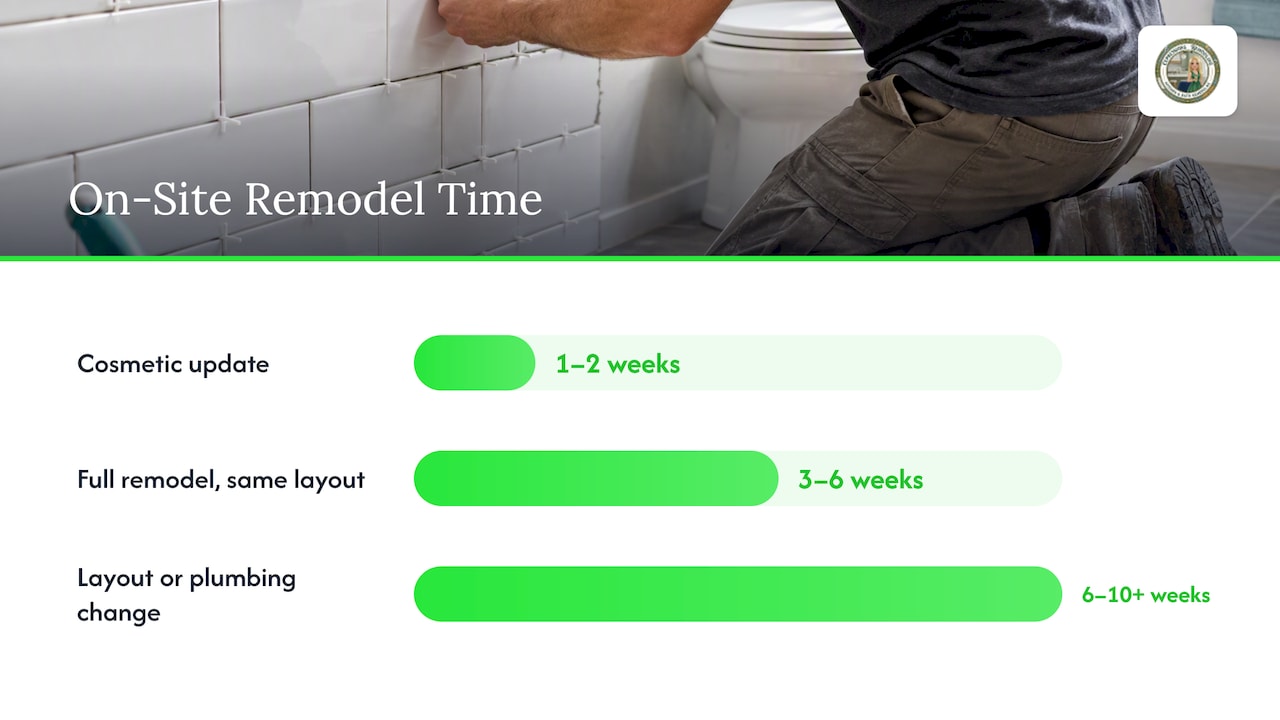
Here is how we think about the three common scopes. These are planning ranges for on-site work, not guarantees. Your own schedule depends on the size of the room, the materials and the condition of what is behind the walls.
| Scope | What it includes | Typical on-site time | Biggest schedule risk |
|---|---|---|---|
| Cosmetic update | Paint, new vanity or faucet, lighting, mirror, hardware, sometimes new flooring | About 1 to 2 weeks | Backordered vanity or fixtures |
| Full remodel, same layout | Demolition, new tub or shower, tile, vanity, toilet, lighting, finishes | About 3 to 6 weeks | Tile lead time, inspection scheduling |
| Full remodel with layout or plumbing changes | Moving the toilet, shower, or drain lines; new framing; possibly new electrical circuits | About 6 to 10 weeks or more | Hidden conditions, permits, rework |
The more you disturb walls, floors and plumbing, the more trades are involved and the more sequencing matters. A cosmetic refresh is mostly one or two trades working in an open room. A layout change means framing, plumbing, electrical, waterproofing, tile and finish carpentry all taking turns, and each handoff is a chance for a gap.
If you are considering moving fixtures, our bathroom layout redesign guide explains what a layout change involves and why it changes the schedule.
The phases of a bathroom remodel
Phase 1: Planning and design
This is where the project is won or lost. You decide on the layout, the shower or tub, tile, vanity, fixtures, lighting and budget. A contractor measures, checks the existing plumbing, and prepares a scope and a schedule.
Plan for a few weeks here, longer if you are undecided. Our bathroom remodel checklist lists every decision to make before work starts. If you want one team handling design and construction together, see how design-build for a bathroom keeps those steps connected.
Phase 2: Selections and ordering
Materials set the pace of the whole job. Stock tile and a standard vanity can arrive in days. Special-order tile, a custom vanity or a specialty shower system can take weeks. The Spruce guide names special-order materials and imported tile among the major causes of delay.
The fix is simple: order before you demolish, and confirm everything has arrived and is the right size, color and finish. We explain the process in how material selection works.
Phase 3: Permits
Permit time sits before construction and sometimes between stages. We cover St. Louis specifics below.
Phase 4: Demolition
Demolition is the fast phase. Removing fixtures, old tile, a tub and damaged drywall usually takes a few days for a standard bathroom. It is also when surprises appear: rot around a tub, outdated plumbing, a subfloor that needs repair. Budget a little schedule cushion here.
Phase 5: Rough-in and repairs
Plumbers and electricians set new supply and drain lines, shower valves, circuits, fans and lighting. Carpenters repair framing or the subfloor. This typically takes several days to a week, depending on how much changes. When your project needs a rough inspection, the walls stay open until it passes.
Phase 6: Inspection, then closing the walls
The plumbing and electrical rough-in is inspected before drywall goes up. The City of St. Louis plumbing-fee page lists separate rough and finish inspections, each charged at $25, and re-inspections at $30. A failed or missed inspection means a re-inspection, which means waiting.
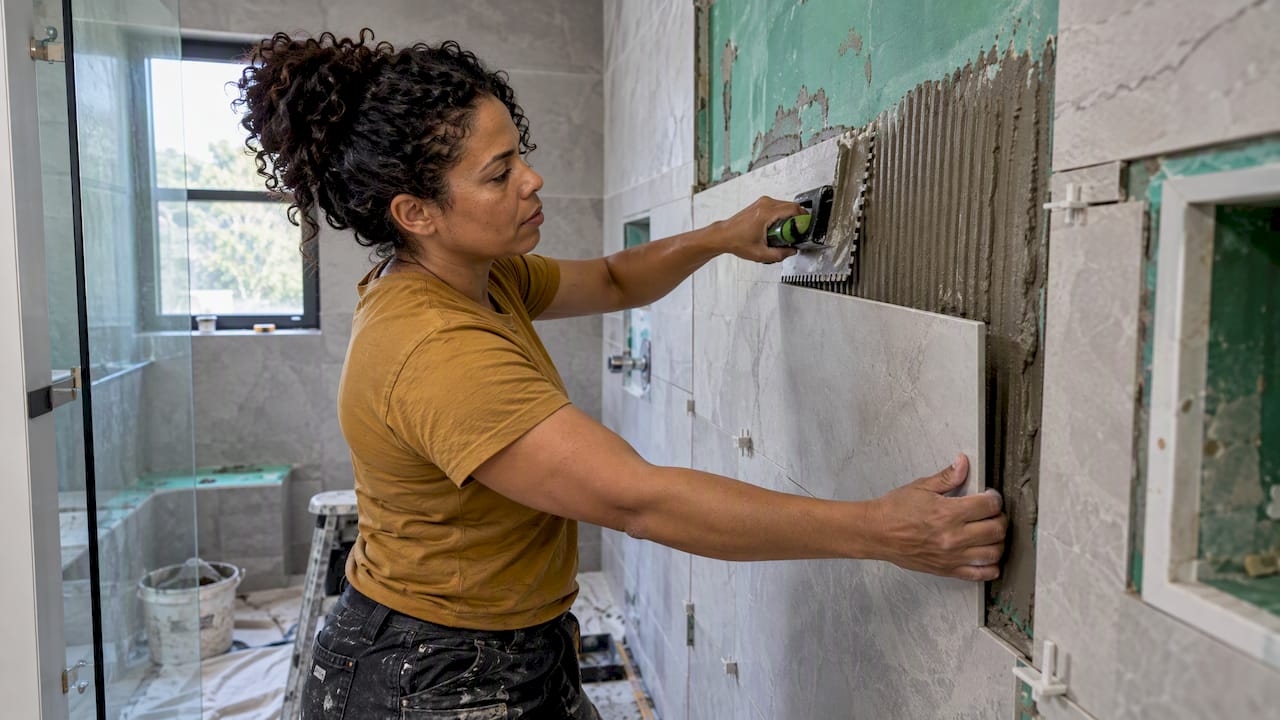
Phase 7: Waterproofing, tile and surfaces
Tile is usually the longest single stretch of visible work. Waterproofing the shower comes first, and it needs to cure before tile goes on. Then comes setting tile, grouting and sealing. Large-format tile goes up faster than small mosaics or intricate patterns. Allow for cure time, because rushing grout and sealer shortens the life of the finish.
Phase 8: Fixtures, vanity and finish carpentry
After tile, the room starts to look like a bathroom again. The vanity, countertop, toilet, faucets, mirror, glass enclosure and trim go in. Custom glass is a common late wait, because it is usually measured after tile is finished and then fabricated.
Phase 9: Final inspection, punch list and cleanup
The finish plumbing inspection happens, then a final walk-through where you and the contractor list small fixes. Expect a few days to close this out. Plan to use the bathroom only after the shower is cleared for use and everything is signed off.
Permits and inspections in St. Louis
Permits are the piece of the timeline that homeowners underestimate most, because they depend on the project and the municipality.
In the City of St. Louis, structural changes or major alterations require a residential building permit, and separate plumbing, mechanical and electrical permits are required when they apply. The same page lists ordinary repairs, painting, floor tile, like-for-like flooring replacement and cabinet installation among work that usually does not need a residential building permit, but it advises checking your specific project.
The city’s Building Division permits section issues building, demolition, electrical, plumbing, mechanical and occupancy permits, and it describes a building permit as legal authorization to begin construction.
What that means for your schedule:
- Cosmetic update: often no building permit, so little or no permit time.
- Same-layout remodel with new plumbing fixtures: plan for plumbing and electrical permits and inspections as applicable.
- Layout change or structural work: expect a building permit in addition, and build in review time before work begins.
St. Louis County and the surrounding suburbs each have their own permit offices and rules, so a project in Kirkwood, Webster Groves or Chesterfield can differ from one in the city. Ask your contractor which jurisdiction applies and who pulls the permits. Be careful with numbers you may see online: the city’s six to eight week window is for public-improvement permits, which cover work in the public right of way, not an ordinary interior bathroom remodel. Likewise, the quick turnaround figures from the city’s 2025 tornado rebuild process were specific to that disaster response and are not a general guarantee.
What slows a bathroom remodel down
Most delays are predictable. The Spruce guide points to special-order materials, imported tile, subcontractor coordination, contractor workload, DIY scheduling, and the difference between a cosmetic remodel and a strip-to-the-studs rebuild. Here is how each plays out.
- Late or wrong materials. A tile shipment arrives short, or a vanity comes in the wrong size. Crews cannot always move on, so the job sits.
- Changes after demolition. Choosing a different shower layout once walls are open can mean new plumbing, new permits and a new order.
- Hidden damage. Water damage, outdated wiring or uneven floors show up only when things come apart. Older St. Louis homes make this more likely.
- Trade handoffs. Plumber, electrician, tile setter and glass installer all depend on one another. Gaps between them add days. Our guide on coordinating subcontractors explains how a good schedule closes those gaps.
- Inspections. A missed or failed inspection holds the work until the next slot.
- DIY pace. Homeowners doing the work on evenings and weekends typically take much longer than a full-time crew.
How to keep your project on schedule
- Finish every selection before demolition. Tile, vanity, faucets, glass, lighting, mirror, accessories. Decisions made in the middle of the job cost days.
- Order early and verify on delivery. Check quantity, color lot and damage while there is still time to reorder.
- Agree on a written scope and schedule. Know the start, the milestones and who handles permits.
- Set aside a contingency. Cushion both time and money for surprises. We suggest thinking in the nine-week real-world view rather than the ideal one.
- Make decisions quickly during construction. Be reachable, and answer questions the same day when you can.
- Limit change orders. Each one touches the schedule, not only the price.
For a broader view of how schedules are built, read how renovation timelines work.
How a bathroom timeline compares with a kitchen
Many homeowners plan both rooms, so a quick comparison helps. U.S. News reports that a typical kitchen renovation takes 4 to 8 weeks, and a full-scale overhaul takes 8 to 12 weeks or more, with research, planning and design adding several more weeks.
That means a full kitchen usually outlasts a full bathroom, mainly because of cabinet lead times, countertop templating and more trades. The upside of a bathroom is that it is smaller and the schedule is tighter, so organization shows up quickly. If you are weighing doing both, stagger them so you always have one working bathroom or kitchen.
Our perspective: the schedule is made before the first hammer swings
We remodel homes in St. Louis, and the pattern is consistent: bathrooms rarely run late because the work is hard. They run late because a decision was open, a material was not on site, or the scope changed halfway through.
That is why we put so much weight on the planning stage. Our approach is built around understanding what you want from the room, then turning that into a clear scope, materials and a sequence of work. Our 3D design visualization helps you see the finished space before anything is demolished, which is when changing your mind is cheapest.
We also encourage homeowners to treat the published schedule as a plan, not a promise from the universe. Older homes hide things. A good contractor tells you early what could move the dates and what the options are, rather than letting you find out on day twelve.
If we could give you one piece of advice, it would be this: spend an extra week on selections and you will usually save more than a week on site.
— Kierin
Plan your bathroom with Expressions Remodeling
If you are ready to turn a timeline into a project, we can help with design, materials, permits and construction in one process. Our published price for a full bathroom remodel is $16,999 per project, and our bathroom remodeling service page explains how we work. For a cost breakdown, see our St. Louis bathroom remodel cost guide.
Reach out through our site and we will talk through your scope and what to expect for your own schedule. Learn more about bathroom remodeling in St. Louis.
FAQ
How long does a typical bathroom remodel take?
A cosmetic update can take one to two weeks, while a full remodel usually takes several weeks on site, with design and ordering before that. A national guide estimates about 23 workdays in an ideal case and about 46 days with real-world downtime for a small complete remodel. Layout changes add more time.
How long does a kitchen remodel take compared with a bathroom?
Kitchens take longer. A typical kitchen renovation runs 4 to 8 weeks, and a full overhaul 8 to 12 weeks or more. Cabinets, countertops and more trades account for most of the difference.
Do I need a permit to remodel a bathroom in St. Louis?
It depends on the work. The City of St. Louis requires a building permit for structural changes or major alterations, plus separate plumbing, mechanical or electrical permits when they apply. Simple updates like painting or floor tile usually do not, but confirm with your contractor or the city before starting.
Can I use my bathroom during the remodel?
Not the one under construction, so plan for another bathroom in the house for the duration. If it is your only one, talk with your contractor about the shortest possible sequence and where you will stay during the water-off stretches.
Can a bathroom remodel be done faster?
Sometimes. Choose in-stock materials, finalize every selection first, keep the layout, and avoid change orders. Rushing cure times or inspections is not a good way to save time, since problems there can cost more later.
Sources
- How Long Does a Bathroom Remodel Take? (The Spruce)
- How Long Does a Kitchen Remodel Take? (U.S. News Real Estate)
- When a Residential Building Permit is Needed (City of St. Louis)
- Building Division Permits Section (City of St. Louis)
- Plumbing Permit Fees (City of St. Louis)
- Apply for a Public Improvement Permit (City of St. Louis)
- Permits and Approvals for Properties Impacted by the May 16 Tornado (City of St. Louis)