A professionally installed epoxy garage floor runs $3 to $12 per square foot, so a standard two-car garage (400 to 500 square feet) typically lands between $1,700 and $3,300, with most homeowners landing near $2,300 to $2,500. Concrete condition, moisture, and the coating system you pick swing that number more than anything else.
TL;DR:
- Surface preparation and concrete condition largely drive epoxy cost variability, with moisture testing and crack repair adding significant expenses.
- Epoxy coating prices depend significantly on finish type, with solid color being most affordable and metallic or polyaspartic options at the higher end.
- DIY epoxy kits are generally less cost-effective long-term, as they last only a fraction of professional systems and are prone to failures from poor application or moisture.
- A detailed, written quote should specify surface preparation, epoxy solids percentage, coating layers, warranty, and moisture tests to avoid hidden costs.
- Matching the epoxy finish to your garage use can reduce costs, and scheduling during off-season or bundling projects helps lower overall expenses.
Table of Contents
- Garage Epoxy Floor Cost by Size and Coating Type
- Why Do Epoxy Quotes Vary So Much?
- Is a DIY Epoxy Kit Actually Cheaper?
- What Should Be on Your Epoxy Garage Floor Quote?
- How Can You Lower the Cost Without Cutting Corners?
- How a Remodeling Contractor Scopes an Epoxy Job
- Ready to Get a Written Estimate?
- Where These Numbers Come From
- Sources
Garage Epoxy Floor Cost by Size and Coating Type
The finish you choose changes your per-square-foot rate more than most homeowners expect. A basic solid-color epoxy sits at the low end of the range, while metallic finishes and thicker polyaspartic systems push toward the top.
- Solid color epoxy: $3–$5 per sq ft. Utilitarian, budget-friendly, fine for a garage that’s just storage and parking.
- Flake/chip broadcast: $5–$8 per sq ft. The decorative chips hide minor surface flaws and add slip resistance.
- Metallic epoxy: $8–$12 per sq ft. Marbled, high-gloss look; requires a skilled installer to avoid blotching.
- Polyaspartic coatings: $6–$10 per sq ft. Cures faster than epoxy and holds up better to UV and temperature swings.
Scaled to garage size, a 1-car garage (200 to 250 square feet) generally totals $700 to $2,500 depending on finish. A 2-car garage (400 to 500 square feet) runs $1,400 to $5,000. A 3-car garage (600 to 800 square feet) climbs to $2,100 to $8,000, mostly because labor time and material volume scale directly with square footage. National averages tend to cluster around $1,500 to $3,500 for a typical residential job, with a midpoint near $2,400.
Why Do Epoxy Quotes Vary So Much?
Two contractors can walk the same garage and hand you numbers $1,500 apart, and it almost always comes down to what’s happening beneath the surface. Concrete condition is the single biggest factor in price variability, because remediation work adds labor and specialized treatment that a clean slab never needs.
Surface prep sets the tone. Acid etching is cheap but leaves a weaker mechanical bond, while diamond grinding or shot blasting costs more upfront and gives the epoxy something to actually grip. Moisture is the other wild card: contractors run calcium chloride or relative humidity tests, usually $30 to $150, and if the slab is reading wet, mitigation primers or vapor barriers add another $0.50 to $1.50 per square foot.
- Crack and joint repair: often $2 to $10 per linear foot, more if it signals foundation movement.
- Oil stains and old coatings: extra degreasing or grinding passes, sometimes $1 to $3 per sq ft.
- Prior paint or sealer: usually requires full mechanical removal before anything new goes down.
On a typical job, surface prep eats 20 to 25% of the total budget, materials another 25 to 35%, and labor 20 to 25%, with the rest going to topcoat and mobilization, according to cost breakdowns from industry estimators. Labor rates also shift by region, so a quote in a high-cost metro will run higher than the same job in a smaller market.
Is a DIY Epoxy Kit Actually Cheaper?
Not usually, once you factor in how long it lasts. A DIY kit costs $100 to $350 and looks like a steal next to a professional bid, but these kits typically last only 2 to 5 years before peeling or yellowing, while professionally installed 100% solids systems run 10 to 20 years.
- Cost per year of use: a $250 DIY kit lasting 3 years costs roughly $83 a year. A $2,400 pro install lasting 15 years costs about $160 a year, but you’re not repainting your garage every few seasons.
- Common failure causes: DIY kits are usually thinner, water-based formulas without true mechanical bonding, so hot tires, moisture, or a skipped prep step causes peeling. Fixing a failed DIY job often means full removal and starting over, which can cost more than a professional job would have in the first place.
- When DIY makes sense: a small, dry, crack-free slab with light use, like a workshop corner, is a reasonable DIY candidate. Anything with visible moisture, heavy vehicle traffic, or existing damage calls for a professional.
What Should Be on Your Epoxy Garage Floor Quote?
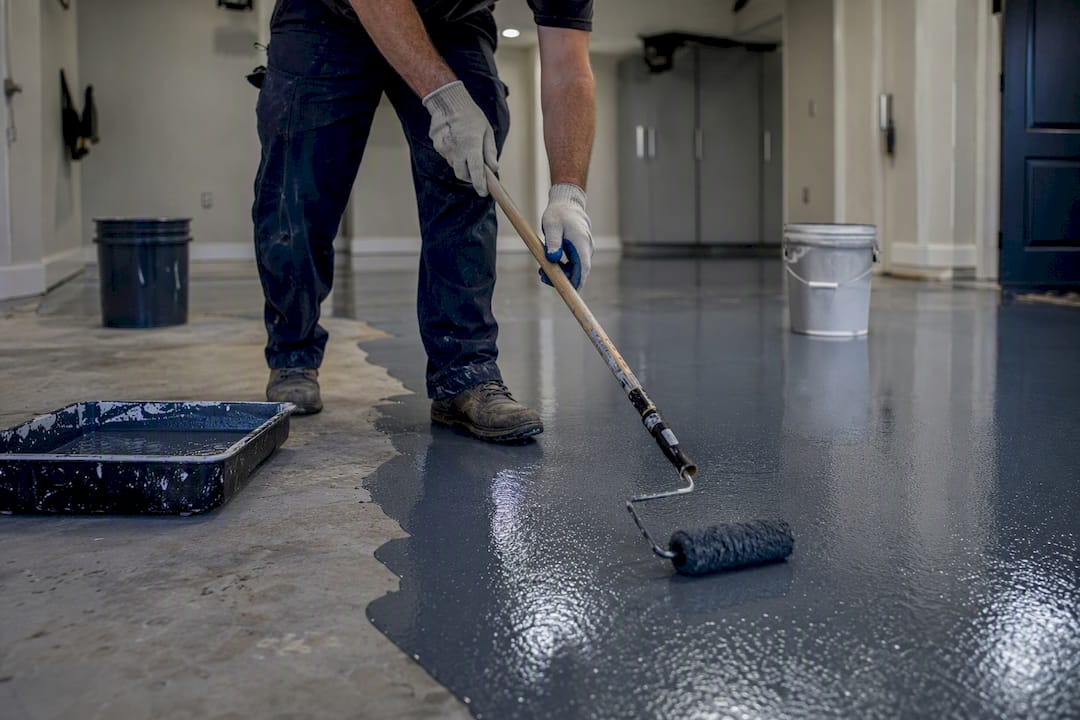
A trustworthy quote reads like a punch list, not a single lump sum. It should spell out prep method, material solids percentage, number of coats, topcoat type, and warranty terms in plain language.
- Ask what surface-profiling method they’ll use, mechanical grinding or acid etch, and why.
- Request the moisture test results in writing, not just a verbal “it’s fine.”
- Confirm the epoxy’s solids percentage; 100% solids systems outlast thinned water-based ones.
- Get the warranty length and what voids it in writing.
Watch for red flags: a bid dramatically lower than every other quote, no mention of moisture testing, vague phrases like “we’ll prep the floor,” or an installer pushing hard for same-day upgrades before they’ve even seen your slab.
Pro Tip: Ask each contractor for their gallons-per-100-square-foot calculation. A proper 2-coat system needs roughly 1.5 to 3.0 gallons per 100 square feet; if their number is way under that, they may be planning a thinner application than you’re paying for.
How Can You Lower the Cost Without Cutting Corners?
Match the finish to how you actually use the garage. A solid color coating is plenty for a space that’s mostly parking and storage; save flake or metallic finishes for a garage that doubles as a workshop, gym, or man cave you actually show off.
- Bundle epoxy work with other renovation projects to split mobilization fees.
- Scheduling in a mild-weather off-season can lower labor premiums in many markets.
- Clean and degrease the floor yourself before the crew arrives; skip DIY crack filling or moisture sealing, since a botched patch job often costs more to fix than to do right the first time.
- Build in a 10 to 25% contingency for repairs or moisture mitigation your contractor might find once the old coating comes off.
How a Remodeling Contractor Scopes an Epoxy Job
Expressions Remodeling approaches a garage epoxy job the same way it approaches any garage renovation: walk the slab first, test before quoting. That means checking for cracks, moisture readings, and old coatings before recommending a system, the same diligence applied to moisture management in basement projects. A written quote should reflect exactly what your slab needs, not a one-size-fits-all package.
— Kierin
Ready to Get a Written Estimate?
If you’ve been comparing DIY kits against professional bids and want a number you can actually trust, Expressions Remodeling gives St. Louis homeowners a real alternative to guessing: an on-site inspection that catches the moisture and crack issues before they become a mid-project surprise on your invoice.
During a visit, expect a walk-through of the slab, a moisture check, and a line-item written quote covering prep, materials, and topcoat, so you know exactly what you’re paying for before work starts. Clear the garage floor beforehand and jot down any known problem spots, oil stains, cracks, past flooding, so the estimate reflects reality from the first visit. If a stubborn oil stain is part of the problem, treating it before your appointment can even speed up prep. Most estimates are scheduled within a week or two, and every quote includes clear warranty terms in writing. Ready to see what your garage actually needs? Request your estimate and get a number you can build a real budget around.
Where These Numbers Come From
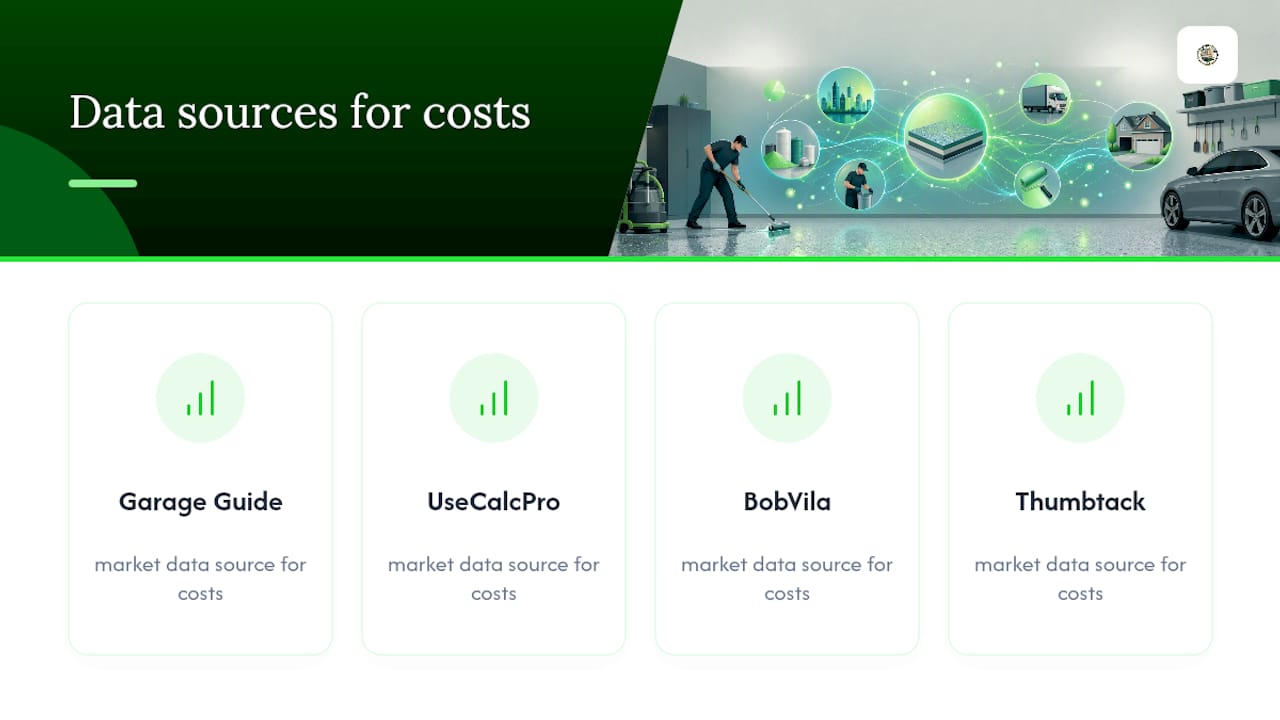
Cost figures in this guide draw on The Garage Guide, UseCalcPro, BobVila, and Thumbtack market data.
Sources
- Epoxy Garage Floor Cost 2026: DIY vs Professional | The Garage Guide
- How Much Does Epoxy Flooring Cost in 2026? (Garage, Basement & Commercial) | UseCalcPro
- All the Factors That Go Into Epoxy Garage Floor Costs | BobVila
- Epoxy Cost Per Gallon: Realistic Pricing for Home and Business Floors 2026 – Current Cost
- 2026 Epoxy Garage Floor Cost | Get Estimates
Recommended
- Garage Makeover & Remodeling Contractor in St Louis | Garage Renovation St Louis – Expressions Remodeling St Louis
- Dedicated Garage Renovations St. Louis MO | Remodeling
- Unlocking Hidden Potential: Transforming Basements and Garages – Expressions Remodeling
- How Basement Egress Affects Value: A 2026 Guide