
Porcelain is the default choice for wet areas and bathroom floors, with small-format or textured tiles reserved for shower floors where traction matters most. Before falling in love with any pattern, check two numbers: water absorption of 0.5% or less under ASTM C373 and a DCOF rating of 0.42 or higher for any floor that gets wet. Once those specs are settled, the fun part, color and pattern, follows naturally.
TL;DR:
- For floors that get wet, verify DCOF of at least 0.42 and PEI 3 or higher; shower tile needs absorption of 0.5% or less.
- Small shower floor tiles add grout lines for traction and follow the slope to the drain; large formats work better on walls and open floors.
- Herringbone and hexagon layouts require 10% to 15% more tile than straight subway patterns, so include that waste allowance when calculating the order.
- Wet areas need cement board and a waterproof membrane, not drywall; complex mosaics, glass tile, and shower pan waterproofing are best left to professionals.
- Reseal cement grout every one to two years; epoxy resists moisture and mold without resealing, but it costs more and takes greater installation skill.
Table of Contents
- Tile Types and Where Each One Belongs
- Matching Tile Specs to Each Zone of the Bathroom
- Tile Size and Layout: Balancing Traction, Grout, and Scale
- Design Choices That Hold Up Over Time
- Getting the Installation Right: Substrate, Waterproofing, and Timing
- Keeping Tile and Grout Looking New for Years
- What We’ve Learned From Bathroom Remodels That Go Smoothly
- Let Us Handle the Tile Decisions and the Installation
- FAQ
- Sources
Tile Types and Where Each One Belongs
Not every tile belongs in every room, and bathrooms punish the wrong choice faster than almost any other space in the house. Here’s how the main materials stack up.
Porcelain is fired at higher temperatures than standard ceramic, which gives it a water absorption rate of 0.5% or less under the ASTM C373 standard. That density makes it the strongest all-around pick for bathroom floors, shower walls, and anywhere moisture is a constant. It costs more per square foot than basic ceramic and can be trickier to cut, but it rarely fails from water damage.
Ceramic tile typically absorbs more water than porcelain, sometimes well above the 0.5% threshold, which is why it shines on walls and dry-side floors but needs a closer look at the spec sheet before it goes anywhere near a shower pan.
Natural stone, think marble, travertine, or slate, brings a look no manufactured tile fully replicates, but it’s porous and needs sealing on a schedule. Save it for accents or low-traffic walls unless you’re prepared for ongoing upkeep, or browse current shower tile trends for stone and mosaic combinations that use it sparingly.
Glass and mosaic tiles are accent players, not floor material. On glass shower floors, the thin-set adhesive shows through the glass, so any imperfection in the installation becomes visible, and the smooth surface scratches more easily than porcelain.
Vinyl tile is a waterproof, budget-friendly alternative worth considering for a full remodel, especially where the subfloor or budget rules out ceramic. Our comparison of porcelain versus vinyl flooring breaks down when each makes more sense.
| Material | Water absorption | Best use | Maintenance |
|---|---|---|---|
| Porcelain | ≤0.5% (ASTM C373) | Floors, shower walls, wet zones | Low |
| Ceramic | Often above 0.5% | Walls, dry floors | Low to moderate |
| Natural stone | Porous, varies by type | Accents, sealed floors | High |
| Glass/mosaic | Varies, often non-absorbent surface | Accents, backsplashes | Moderate |
| Vinyl tile | Waterproof | Budget floors | Low |
- Porcelain handles moisture better than ceramic and suits nearly every bathroom surface.
- Natural stone looks striking but demands regular sealing to stay watertight.
- Glass and mosaic tiles work best as accents, not as the main floor material.
Matching Tile Specs to Each Zone of the Bathroom
A shower floor, a shower wall, and the main bathroom floor each face different stresses, so the tile that works in one spot can be the wrong pick a few feet away. Tile practitioners recommend designing by zone rather than picking one tile for the whole room.
Shower floors need the most traction of any surface in the house. Shower walls can handle a smoother, more polished finish since feet never touch them. Bathroom floors sit between the two, needing both slip resistance and everyday durability. Backsplashes are the one area where looks can lead, since they rarely get wet underfoot.
- Look for a DCOF of 0.42 or higher on any floor tile that gets walked on wet, per ANSI A326.3 guidance.
- Choose a PEI rating of 3 or higher for residential floor tile, since lower ratings are meant for wall use only.
- Confirm water absorption at or below 0.5% on any tile headed for a shower floor or wall.
- Remember that texture and matte finishes boost real-world grip beyond what the DCOF number alone suggests.
A DCOF rating of 0.42 or higher is the baseline ANSI A326.3 benchmark for interior floors that get wet, and it’s the single number most homeowners skip when they fall for a glossy showroom sample. A tile can look identical to its matte cousin and still perform very differently underfoot once water hits it.
Tile Size and Layout: Balancing Traction, Grout, and Scale
Size affects more than the visual scale of a bathroom. It changes how safe the floor feels and how much maintenance the grout lines demand.
- Choose small-format tiles for shower floors. More grout lines mean more traction, and smaller tiles can follow the slope toward the drain in ways large-format tile cannot.
- Save large-format tiles for walls and open floors. Fewer grout lines create a cleaner look, but large tiles demand a flatter substrate to avoid lippage, where tile edges sit unevenly.
- Plan the pattern before you order. Herringbone and hexagon layouts often need 10 to 15% more material than a straight subway layout, so account for waste when calculating square footage.
Pro Tip: Order a few extra boxes from the same production lot as your main order. Dye lots vary, and a mismatched replacement tile stands out more than most homeowners expect.
Design Choices That Hold Up Over Time
Good bathroom design isn’t about picking the boldest tile in the showroom. It’s about choosing a palette that still looks intentional five years from now.
- Stick to two or three colors total, and use a bold hero tile as an accent rather than the whole floor.
- Pick a mid-tone grout for most installations. It tends to hide mineral deposits and soap scum better than grout at either extreme of light or dark.
- Match the finish to the function: matte or textured tile underfoot, since texture improves wet traction and hides water spots, and polished tile on walls where slip isn’t a factor.
- Use scale to your advantage. Larger tiles with fewer grout lines can make a small bathroom feel more open, while a patterned accent wall adds drama without overwhelming the whole room.
Getting the Installation Right: Substrate, Waterproofing, and Timing
The tile itself only tells half the story. What’s underneath it determines whether the finished job lasts a decade or fails within a year.
- Use cement board and a waterproof membrane in any wet area. Drywall is not an adequate backer where water will touch the wall, and improper substrate or membrane use is a common root cause of tile failure.
- Flatten the substrate before setting large-format tile. Bigger tiles show lippage more readily, and installers typically follow ANSI A108 installation standards to keep surfaces even.
- Finalize your tile selection early in the project. Lead times and lot matching can delay demolition, and ordering from mismatched production runs creates visible color differences later.
- Know when to call a professional. Complex mosaics, glass tile, epoxy grout, and any waterproofing in a shower pan are places where a small mistake becomes an expensive repair.
Our renovation timeline guide walks through how these decisions fit into a broader remodeling schedule.
Keeping Tile and Grout Looking New for Years
Lifecycle cost often comes down to grout, not tile. Porcelain and glazed ceramic rarely need sealing, but the grout between them needs attention on a schedule.
- Reseal cement grout every one to two years to keep it from absorbing moisture and staining.
- Consider epoxy grout if you want to skip resealing altogether. It resists moisture and mold better than cement grout but costs more and takes more skill to install.
- Seal natural stone regularly, since it’s more porous than porcelain or glazed ceramic and stains more easily without upkeep.
- Wipe down tile and grout weekly with a pH-neutral cleaner to prevent soap scum buildup before it sets in.
Pro Tip: If you’re on the fence between cement and epoxy grout, ask your installer for a small sample board of each. Seeing how they clean up after a week makes the tradeoff obvious.
What We’ve Learned From Bathroom Remodels That Go Smoothly
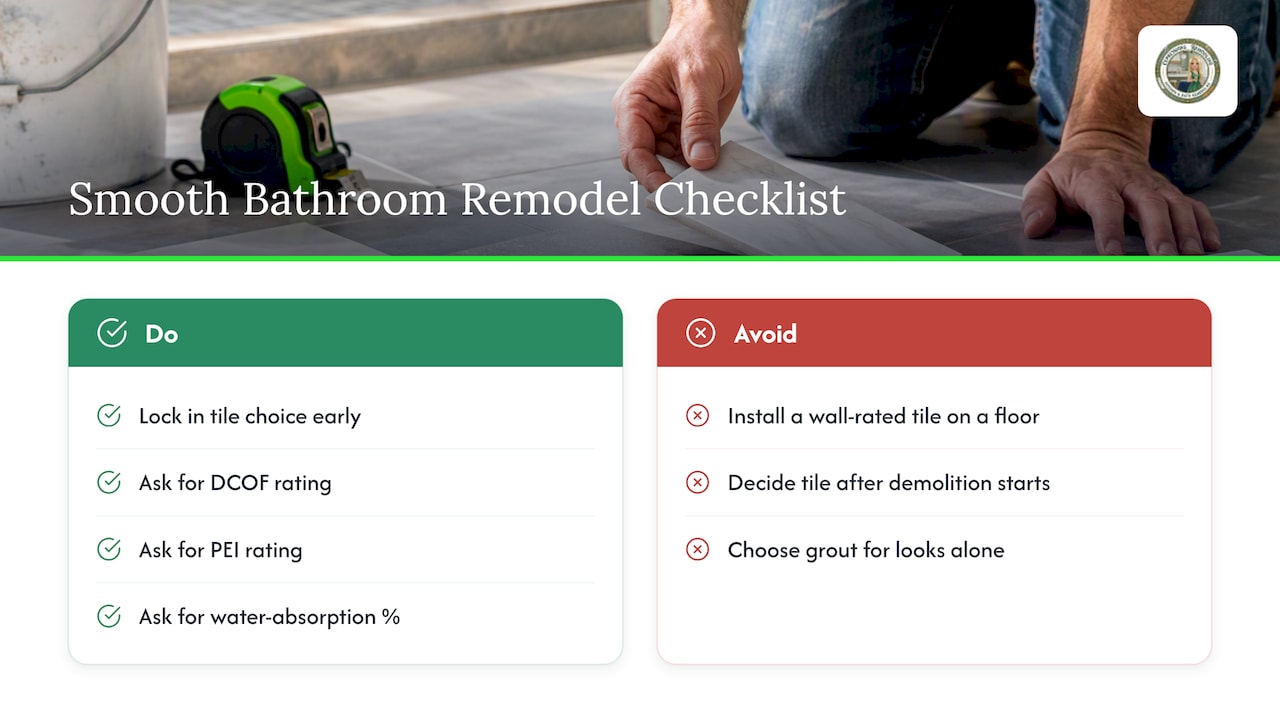
The bathrooms that turn out best are rarely the ones with the flashiest tile. They’re the ones where substrate prep and waterproofing got as much attention as the pattern on the wall. Locking in tile choices early protects the schedule, since a late change can push back demolition by weeks while a new order ships.
The most common mistakes we see are a wall-rated tile installed on a floor, a tile decision made after demolition has already started, and a grout choice picked for looks alone without asking how it cleans up. Before placing an order or hiring an installer, ask for the DCOF rating, the PEI rating, the water absorption percentage, and the warranty or return policy on the tile itself. Those four answers tell you more than any showroom display.
— Kierin
Let Us Handle the Tile Decisions and the Installation
Choosing tile is only half the project. Getting the substrate, waterproofing, and layout right is where most DIY bathroom jobs run into trouble, and it’s where our bathroom remodeling team does its best work. We handle everything from waterproof membrane installation to tile selection and layout, so the finished room meets the specs this guide walks through without you having to track them down yourself.

Before your consultation, gather rough measurements of the space, a few inspiration photos, and a general budget range. It helps our team move faster once the project starts. Full bathroom remodeling is priced at $16,999 per project, and you can review the full pricing breakdown before reaching out.
- Full bathroom remodeling, including tile selection and installation.
- Waterproofing and substrate prep for showers and wet floors.
- Design consulting to help narrow down patterns, grout, and layout.
Reach out to start planning your bathroom remodel and we’ll walk through the tile and layout options that fit your space and budget.
FAQ
What is the 1/3 rule for tiles?
The 1/3 rule is a layout guideline for subway or brick-pattern tile, where each row is offset by one-third of the tile’s length instead of half. It’s used to avoid the lippage and visual repetition that can show up with a traditional half-offset running bond pattern.
What is the current trend on bathroom tile?
Matte and textured finishes are currently favored over high-gloss surfaces because texture improves wet traction and hides water spots better than polished tile. Large-format tile on floors and feature walls, paired with a smaller-format accent in the shower, remains a popular combination.
What is the 3/4/5 rule for tiling?
Definitions vary across trades, but it most commonly refers to a measuring technique installers use to check that corners are square before setting tile, based on a common right triangle measurement method from basic geometry. It’s a prep step rather than a design rule, used to catch an out-of-square wall or floor before tile goes down.
Should a bathroom floor be lighter or darker than the walls?
Either works, but a floor one or two shades darker than the walls tends to hide everyday dirt and water spots more easily. A floor lighter than the walls can make a small bathroom feel more open, so the right call depends more on room size and light than on a fixed rule.