

A renovation timeline is the sequence of defined phases from initial planning through final inspection that determines how long your project takes. Understanding how renovation timelines work is the single most effective way to avoid budget overruns, contractor conflicts, and the frustration of a project that drags on for months longer than expected. Small projects like bathroom remodels run 6–12 weeks, while whole-home renovations typically span 16–20 weeks or more. The International Residential Code (IRC) and local permitting authorities shape every phase of that schedule, whether you plan for them or not.
How renovation timelines work: the core phases explained
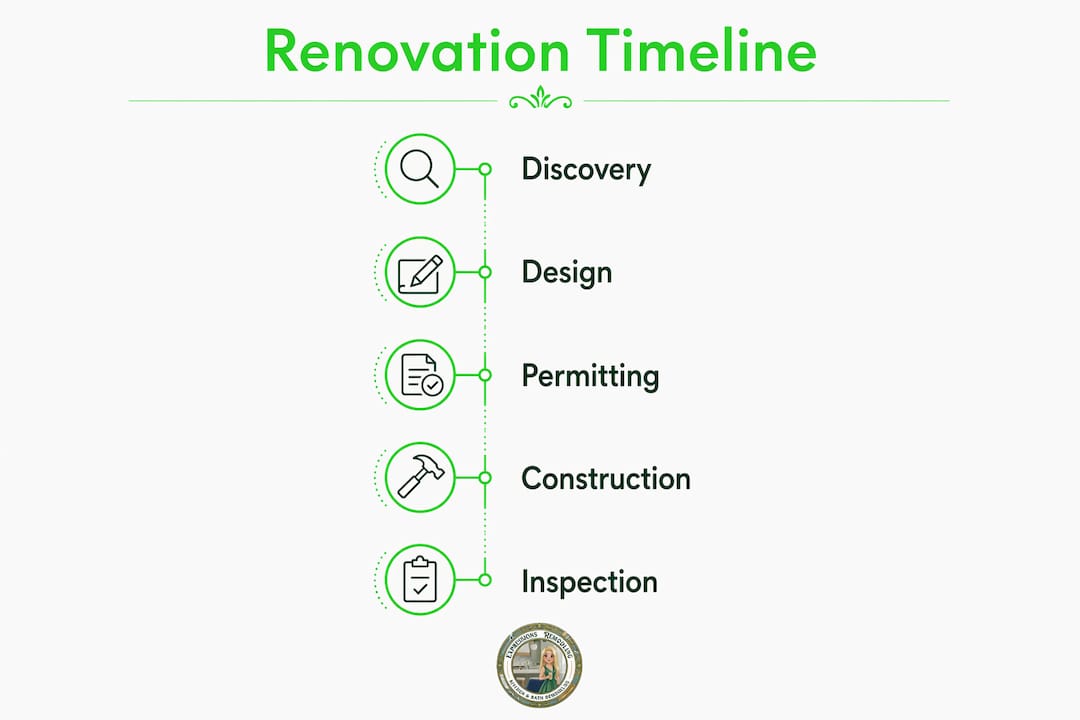
Every renovation project follows the same basic sequence. The phases do not overlap much, because each one depends on the previous one being complete. Skipping or rushing a phase almost always costs more time than it saves.
| Phase | Small project (bath/kitchen) | Large project (addition/whole home) |
|---|---|---|
| Discovery and scope | 1–2 weeks | 2–4 weeks |
| Design and drawings | 2–4 weeks | 4–10 weeks |
| Permitting and pre-construction | 1–3 weeks | 4–12 weeks |
| Demolition and structural | 1–2 weeks | 2–6 weeks |
| Mechanical, electrical, plumbing rough-in | 1–2 weeks | 2–4 weeks |
| Insulation, drywall, and surfaces | 1–2 weeks | 2–5 weeks |
| Finish carpentry, cabinets, and trim | 1–3 weeks | 3–8 weeks |
| Punch list and final inspections | 1 week | 1–2 weeks |
The discovery and scope phase is where your contractor assesses the existing conditions and defines exactly what the project includes. Getting this wrong is expensive. Vague scope leads to change orders later, which add both cost and weeks to the schedule.
Design and pre-construction typically last 4–12 weeks for larger projects. This phase includes architectural drawings, material selections, and contractor bidding. Homeowners who rush selections during design almost always regret it during construction, when changing a tile choice means a two-week reorder.
The mechanical, electrical, and plumbing rough-in phase is one of the most inspection-dependent stages. Work stops here until the inspector signs off. That sign-off is what allows the walls to close, so any delay in scheduling an inspection directly delays every phase that follows.
- Discovery and scope: Define the full project before signing a contract.
- Design and drawings: Lock in material selections before construction begins.
- Permitting: Apply early; never treat this as a formality.
- Rough-in inspections: Schedule these the moment rough-in work is complete.
- Punch list: Walk the project with your contractor before releasing final payment.
The home modernization process follows this same phase structure, and knowing it in advance puts you in a much stronger position to hold your contractor accountable.
How do permits and approvals impact renovation timelines?

Permits are the most underestimated variable in any renovation schedule. Simple over-the-counter permits can take as little as 5 business days, while complex structural permits in busy jurisdictions can require 4–12 weeks for plan review. That is not a minor delay. A 10-week permit review can push your entire project start date into the next season.
The type of work determines the permit complexity. Cosmetic updates like painting or flooring typically require no permit at all. Structural changes, electrical panel upgrades, plumbing reroutes, and additions all require full plan review. Many homeowners assume a bathroom remodel is cosmetic. If it involves moving a wall or relocating a drain, it is structural, and the permit timeline reflects that.
80% of project timeline failures originate in the early phases, including discovery, design, bidding, and permitting. That statistic points to one clear conclusion: the time you spend on planning is not overhead. It is the project.
- Apply for permits as soon as drawings are approved, not after you have lined up your contractor.
- Ask your local building department for their current review backlog before finalizing your start date.
- Build permit review time into your schedule as a fixed block, not an optimistic estimate.
- Understand that permit conditions can require design revisions, which restart the review clock.
Pro Tip: Never schedule your contractor’s start date before you have the permit in hand. Starting construction without a permit creates legal exposure and can force you to demolish completed work.
What common delays affect renovation timelines?
Material lead times are the most predictable source of delay, yet homeowners consistently underestimate them. Custom cabinetry carries lead times of 10–14 weeks. Stock cabinetry runs 2–4 weeks. If you order custom cabinets the week demolition starts, your kitchen sits gutted for three months while you wait.
Ordering custom materials before permit approval creates a second problem. If the inspector requires a plan change, those custom pieces may not fit the revised layout. Restocking fees and reorder lead times compound the original delay.
The demolition phase reveals what is actually inside your walls. Discovery during demolition typically spans 1–2 weeks and commonly generates change orders. Knob-and-tube wiring, asbestos insulation, rotted subfloor, and undersized joists are all common finds. None of them are in the original budget or schedule.
Closing walls before a rough-in inspection passes is one of the costliest mistakes in renovation. If an inspector requires corrections after drywall is up, the drywall comes down. That mistake can double the labor and time for an entire phase.
Pro Tip: Order custom cabinetry and specialty fixtures only after your permit is approved and your contractor has confirmed the final dimensions on-site. This single habit prevents the most common four-to-six-week slippage in kitchen and bathroom projects.
Weather, trade availability, and contractor communication also affect the schedule. Exterior work stalls in ice and rain. Subcontractors book weeks out. A contractor who does not communicate proactively about delays is a contractor who lets small problems become large ones. Ask for a written schedule with milestones before work begins, and ask for weekly updates against that schedule.
How to plan and manage your renovation schedule effectively
Effective planning starts before you hire anyone. The homeowners who finish on time are almost always the ones who made decisions early and documented everything.
- Define scope in writing. A signed scope document prevents the “I thought that was included” conversations that generate change orders.
- Select all materials before construction begins. Tile, fixtures, cabinets, hardware, and appliances should all be chosen and ordered during the design phase.
- Build in a 10–20% time buffer. Experts recommend a 10–20% schedule cushion to absorb material backorders, weather, and unexpected site conditions. A 12-week project should be planned as a 14-week project.
- Use milestone checklists. Break the project into checkpoints: permit approved, demolition complete, rough-in inspected, drywall complete, cabinets installed, punch list signed. Track each one.
- Schedule independent inspections before final payment. Independent quality control before final payment helps avoid project stalls caused by failed municipal inspections and protects your investment.
- Use 3D renderings during design. Visualizing the finished space before construction begins reduces mid-project changes, which are the most expensive kind.
- Integrate permit and inspection scheduling into your timeline. Treat inspection dates as hard deadlines, not flexible targets.
A solid renovation project management approach treats the schedule as a living document. Update it weekly. When a delay occurs, adjust the downstream dates immediately so you always know your real completion date, not the original optimistic one.
Pro Tip: Ask your contractor to provide a critical path schedule showing which tasks block other tasks. This one document tells you exactly where to focus attention when something slips.
Good remodeling planning also means knowing when to push back. If a contractor cannot give you a written schedule, that is a warning sign worth taking seriously before you sign anything.
Key Takeaways
Renovation timelines follow a fixed sequence of phases, and the early phases of planning, design, and permitting determine whether the entire project stays on track.
| Point | Details |
|---|---|
| Phase sequence is fixed | Each phase depends on the previous one; skipping steps creates costly rework. |
| Permits drive the start date | Complex permits take 4–12 weeks; apply immediately after drawings are approved. |
| Custom materials need early ordering | Custom cabinetry takes 10–14 weeks; order only after permit approval and confirmed dimensions. |
| Buffer time is non-negotiable | Add 10–20% to your schedule to absorb delays from weather, backorders, and site surprises. |
| Inspection sequencing protects your budget | Rough-in inspections must pass before walls close; failing this step can double labor costs. |
What I’ve learned from watching renovations go sideways
The pattern I see most often is homeowners who treat the permit as an afterthought. They hire a contractor, agree on a start date, and then discover the permit takes eight weeks. The contractor moves to another job. The homeowner waits. The project restarts cold, with a crew that has lost momentum and a schedule that is already two months behind before a single wall comes down.
The second pattern is the design phase being treated as a formality. Homeowners pick finishes casually, thinking they can change their minds later. They cannot, not without paying for it. Every change during construction costs more than the same change made on paper during design. The math is not close.
What actually works is treating the first 30% of the project timeline as the most important part. Get the scope locked. Get the permit filed. Get the materials selected and ordered. Do all of that before you let anyone swing a hammer. The construction phase, when it finally starts, should feel almost anticlimactic because every decision has already been made.
The homeowners who finish on time and on budget are not lucky. They are prepared. They asked hard questions before signing contracts, they built buffer time into their schedules, and they stayed engaged throughout. Renovation is not a process you hand off and check back on at the end. It rewards attention.
— Kierin
Expressions Remodeling takes the guesswork out of scheduling
Planning a renovation schedule is straightforward when you have a team that handles permitting, material lead times, and milestone tracking from day one.

Expressions Remodeling works with homeowners across St. Louis, MO to build realistic project schedules from the first consultation. The team manages permit applications, coordinates subcontractor sequencing, and keeps you updated at every milestone so there are no surprises. Whether you are planning a kitchen upgrade or a bathroom remodel, Expressions Remodeling brings the planning discipline and trade relationships that keep projects on track. Contact the team to get a realistic timeline for your project before you commit to a start date.
FAQ
How long does a typical home renovation take?
Bathroom and kitchen remodels run 6–20 weeks, while whole-home renovations typically take 16 weeks or more from consultation to move-in. Additions and large-scale projects can extend to 24 weeks or beyond.
What is the most common cause of renovation delays?
80% of timeline failures start in the early phases, specifically in discovery, design, bidding, and permitting. Homeowners who underestimate permit timelines trigger cascading delays across every phase that follows.
Should I order materials before the permit is approved?
No. Ordering custom materials before permit approval risks expensive restocking fees and weeks of additional delay if inspectors require plan changes that alter dimensions or layout.
How much buffer time should I add to my renovation schedule?
Add 10–20% to your total schedule as a buffer for material backorders, weather, and unexpected site conditions. A 12-week project should be planned as a 13–14 week project.
Why do rough-in inspections matter so much?
Closing walls before a rough-in inspection passes can force you to tear out completed drywall if corrections are required. Scheduling inspections immediately after rough-in work is complete protects both your timeline and your budget.