

A pre-listing renovation is a set of targeted home improvements made before putting a property on the market, designed to increase its appeal and sale price. Unlike a personal remodel, every decision here is ROI-focused: you’re spending to attract buyers and reduce their objections, not to enjoy the result yourself. Targeted updates can lead to up to 15% higher sale prices compared to unrenovated homes. The most common projects include:
- Fresh neutral paint throughout the interior
- Landscaping and curb appeal improvements
- Minor kitchen and bathroom refreshes
- Small structural or plumbing repairs
- Professional staging and decluttering
The goal is never a full transformation. It’s a calculated presentation upgrade that makes buyers feel confident enough to offer full price.
Why pre-listing renovations pay off for sellers
Renovated homes sell faster and command stronger offers. Buyers prefer move-in-ready properties over fixer-uppers, and that preference shows up directly in offer prices. Better-looking spaces also photograph better, which matters enormously when most buyers start their search online.
- Higher asking prices. Updated homes justify premium pricing relative to neighborhood comps.
- Faster sales. Move-in-ready listings spend fewer days on market.
- Stronger buyer confidence. Renovations signal that the home has been cared for.
- Better listing photos. Clean, updated spaces attract more online views and showings.
Accurate pricing, staging, and quality photography alone can create a 5%–10% perceived value lift without major construction. For homes already in good condition, presentation-focused prep is often the most profitable path.
Which renovation projects actually move the needle?

The highest-ROI pre-listing work is almost always cosmetic. Neutral interior paint costs $1,000–$3,000 and returns an estimated 107% at resale. Garage door replacement runs $1,500–$3,500 and delivers roughly 102% ROI. These two projects alone consistently outperform renovations that cost ten times as much.
Common high-ROI projects worth considering:
- Neutral interior paint (one of the only updates that more than pays for itself)
- Garage door replacement
- Landscaping refresh, including mulch and power-washing driveways
- Minor bathroom updates: new fixtures, re-caulking, fresh towels
- Decluttering and depersonalizing every room
- Professional staging for key spaces like the living room and primary bedroom
Landscaping investment before listing consistently delivers strong perceived value gains, particularly for curb appeal that shows up in listing photos.
What to skip: luxury kitchen gut remodels, sunrooms, pools, and high-end appliance upgrades. High-cost projects like kitchen gut remodels often return only 50%–70% of their cost. Buyers frequently prefer to customize after purchase anyway.

Pro Tip: Hire a professional photographer after renovations are complete. Listing photos are the first showing. A $300–$500 photography session recovers its cost many times over in online engagement.
How to finance pre-listing renovations without upfront cash
Not every seller has $10,000 sitting in a checking account earmarked for repairs. Several financing paths exist:
- Traditional home equity loans or HELOCs. These draw on existing equity and typically carry lower interest rates than personal loans.
- Personal loans. Faster to access but usually at higher rates. Best for smaller scopes under $5,000.
- Contractor payment plans. Some contractors offer deferred billing arrangements. Always get terms in writing.
- Pay-at-close programs. A growing number of real estate service providers offer programs where renovation costs are deducted from sale proceeds at closing, with no out-of-pocket payment before the sale.
Pay-at-close arrangements reduce financial risk significantly. You spend nothing upfront and repay from the proceeds you’ve already earned. The tradeoff is that fees or interest still apply, so read the terms carefully before signing.
Pro Tip: If a pay-at-close program charges a flat fee rather than interest, calculate the effective APR based on your expected listing timeline. A 3% fee on a 60-day loan is a very different cost than a 3% fee on a 180-day loan.
How much should you spend, and when should you start?
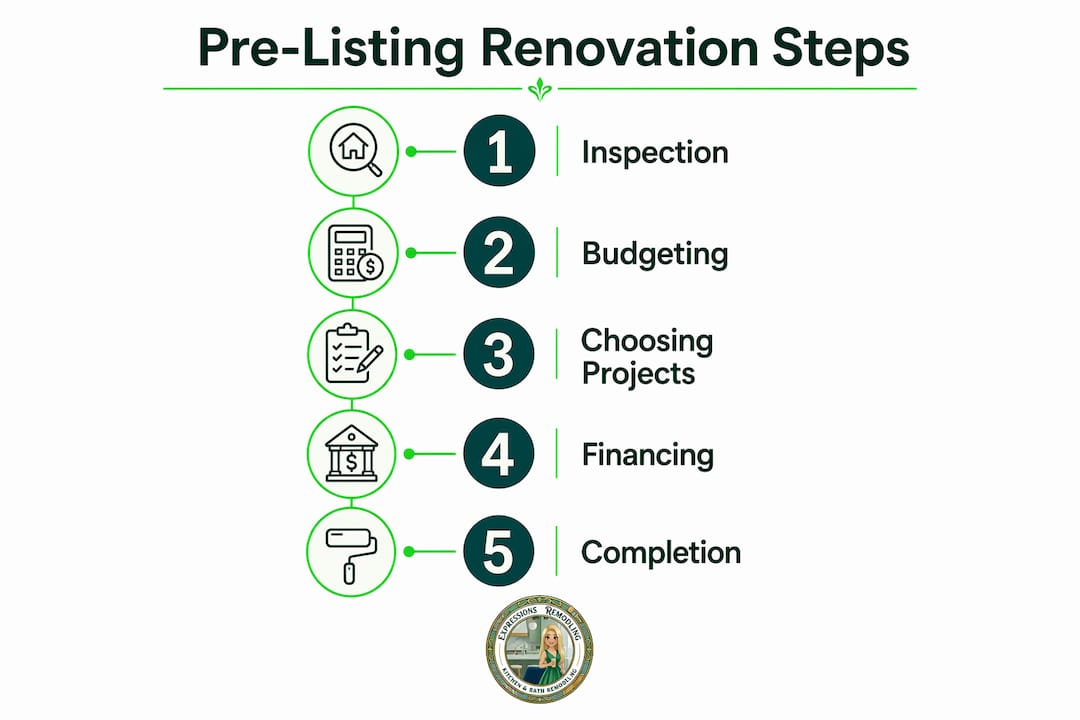
Experts recommend budgeting 1%–3% of anticipated sale price for pre-listing preparation. On a $400,000 home, that’s $4,000–$12,000. The 30% rule serves as an outer guardrail: never spend more than 30% of your home’s current market value on total renovations. In practice, pre-listing budgets should land far below that ceiling.
- Focus spending on cosmetic, high-visibility updates rather than structural overhauls.
- Avoid any single project that costs more than the expected price lift it delivers.
- Check your renovation timeline early. Rushed work shows.
Timing renovations 30–60 days before listing yields the best results. Projects completed in the final two weeks tend to look rushed in photos and at showings.
Pro Tip: Get a pre-listing inspection before you budget anything. Knowing which issues buyers will flag lets you spend on repairs that protect your asking price instead of guessing.
Buyers inflate post-inspection repair credit requests well beyond actual repair costs. A seller who fixes a known issue before listing pays only the repair cost. A seller who waits often pays far more through negotiated credits at closing.
What experts and experienced sellers say about pre-listing strategy
The consistent advice from real estate professionals: presentation beats transformation. Over-investing in high-end renovations like luxury kitchens and baths is the most common pre-listing mistake. These projects rarely recoup full cost because buyers want to customize to their own taste.
The smarter approach focuses on answering buyer concerns rather than remaking the home. Key principles experienced sellers follow:
- Spend on what buyers see first: curb appeal, entryway, kitchen surfaces, bathrooms.
- Neutral finishes outperform personalized ones every time in resale contexts.
- Staging and photography amplify the impact of every dollar spent on physical updates.
- Document completed repairs with receipts and permits. Buyers and their agents notice.
Expressions Remodeling works with St. Louis sellers on exactly this kind of targeted prep: identifying which updates will move the needle for a specific home and neighborhood, then executing them with the quality that shows up in listing photos.
Risks and drawbacks worth knowing before you start
Pre-listing renovations can go wrong in predictable ways. The biggest risk is overcapitalization: spending more on improvements than the market will return. A $45,000 kitchen remodel on a home in a $350,000 neighborhood rarely recovers its cost regardless of quality.
Other real risks include timeline overruns that delay your listing, contractor quality issues that produce work that looks DIY in photos, and permit complications that surface during buyer due diligence. Choosing the wrong projects is just as costly as choosing the right ones poorly. See the home value renovation checklist for a prioritized breakdown of what actually pays off by project type.
How to evaluate ROI before you spend a dollar
Pre-sale renovation ROI depends on five conditions: solid home bones, neighborhood comps showing renovated examples at the higher price range, a right-sized budget, 30 to 60 days of available timeline, and quality workmanship that photographs as “renovated” rather than “DIY refreshed.”
Before committing to any project, run this quick check:
- Pull three to five recent comparable sales in your neighborhood. What did renovated homes sell for versus unrenovated ones?
- Get two contractor quotes. If the project cost exceeds the expected price lift, skip it.
- Prioritize high-ROI home renovations with proven resale track records over personal preference.
The math breaks when structural or systems issues exist underneath cosmetic work. Buyers and their inspectors will find them, and cosmetic spend on top of a foundation problem returns nothing.
Legal and disclosure requirements sellers need to understand
Most states require sellers to disclose material defects they know about, including issues discovered through a pre-listing inspection. In North Carolina, for example, NC General Statute Chapter 47E requires sellers to provide a Residential Property Disclosure form to every buyer before an offer is submitted. Failure to disclose gives buyers a rescission right.
Getting a pre-listing inspection and then disclosing findings is a risk-reduction strategy, not a liability creator. Sellers who fix issues and document the work with permits and receipts enter negotiations from a position of strength. Sellers who skip disclosure and hope buyers miss something face far greater legal and financial exposure if problems surface post-closing.
Always consult a licensed real estate attorney in your state before listing, particularly if your pre-listing work involved structural repairs or unpermitted improvements.
Key Takeaways
Pre-listing renovations work best when they focus on cosmetic, high-visibility updates that buyers notice immediately, not expensive remodels that rarely return full cost.
| Point | Details |
|---|---|
| Targeted updates lift sale price | Strategic pre-listing improvements can yield up to 15% higher sale prices versus unrenovated homes. |
| Budget 1% to 3% of sale price | Spending $4,000–$12,000 on a $400,000 home covers the highest-ROI cosmetic updates like cleaning, painting, landscaping, and minor repairs. |
| Paint delivers the best single ROI | Neutral interior paint offers one of the highest ROI, costing $1,000–$3,000 and often returning more than 100% of its cost at resale. |
| Time renovations 30 to 60 days out | Work completed in the final two weeks tends to look rushed in listing photos and at showings. |
| Expressions Remodeling for St. Louis sellers | Expressions Remodeling executes targeted kitchen, bathroom, and living space updates built for pre-listing ROI in the St. Louis market. |
Expressions Remodeling gets your home ready to sell
Sellers preparing to list in the St. Louis area have a specific need: targeted updates that photograph well, pass buyer scrutiny, and close without surprises. That’s exactly what Expressions Remodeling delivers. Rather than pushing full remodels that rarely recoup their cost, the team focuses on the cosmetic and functional improvements that actually move offers: kitchen surface refreshes, bathroom updates, and living space upgrades that make a home feel move-in ready without overcapitalizing.
Expressions Remodeling brings quality craftsmanship and design expertise to every project, with the attention to detail that shows up in listing photos and buyer walkthroughs. Whether you need a kitchen refresh before listing or a full pre-listing prep plan, the team works on your timeline. Contact Expressions Remodeling today to get a quote and a clear scope before your listing date.