

Renovation project management is the structured process of coordinating every phase of a home improvement project to keep work on schedule, on budget, and at the quality you expect. Without it, even a well-funded kitchen remodel can spiral into missed deadlines, surprise invoices, and contractor disputes. The process covers everything from renovation project planning and budgeting to trade sequencing, documentation, and final walkthroughs. Think of it as running a small business for 8 to 16 weeks. The same discipline that keeps a business profitable keeps a renovation from becoming a financial headache.
What is renovation project management, and why does it matter?
Renovation project management is the coordination of design goals, finances, contractor schedules, and quality control under one organized system. It differs from simply hiring a general contractor. A general contractor manages labor and materials, while a renovation project manager acts as a quarterback who integrates the design vision, the budget, and the sequencing of trades to prevent domino delays. That distinction matters most on complex projects involving plumbing, electrical, HVAC, and finish work happening in overlapping phases.
Poor management produces predictable outcomes: cost overruns, scheduling gaps between trades, and quality defects discovered after final payment. Good management produces the opposite. The renovation management process gives you a system to catch small problems before they become expensive ones. Homeowners and property investors who treat renovation like a managed project consistently report less stress and better results than those who improvise.

What are the core phases of managing a renovation project?
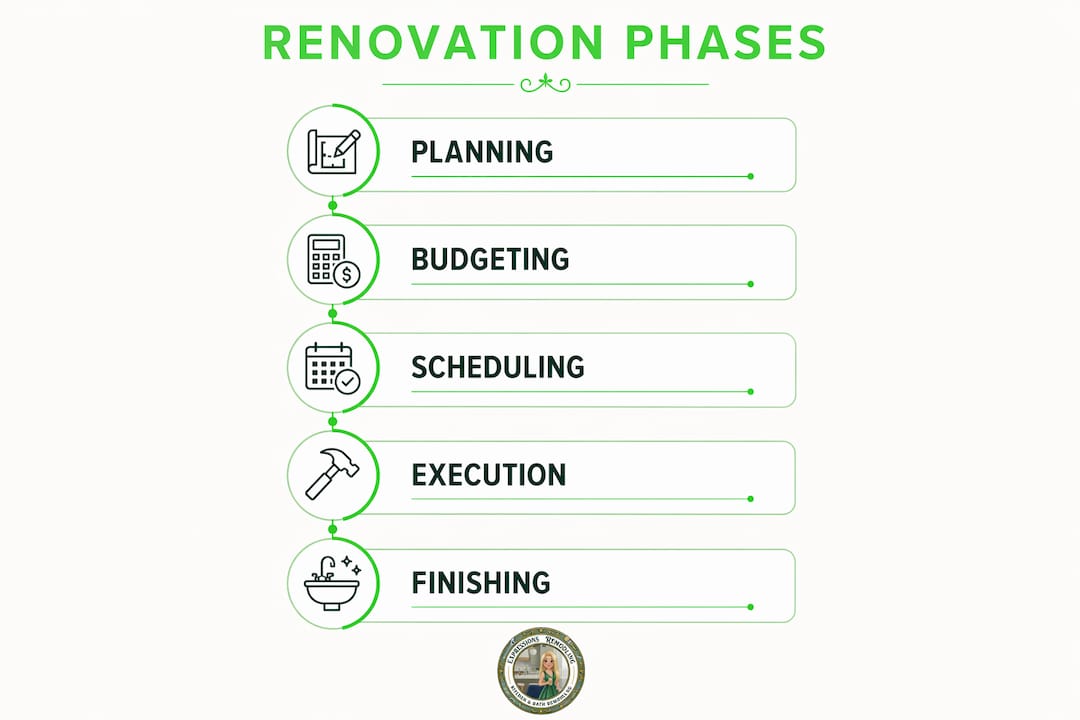
Every well-run renovation follows a clear sequence. Skipping phases or reordering them is the most common cause of rework and budget blowouts.
-
Define scope and design. Lock in exactly what you want before any contractor sets foot on site. Vague scope is the root cause of most disputes. Use drawings, mood boards, or a tool like Expressionsremodeling’s complimentary 3D design service to visualize the finished space before construction begins.
-
Build a detailed budget with contingency. Price every line item, then add a contingency fund of 15–20% of the total budget. That buffer absorbs the unexpected: a rotted subfloor, outdated wiring behind a wall, or a discontinued tile that needs a substitute.
-
Collect and compare quotes. Get at least three itemized quotes for any project over $5,000. Itemized means line-by-line, not a single lump sum. Lump-sum quotes make it impossible to compare contractors fairly or identify where costs are inflated.
-
Build the renovation project timeline. Map each trade in the correct sequence: demolition, rough framing, rough plumbing and electrical, inspections, insulation, drywall, finish work, fixtures. Each phase must be complete before the next begins. Build buffer days between trades to absorb delays without cascading the entire schedule.
-
Establish a communication rhythm. Set weekly check-ins with your contractor from day one. These meetings catch alignment issues early and keep everyone accountable without micromanaging.
-
Document every change. Any deviation from the original scope gets a written, signed change order before work proceeds. No exceptions.
-
Final walkthrough and punch list. Walk the project with your contractor before releasing final payment. Create a written punch list of every incomplete or deficient item. Sign off only when every item is resolved.
Pro Tip: Photograph every wall cavity before drywall closes. Capturing images of plumbing, electrical, and HVAC systems before walls are sealed saves thousands in future repair costs and eliminates guesswork during future renovations.
How do you manage renovation budgets and unexpected costs?
Budget management is the single most stressful part of any renovation. The good news is that most budget overruns are predictable and preventable.
The first rule is to never start with a round number. A budget of “$50,000 for the kitchen” is not a budget. It is a wish. A real budget lists cabinets, countertops, appliances, plumbing fixtures, tile, labor, permits, and disposal separately. That level of detail lets you make trade-offs before work starts rather than mid-project.
The second rule is the contingency fund. Budget 15–20% above your estimated total for surprises. On a $40,000 bathroom remodel, that means holding $6,000–$8,000 in reserve. Most homeowners who skip this step end up borrowing or cutting corners on finishes.
Key causes of budget overruns to watch for:
- Undocumented verbal changes. Verbal scope changes cause 80% of major budget overruns. Every change, no matter how small, needs a written change order with a cost and a signature.
- Choosing materials before confirming lead times. A tile backordered for 10 weeks can idle your entire crew.
- Skipping permits. Unpermitted work can force demolition and rework at your expense.
- Paying too much upfront. A reasonable deposit is 10–30% of the contract value. Paying more than 50% upfront removes your leverage over quality and completion.
Pro Tip: Ask each contractor to break their quote into labor and materials separately. This makes it far easier to spot where one bid is high and gives you a basis for negotiation without guessing.
What communication and documentation practices keep renovations on track?
Clear communication is not a soft skill in renovation management. It is a cost control tool. Weekly walkthroughs with your contractor catch minor misalignments before they require expensive corrections. A verbal conversation on a Tuesday that is not written down by Wednesday is a liability by Friday.
The practices that prevent the most disputes:
- Write down every decision with a date and cost impact. Use a simple shared document, a project management app like Trello or Buildertrend, or even a dedicated email thread. The format matters less than the consistency.
- Confirm all contractor communications in writing. After a phone call, send a follow-up email summarizing what was agreed. This creates a paper trail without being adversarial.
- Log every change order immediately. Date it, describe the change, note the cost adjustment, and get a signature from both parties before work proceeds.
- Keep a daily site log during active construction. Note who was on site, what work was completed, and any issues observed. This takes five minutes and resolves disputes that would otherwise take hours.
Consistent communication reduces cost and stress because problems surface when they are still cheap to fix. A crack in a freshly poured concrete floor costs nothing to address before tile goes down. After tile, it costs thousands.
Pro Tip: Create a single shared folder, whether in Google Drive or Dropbox, for all contracts, quotes, change orders, permits, and photos. When a dispute arises, you will have every document in one place instead of scattered across email threads.
Should you hire a renovation project manager or self-manage?
The right answer depends on project complexity, your available time, and your tolerance for managing multiple contractors simultaneously.
| Factor | Hire a Pro (PM or GC) | Self-Manage |
|---|---|---|
| Project complexity | Multiple trades, structural changes, full gut renovations | Single-trade work, cosmetic updates, phased small projects |
| Your available time | Less than 5 hours per week to oversee the project | 10+ hours per week available for site visits and coordination |
| Budget | Can absorb a 10–20% management markup | Tight budget where markup savings offset the coordination effort |
| Experience | First renovation or unfamiliar with trade sequencing | Prior renovation experience, strong organizational skills |
| Risk tolerance | Low. Errors are costly and you want accountability | Higher. Comfortable troubleshooting problems as they arise |
A general contractor manages subcontractors and takes responsibility for the finished product. A renovation project manager coordinates trades, tracks budget and schedule, and reports to you without necessarily holding the subcontracts. For a full kitchen and bathroom remodel happening simultaneously, a GC or PM typically pays for themselves by preventing sequencing errors alone.
Self-management works well for St. Louis homeowners tackling phased projects or working with a single trusted contractor. The key is treating it with the same discipline a professional would. That means written contracts, documented changes, and regular site visits, not just phone check-ins.
What are the most common renovation project management mistakes?
Most renovation disasters trace back to a short list of avoidable errors. Knowing them in advance is the cheapest form of project insurance.
- Skipping the punch list. Contractors lose leverage on quality once final payment is made. Walk every room with a critical eye before you write the last check. Document every unfinished or deficient item in writing.
- No photos of concealed work. Once drywall goes up, you cannot see what is behind it. Photograph all plumbing, electrical, and HVAC before walls close. Future repairs will thank you.
- Inadequate schedule buffers. Trades run late. Materials ship late. Build at least a 10% time buffer into your overall timeline. A 10-week project should have an 11-week plan.
- Relying on verbal agreements. This is the single most expensive habit in renovation. Every agreement, change, and promise belongs in writing.
- Starting construction before finalizing selections. Changing your countertop material after cabinets are installed can cost thousands in rework. Lock in all material selections before demolition begins.
Pro Tip: Before signing any contract, ask the contractor for references from projects completed in the last 12 months. Call at least two. Ask specifically whether the project finished on time and on budget.
Key Takeaways
Renovation project management is the structured coordination of planning, budgeting, scheduling, communication, and documentation that determines whether a renovation succeeds or fails.
| Point | Details |
|---|---|
| Budget with a contingency | Set aside 15–20% above your estimated total to absorb unexpected costs without derailing the project. |
| Get three itemized quotes | For any project over $5,000, collect at least three line-by-line bids to compare scope and pricing accurately. |
| Use written change orders | Every scope change needs a signed change order before work starts to prevent budget overruns. |
| Photograph concealed systems | Capture plumbing, electrical, and HVAC before drywall closes to avoid costly future inspections. |
| Hold final payment until punch list is signed | Retain leverage over quality by releasing the last payment only after all deficiencies are resolved in writing. |
What I have learned about renovation management after years on the job
Renovation management is not about watching every nail go in. It is about building systems that catch problems early, before they compound. The homeowners I have seen struggle most are not the ones with the tightest budgets. They are the ones who trusted verbal agreements, skipped the contingency fund, and assumed their contractor would flag every issue unprompted.
The most effective thing you can do before a single wall comes down is to create three things: a written scope, a realistic budget with a real contingency, and a communication plan with your contractor. Those three documents will resolve 80% of the disputes that derail renovations. The other 20% are genuinely unpredictable, and that is exactly what the contingency fund is for.
Renovation is never perfect. Surprises happen in every project, regardless of how well you plan. The difference between a stressful renovation and a manageable one is not luck. It is whether you had a system in place when the surprise arrived. A good project manager, whether that is you or a hired professional, does not prevent every problem. They prevent small problems from becoming expensive ones.
— Kierin
How Expressionsremodeling makes renovation management easier

Managing a renovation is far less stressful when your contractor brings the organization to the table. Expressionsremodeling serves St. Louis homeowners with a process built around clarity from day one: detailed itemized estimates, complimentary 3D design so you see the finished space before construction starts, and expert coordination across kitchens, bathrooms, and basements. Whether you are planning a kitchen remodel or a full bathroom renovation, Expressionsremodeling handles the trade sequencing, timeline management, and quality control that homeowners find most overwhelming. Contact Expressionsremodeling today to get a detailed estimate and start your project with a plan that actually holds.
FAQ
What is renovation project management in simple terms?
Renovation project management is the process of planning, budgeting, scheduling, and overseeing all work on a home improvement project to deliver it on time and on budget. It covers everything from hiring contractors to documenting changes and conducting a final walkthrough.
How much contingency should I budget for a home renovation?
Budget a contingency fund of 15–20% above your estimated renovation cost to cover unexpected expenses like hidden water damage, outdated wiring, or discontinued materials.
Why are written change orders so important?
Verbal scope changes cause 80% of major budget overruns. A written, signed change order for every modification protects both the homeowner and the contractor by documenting the agreed cost and scope before work proceeds.
When should I hire a renovation project manager versus self-managing?
Hire a project manager or general contractor for complex projects involving multiple trades, structural changes, or full gut renovations. Self-management works for simpler, phased projects when you have the time and organizational discipline to track scope, schedule, and documentation consistently.
What should I do before releasing final payment to a contractor?
Complete a thorough walkthrough and create a written punch list of every unfinished or deficient item. Hold final payment until every punch list item is resolved and signed off by both parties.
Recommended
- Smart Home Remodeling Planning Tips for St. Louis Homeowners – Expressions Remodeling
- Transform Your Home: The Ultimate Guide to Kitchen and Bathroom Remodeling – Expressions Remodeling
- Transform Your Home: Boosting Value with Bathroom Upgrades – Expressions Remodeling
- How to Plan a Home Remodel That Balances Style, Function, and Long-Term Value – Expressions Remodeling