
For most homeowners who want low maintenance and durability, engineered quartz is the best first choice for a kitchen remodel. If heat resistance and a natural look matter more, granite or quartzite wins out. Homeowners chasing extreme durability for a hardworking kitchen should look at porcelain or sintered stone, while anyone drawn to a warmer, repairable surface should consider butcher block. Tight budgets point toward laminate.
Here’s the quick breakdown before you get into specifics:
- Engineered quartz — best for busy households that don’t want to seal or babysit a surface
- Granite or quartzite — best for heat exposure near stovetops and a natural stone look
- Porcelain or sintered stone — best for extreme resistance, including outdoor kitchens
- Butcher block — best for a warm look and the ability to sand out damage
- Laminate — best for stretching a renovation budget without sacrificing style
Consumer Reports tested more than a dozen countertop materials for stains, heat, cuts, abrasion, and impact, and found that performance splits along material lines far more than brand lines. Quartz, granite, solid surfacing, and select sintered and laminate products came out as the strongest all-around performers for a kitchen that sees daily use.
Key Takeaways
The right countertop material depends on matching heat tolerance, scratch resistance, and sealing effort to how your household actually cooks and cleans.
| Point | Details |
|---|---|
| Quartz leads for low upkeep | Non-porous engineered quartz needs no sealing but scorches under sustained high heat. |
| Stone needs periodic sealing | Granite and quartzite typically require resealing every one to three years. |
| Marble trades durability for beauty | It etches with acidic foods, but a honed finish hides most marks. |
| Damage repairability varies by material | Butcher block and soapstone sand out scratches; tile and laminate require section replacement. |
| Expressions Remodeling guides material selection | The St. Louis team pairs 3D visualization and templating with sealing and maintenance planning during installation. |
Table of Contents
- Types of Kitchen Countertop Materials Compared
- How Do You Choose the Right Countertop Material?
- Who’s Behind This Guide
- Why the “Best” Countertop Question Misses the Point
- Get Your Kitchen Countertop Installed Right the First Time
- Frequently Asked Questions
- Sources
Types of Kitchen Countertop Materials Compared
Choosing among the types of kitchen countertop materials comes down to five practical questions: how it handles heat, how easily it scratches, whether it stains or needs sealing, how much upkeep it demands, and what it costs installed. Below is a material-by-material breakdown built around those questions.
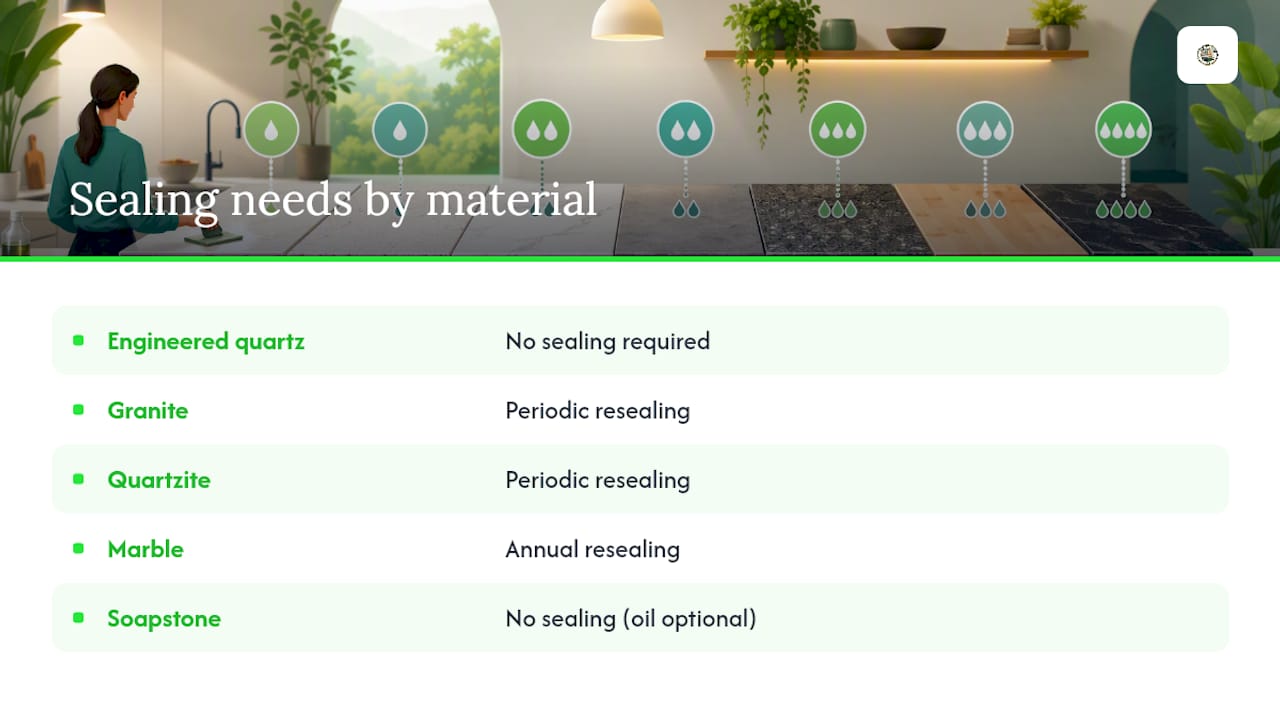
Engineered quartz is roughly 90% to 93% ground quartz bound with polymer resin, according to a materials comparison from RemodelCalculators. That composition makes it non-porous, so it resists common stains without any sealing. The tradeoff is heat: sustained contact with a hot pan can scorch the resin at temperatures around 300°F, so trivets are not optional. Installed cost typically runs $70 to $130 per square foot. It’s the best fit for families who cook often but have zero interest in maintenance rituals. Interior designers frequently recommend quartz for busy households precisely because it removes sealing from the to-do list entirely.
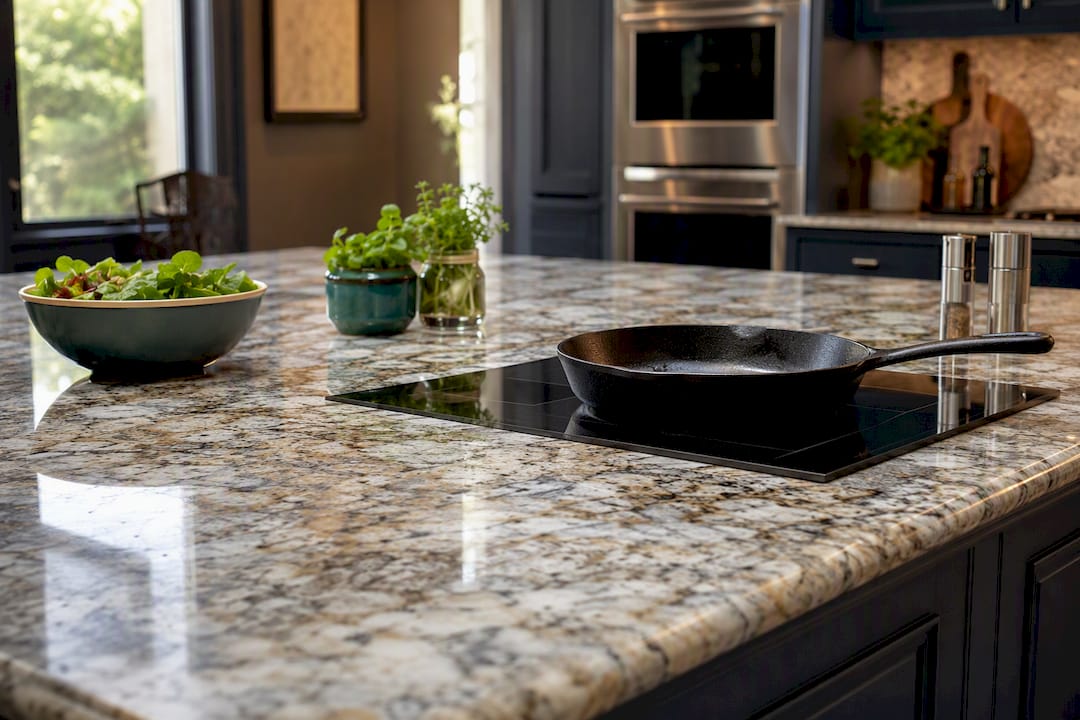
Granite is a natural stone quarried in slabs, prized for heat tolerance that beats quartz and a pattern no two slabs share exactly. It scratches less easily than softer stones but isn’t scratch-proof, and it’s porous enough to need sealing. Expect periodic resealing depending on the sealer and how the stone is used, per RemodelCalculators’ maintenance data. Installed pricing runs $50 to $200 per square foot depending on rarity. Granite suits households that cook with high heat regularly and don’t mind a light annual maintenance task.
Quartzite gets confused with quartz constantly, but it’s a real natural stone, harder than granite in most cases and highly heat resistant. It needs periodic resealing like granite. Cost lands between $60 and $200 per square foot. It’s a strong pick for anyone who wants the durability of granite with a softer, more marble-like veining pattern.
Marble offers a look nothing else fully replicates, and pastry chefs love it because its naturally cool surface keeps butter and dough workable. That beauty comes at a price: marble is soft and porous, and it etches when acidic foods like lemon juice or wine touch it. Designer guidance from The Kitchn notes this etching is often permanent, though a honed rather than polished finish hides the marks far better. Sealing is an annual task at minimum. Installed cost ranges from $75 to $250 per square foot. Marble fits homeowners who bake often and accept the patina as part of the material’s character.
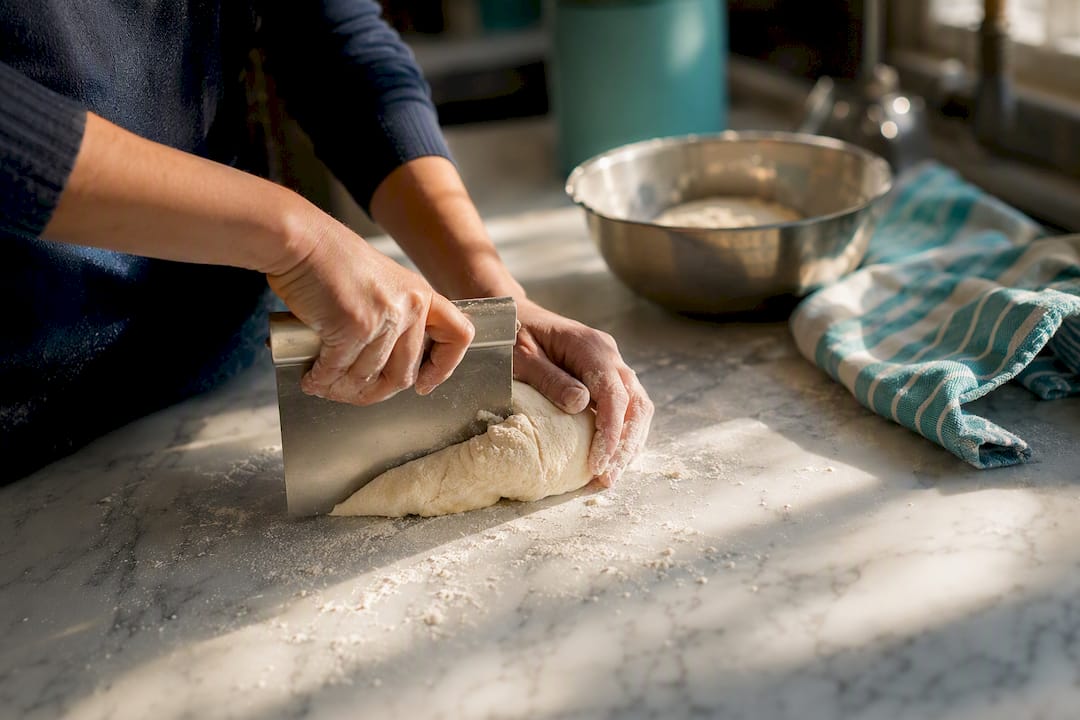
Pro Tip: If you love marble but dread the etching, ask your fabricator for a honed finish instead of polished. The matte surface disguises acid marks that would stand out starkly on a glossy slab.
Soapstone is quarried, non-porous, and naturally resists both acids and bacteria without sealing, though many homeowners apply mineral oil for a deeper color. It’s softer than granite, so it dents and scratches more visibly, but scratches can often be sanded out. Cost runs $70 to $120 per square foot. It’s a good match for a farmhouse aesthetic and cooks who want low chemical maintenance.
Solid surface (the category that includes Corian) is a blended acrylic and mineral material that’s completely non-porous and seamless, with no grout lines even around integrated sinks. It resists stains well but scratches and burns more easily than stone, and deep scratches can be buffed out rather than replaced. Installed cost is $40 to $100 per square foot. It suits accessible, low-maintenance kitchens where a seamless sink integration matters more than heat tolerance.
Laminate, often called HPL for high-pressure laminate, remains the most budget-friendly option and today’s patterns convincingly mimic stone and wood. The Spruce notes that laminate’s core vulnerability is heat and direct knife contact, since damage can’t be sanded or buffed away like it can on stone or wood. Installed pricing runs $20 to $60 per square foot, making it the entry point for full kitchen renovations on tighter budgets.
Butcher block brings warmth that no engineered material fully matches, and unlike stone, surface damage is often fixable with sanding and a fresh oil coat. Cuts, water rings, and burns all happen over time, and the maintenance schedule includes regular oiling, roughly monthly for the first few months and then as needed. Cost ranges from $40 to $100 per square foot depending on wood species.
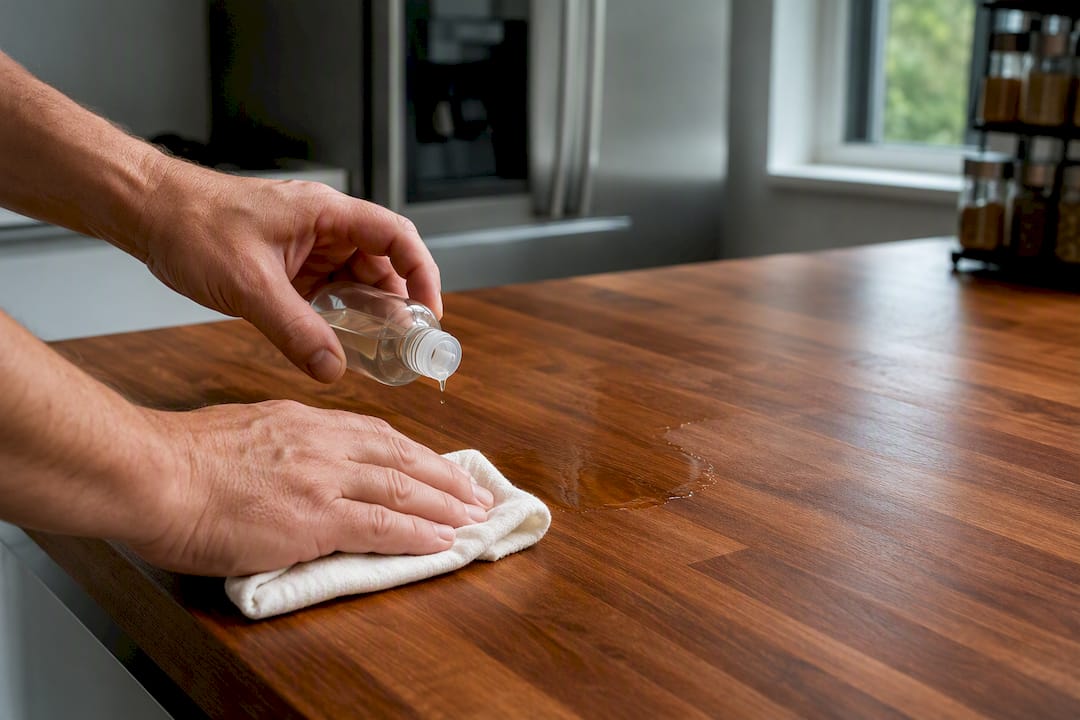
Pro Tip: Set a recurring reminder to oil butcher block counters. Skipping this step is the single fastest way to void the surface’s natural water resistance and invite warping.
Porcelain and sintered stone, sometimes described as ultracompact surfaces, are fired at extremely high temperatures with no resin binder. That process gives them near-total resistance to heat, staining, and UV exposure, which is why they show up in outdoor kitchens where quartz can’t go. The catch is fabrication: these slabs limit edge profile choices and can chip during cutting if a fabricator isn’t experienced with the material. Installed cost runs $65 to $150 per square foot.
Concrete countertops are poured and cured on site or precast, offering total design flexibility in shape, color, and texture. They need topical sealing, typically annually, and are prone to hairline cracking as they settle. Cost ranges from $65 to $135 per square foot. Concrete suits homeowners who want a custom, industrial look and don’t mind an annual sealing task.
Stainless steel and other metal countertops resist heat, bacteria, and staining almost entirely, which is why commercial kitchens rely on them. They scratch and dent visibly over time, developing a patina some homeowners love and others find distracting. Cost runs $65 to $150 per square foot.
Recycled glass composites mix crushed glass with a resin or cement binder for a distinctive, sparkling surface. Resin-based versions perform similarly to quartz, but cement-matrix versions need sealing and are sensitive to acids much like concrete. Cost ranges from $50 to $125 per square foot depending on the binder.
Tile, in ceramic or porcelain form, remains the lowest-cost stone-look option at $5 to $50 per square foot installed. Individual tiles resist heat and stains well, but the grout lines stain and require regular cleaning, and a cracked tile means replacing that section rather than sanding out damage.
How Do You Choose the Right Countertop Material?
Match the material to how you actually cook, not to what looks best under showroom lighting. HouzzWire’s remodeling guidance makes this point directly: prioritizing durability that fits your lifestyle leads to fewer regrets than choosing on looks alone.
Run through this checklist before you settle on a slab:
- How often do you cook, and does it involve high heat or heavy baking?
- Do kids or pets make scratch and impact resistance non-negotiable?
- Are you willing to reseal stone every one to three years, or do you want zero maintenance?
- Would you rather sand out damage (wood, soapstone) or replace a damaged section (tile, laminate)?
- Does your island or run require seams, and does your cabinet base support heavy stone slabs?
Remodelista’s selection guidance also flags substrate load capacity as a common blind spot. Granite and quartzite are heavy, and older cabinet boxes sometimes need reinforcement before installation.
When you’re vetting a fabricator or installer, ask these questions directly:
- What slab sizes are available, and where will seams fall on my layout?
- What edge profiles come standard versus custom?
- What’s the warranty, and does it cover cracking, staining, or seam separation?
- What sealer do you recommend, and how often should I reapply it?
- What’s your policy if a slab chips during fabrication or installation?
Watch for red flags: a bid with no site visit, a warranty that’s vague about what’s covered, or a fabricator pushing an exotic slab without ever checking whether your cabinets can bear the weight.
Who’s Behind This Guide
This guide is written by Kierin, an editorial contributor covering home renovation topics with a focus on practical, maintenance-forward decision making for homeowners.
Expressions Remodeling brings that same lifestyle-first approach into St. Louis kitchens every week. The team’s process centers on:
- Understanding how a household actually cooks and lives before recommending a slab
- Providing 3D design visualization so homeowners see the finished counter before committing
- Templating precisely to minimize seams and waste on complex layouts
- Coordinating sealing schedules and edge finishing as part of the installation timeline
A kitchen renovation succeeds when the countertop matches daily habits, not just the mood board. That means asking about cooking frequency, cleanup tolerance, and cabinet support before a single slab gets ordered.
Homeowners who want a walkthrough of what installation, templating, and sample selection look like in practice can request a design consultation to see the process firsthand.
Why the “Best” Countertop Question Misses the Point
Most countertop advice treats this as a beauty contest, ranking materials by how they photograph. That framing fails the moment you actually live with the surface. The material that wins in a showroom is rarely the one that survives a decade of weeknight dinners, and the guides that lead with aesthetics bury the maintenance math that should come first.
The research backs a blunter conclusion: heat tolerance, scratch behavior, and sealing frequency should decide the shortlist before color or veining even enters the conversation. Quartz dominates recommendations not because it’s prettier than granite, but because it removes an entire category of homeowner effort. Marble persists despite its flaws because bakers genuinely need that cool, workable surface, and that’s a legitimate tradeoff, not a design mistake.
What gets underrated is repairability. Wood and soapstone can be sanded back to new. Quartz and tile cannot. That distinction should weigh as heavily as any hardness rating when kids, pets, or heavy daily use are part of the equation.
Get Your Kitchen Countertop Installed Right the First Time
Picking the right material is half the equation. Getting it templated, seamed, and installed without surprises is the other half, and that’s where a remodeling partner earns its keep. Expressions Remodeling works with St. Louis homeowners from material selection through final installation, using 3D design visualization so you see your quartz, granite, or butcher block counter in your actual kitchen before a slab gets cut.
That upfront visualization catches layout and seam problems before they become expensive change orders, something a showroom sample can never show you. If you’re ready to move from browsing materials to seeing your kitchen with the countertop installed, explore Expressions Remodeling’s kitchen upgrade options and request a design consultation to get a project timeline and estimate started.
Frequently Asked Questions
What is the most durable type of kitchen countertop material?
Porcelain and sintered stone surfaces resist heat, stains, and UV exposure better than almost any other option, making them a strong pick for heavy daily use and outdoor kitchens.
Which countertop material requires the least maintenance?
Engineered quartz needs no sealing and resists stains without regular upkeep, which is why it’s frequently recommended for busy households.
How often do granite and quartzite countertops need to be resealed?
Most granite and quartzite counters need resealing every one to three years, depending on the sealer used and how heavily the kitchen is used.
Is butcher block a good choice for a busy kitchen?
Butcher block works well if you’re willing to oil it regularly, and its biggest advantage is that scratches and burns can often be sanded out rather than requiring replacement.
What’s the most affordable countertop material for a kitchen remodel?
Laminate offers the lowest installed cost among common materials and now comes in patterns that closely mimic stone and wood, though it’s vulnerable to heat and knife damage.
Sources
- Best Countertops for Busy Kitchens
- Countertop Materials Compared: Quartz to Soapstone
- How to Choose the Right Countertop for Your Kitchen Remodel – HouzzWire
- Kitchen countertop materials (The Spruce)