
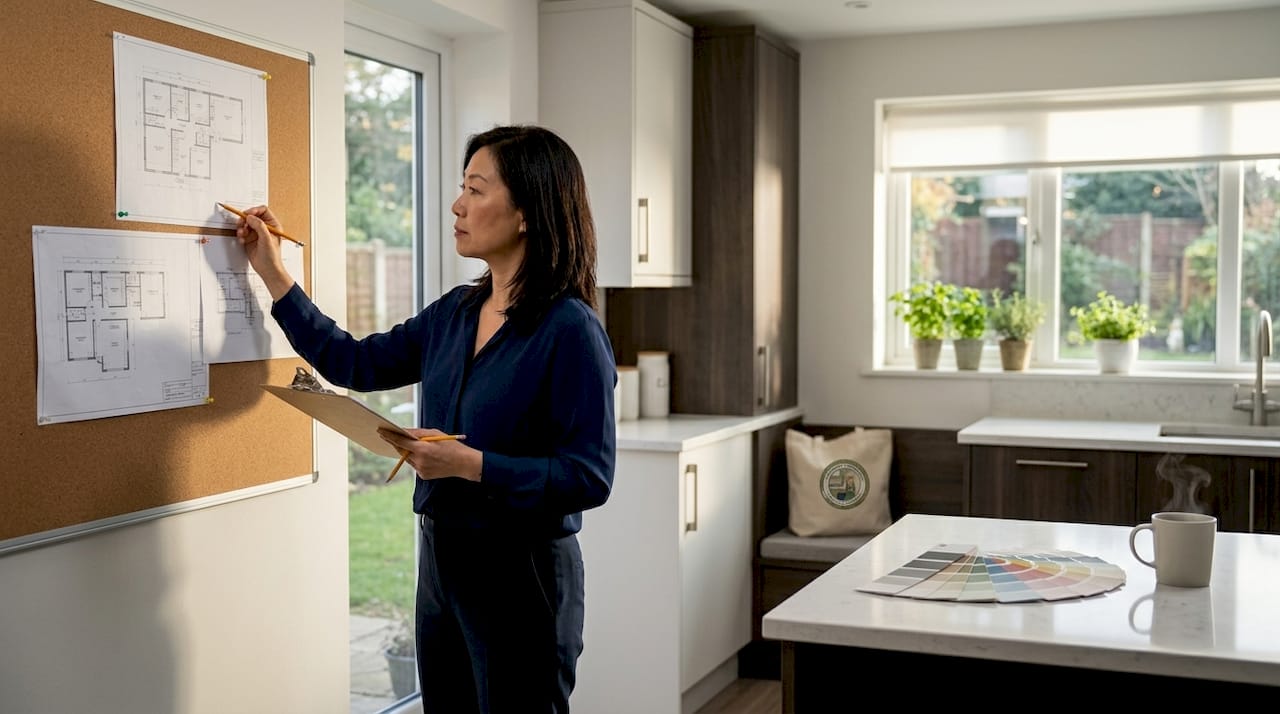
Home modernization is a structured, multi-phase renovation process that transforms a property by updating its systems, layout, and finishes to meet current functional and aesthetic standards. Most homeowners underestimate how much coordination goes into a successful remodel. Understanding how home modernization process works before you break ground is the single best way to protect your budget and your timeline. The industry term for this work is “whole-home remodeling” when it covers multiple rooms, though the same five-phase framework applies to kitchen, bathroom, and basement projects alike.
What are the main phases of the home modernization process?
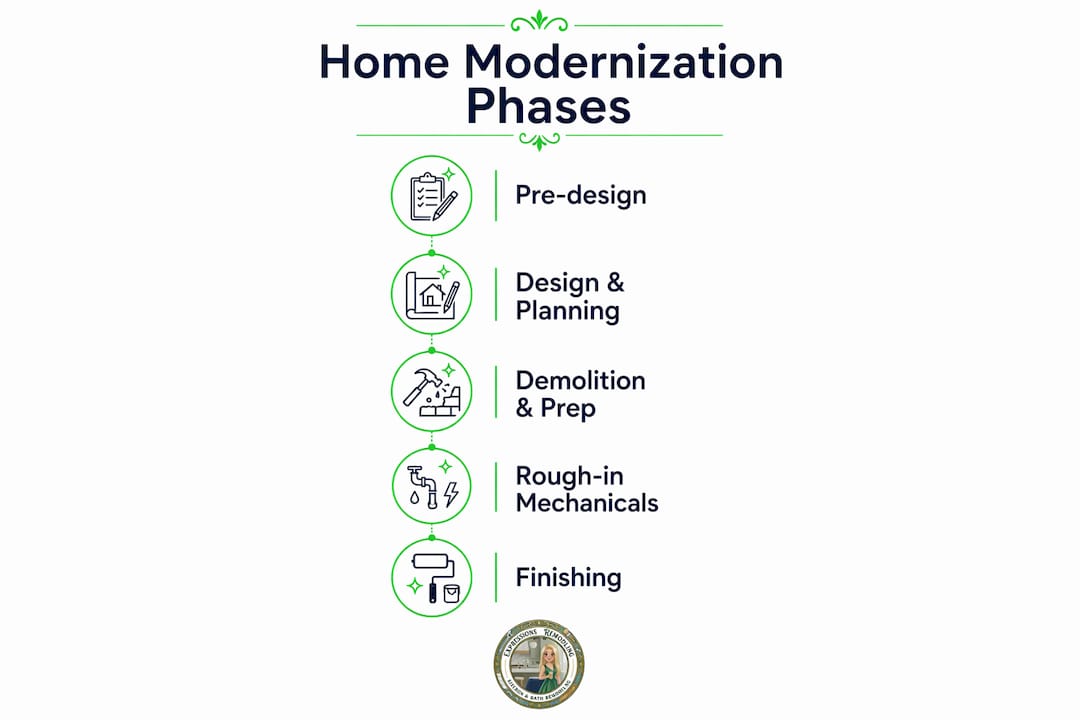
The home modernization process follows five defined phases: pre-design, design and planning, demolition and site prep, rough-in mechanicals, and finishing. Each phase depends on the one before it. Skipping steps or rushing transitions is the most common reason projects run over budget and over schedule.
Phase 1: Pre-design
Pre-design is where you define your goals, set a realistic budget, and hire your contractor and design team. This phase feels slow because it is mostly conversations and paperwork. But pre-construction accounts for up to 50% of total project effort. That investment up front prevents expensive change orders later.
Phase 2: Design and planning
Your designer produces blueprints, elevations, and material specifications during this phase. You select cabinets, tile, fixtures, and flooring. Your contractor pulls permits from the local municipality. This phase ends only when permits are approved and every material is specified.

Phase 3: Demolition and site prep
Crews remove existing finishes, fixtures, and sometimes walls. Demolition reveals what is actually inside your home. Hidden water damage, outdated wiring, or undersized ductwork discovered here will affect your budget. A good contractor documents every discovery and presents options before proceeding.
Phase 4: Rough-in mechanicals
Electricians, plumbers, and HVAC technicians run new wiring, pipes, and ductwork through open walls. Treating these mechanical systems as integrated networks rather than separate trades reduces rework and scheduling conflicts. All rough-in work must pass inspection before walls close.
Phase 5: Finishing
Drywall goes up, then paint, then flooring, then fixtures and trim. The project closes with a punch list walkthrough, where blue tape marks every scratch, misaligned cabinet door, or uneven grout line. Nothing is signed off and no final payment is released until every item on that list is resolved.
Pro Tip: Order your cabinets and specialty tile during Phase 2, not Phase 3. Custom items can take several weeks to over 4 months to arrive, and a late delivery will stall your entire project.
How do timelines and budgeting shape the modernization process?
Realistic expectations about time and money are what separate a smooth renovation from a stressful one. Most homeowners budget for materials and labor but forget the costs that surround the build itself.
Typical timelines
Pre-construction planning takes 4–12 weeks for most projects. The construction phase runs 3–9 months, extending to 12–18 months for complex whole-home renovations. Closeout, which includes final inspections and punch list resolution, adds another 1–4 weeks.
Permit approval is the biggest wild card in the schedule. Permit timelines range from 2 weeks to 3 months depending on your municipality. If an inspection fails, a re-inspection adds another two weeks. That is time your contractor cannot bill for, but you are still paying for temporary housing if you have vacated the space.
What a realistic budget actually includes
A budget that only covers materials and labor will fail. A realistic remodel budget must include contingency funds, permit fees, temporary living costs, and a reserve for issues discovered during demolition. Here is what homeowners consistently underestimate:
- Contingency reserve. Set aside 10–20% of your total project cost for surprises found behind walls.
- Permit and inspection fees. These vary by city and project scope but are non-negotiable costs.
- Temporary housing. If you are remodeling a kitchen or primary bathroom, you may need to live elsewhere for weeks.
- Material price changes. Prices on lumber, tile, and fixtures shift. Lock in quotes and order early.
- Change orders. Every scope change after construction begins costs more than it would have during planning.
Pro Tip: Get three bids before hiring a contractor. The lowest bid is not always the best value. Ask each bidder to show you how they handle change orders and inspection failures.
How can homeowners manage their renovation project effectively?
Good project management is the difference between a renovation that finishes on time and one that drags on for months past the original deadline. You do not need a construction background to manage this well. You need a clear process and consistent communication.
The most important move is investing heavily in pre-construction work. Every decision you make before demolition starts costs far less than the same decision made mid-build. Finalize your floor plan, confirm your material selections, and review the permit drawings before any crew sets foot in your home.
Material lead times for custom items can run from several weeks to over four months. Order custom cabinets, specialty tile, and high-end fixtures the moment your design is approved. A single delayed shipment can pause an entire crew.
Know which tasks require licensed professionals. Structural, plumbing, and electrical work must be handled by licensed contractors to meet code and pass inspection. DIY is reasonable for painting, landscaping, and some finish carpentry. It is not reasonable for load-bearing walls, panel upgrades, or drain relocation.
Use a structured renovation timeline to track phase completions and inspection dates. Schedule weekly check-ins with your contractor. Ask for a written update on any item that is behind schedule. Document every change order in writing before work begins.
How does modernizing a home affect value and functionality?
Home modernization delivers three distinct types of return: improved daily functionality, updated aesthetics, and increased market value. The depth of that return depends on whether you are doing a full remodel or a cosmetic refresh.
A full remodel replaces mechanical systems, updates the floor plan, and installs new finishes throughout. A cosmetic update repaints walls, swaps hardware, and replaces light fixtures. Both improve appearance, but only a full remodel addresses aging electrical panels, outdated plumbing, and inefficient HVAC systems. Those system upgrades are what buyers and appraisers actually value.
| Upgrade type | Functionality impact | Aesthetic impact | Market value impact |
|---|---|---|---|
| Full kitchen remodel | High: new layout, appliances, storage | High: new surfaces, fixtures, lighting | High: one of the top ROI projects |
| Bathroom remodel | High: updated plumbing, ventilation | High: tile, vanity, lighting | High: strong buyer appeal |
| Basement finishing | High: adds usable living space | Medium: depends on finish level | Medium to high: adds square footage |
| Cosmetic refresh | Low: no system changes | Medium: paint, hardware, fixtures | Low: minimal appraiser impact |
A well-planned home remodel that balances style and function consistently outperforms cosmetic-only updates in both daily satisfaction and resale price. Kitchen and bathroom remodels in particular rank among the highest-return projects a homeowner can undertake.
Key Takeaways
The home modernization process works best when pre-construction planning, phased execution, and licensed professional involvement are treated as non-negotiable requirements, not optional extras.
| Point | Details |
|---|---|
| Five phases define the process | Pre-design, design and planning, demolition, rough-in mechanicals, and finishing must happen in sequence. |
| Pre-construction is half the work | Up to 50% of total project effort happens before demolition starts; invest time here to avoid change orders. |
| Permits and lead times drive the schedule | Permit approval takes 2 weeks to 3 months; custom materials can take over 4 months to arrive. |
| Budget beyond materials and labor | Include contingency, permit fees, temporary housing, and a reserve for demolition discoveries. |
| Full remodels outperform cosmetic updates | System upgrades to electrical, plumbing, and HVAC add measurable market value that paint and hardware cannot. |
What I have learned from watching renovations go sideways
The homeowners who struggle most with renovations are not the ones with the smallest budgets. They are the ones who start construction before the design is finished.
I have watched projects stall for weeks because a homeowner changed the kitchen island size after framing was complete. That one decision triggered a plumbing relocation, a new permit application, and a three-week delay. The change cost more than the original island. Every contractor I respect says the same thing: decisions made on paper cost almost nothing. Decisions made in the field cost a lot.
The other mistake I see constantly is treating the punch list as optional. Homeowners get excited when the project looks done and they release final payment before the walkthrough is complete. Two months later, they notice a cabinet door that does not close flush or a grout line that was never sealed. At that point, getting a contractor back is difficult and sometimes expensive. The punch list exists to protect you. Use it.
My honest advice: hire a contractor who communicates in writing, not just verbally. Texts and emails create a paper trail. If a contractor resists written change orders, that is a warning sign. The best remodeling relationships are built on clear documentation and realistic expectations from day one.
— Kierin
Ready to start your home modernization project?
Expressions Remodeling works with homeowners across St. Louis, MO to plan and execute kitchen, bathroom, and basement remodels from first concept through final walkthrough. Their team offers complimentary 3D design and free estimates so you can see your project before a single wall comes down. That early visualization catches layout problems and material conflicts before they become expensive field changes.
If a kitchen remodel is on your list, Expressions Remodeling’s kitchen upgrade services combine quality craftsmanship with budget-conscious planning. Contact their team to schedule a consultation and get a clear picture of your project’s scope, timeline, and cost before you commit.
FAQ
What are the five phases of home modernization?
The five phases are pre-design, design and planning, demolition and site prep, rough-in mechanicals, and finishing. Each phase must be completed and inspected before the next one begins.
How long does a full home modernization take?
Pre-construction planning takes 4–12 weeks, construction runs 3–9 months, and closeout adds 1–4 weeks. Complex whole-home renovations can extend to 12–18 months total.
What should a home renovation budget include beyond materials?
A realistic budget includes contingency funds of 10–20%, permit and inspection fees, temporary housing costs, and a reserve for issues discovered during demolition.
Can I do any of the renovation work myself?
DIY is reasonable for painting, finish carpentry, and landscaping. Licensed professionals must handle structural, electrical, plumbing, and HVAC work to meet code and pass inspection.
What is a punch list and why does it matter?
A punch list is a documented walkthrough at project completion where every unresolved defect is marked and assigned for correction. Final payment should not be released until every item on the list is resolved.
Recommended
- Transform Your Home: Boosting Value with Bathroom Upgrades – Expressions Remodeling
- Smart Home Remodeling Planning Tips for St. Louis Homeowners – Expressions Remodeling
- Renovation Project Management: A Homeowner’s Guide
- Transform Your Home: The Ultimate Guide to Kitchen and Bathroom Remodeling – Expressions Remodeling