
REMODELING TIPS

Choose flooring by room function first, then narrow by moisture exposure, durability, budget and style, and confirm the subfloor and installation with a professional before you buy. Hardwood, engineered wood, tile, vinyl plank and carpet each win in different rooms. Moisture checks and installer input belong at the start, not the end.
TL;DR:
- Keep porous or moisture sensitive flooring out of wet rooms, and seal joints in hard surface floors near water sources, as the EPA advises.
- Compare wood by Janka hardness, vinyl and laminate by wear layer thickness, and tile by its PEI abrasion rating before selecting a product.
- Limit the home to about three main flooring materials, with one dominant surface in living areas and others added only where function requires them.
- Before buying, ask an installer to test subfloor moisture and flatness, price needed repairs, and explain acclimation, since preparation and installation drive long term performance.
- For wood floors, the NWFA recommends indoor temperatures of 60–80°F and relative humidity of 30–50% to limit seasonal movement.
Knowing what each category does well lets you rule options in or out in minutes, before you ever look at a sample.
Finish matters too. Consider how the finish, plank size and pattern will look in the room, and how the flooring may respond to changes in humidity.
Thinking about a kitchen remodel in St. Louis? See how we plan and build it on our kitchen remodeling in St. Louis page, including a free 3D design before work starts.
Start with who uses the room. When choosing flooring, consider pets, children, entertaining and how often the room is used, then compare the options’ durability and cleaning requirements.
Then screen for moisture. The EPA advises choosing flooring for moisture resistance in wet areas, avoiding porous materials there, and sealing joints in hard-surface floors near water sources.
Use these measures to compare durability:
Think in lifetime cost, not just price per square foot. Compare the purchase price with expected maintenance and replacement needs when considering lifetime cost.
Finally, apply the designer three-material rule: limit the home to about three main flooring materials, such as timber, tile and a softer finish, so the house feels cohesive.
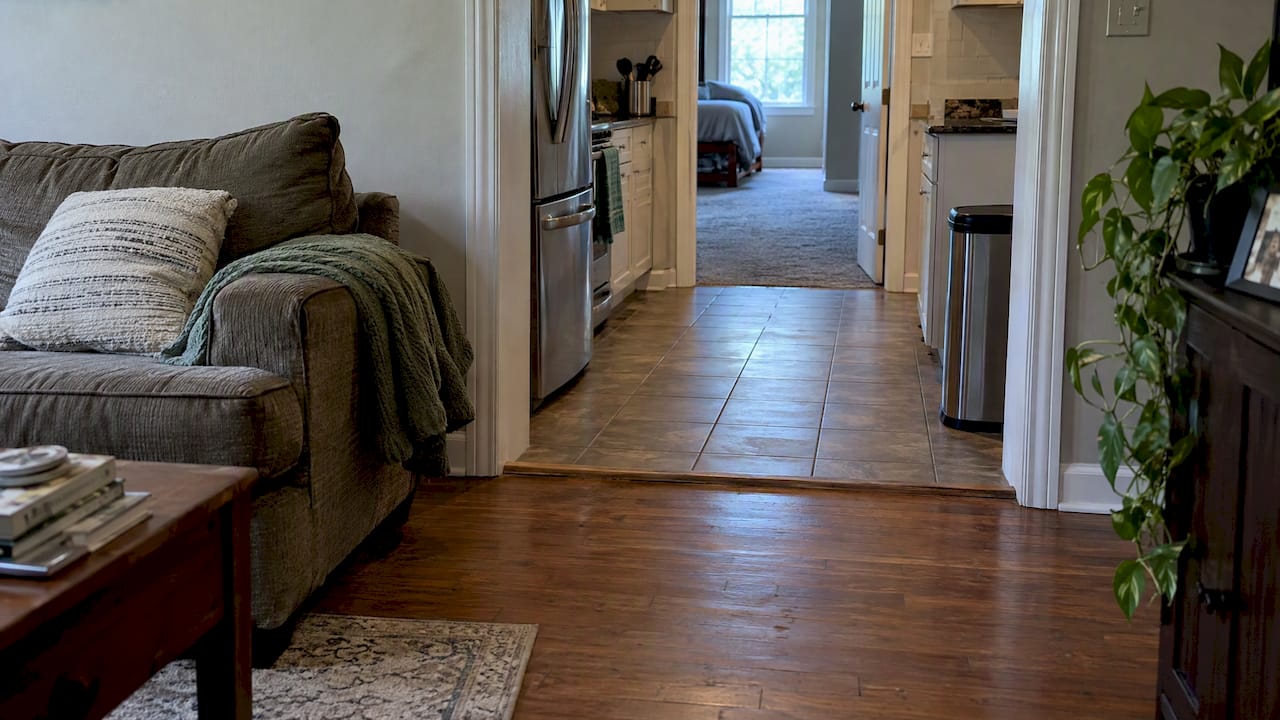
Pro Tip: Pick one dominant material for the main living areas first, then add secondary materials only where function demands them.
For tile and stone inspiration, this natural stone flooring guide shows how stone choices tie into a whole-home design.
Work through these steps in order:
Keep these points in mind as you go.
Subfloor condition can affect flooring performance. Professional installers treat moisture testing, leveling and acclimation as important steps, and homeowners may underestimate them, according to the NWFA’s advice to hire a pro.
The NWFA states that proper installation, subfloor preparation and acclimation are the main factors in long-term flooring performance, and it recommends consulting a professional early. Ask prospective installers what tools they use and what workmanship warranty, if any, they offer. For an example of installer services, see this flooring installation provider.
Ask every contractor these questions during an estimate:
Routine care protects your investment:
For wood, the NWFA recommends keeping indoor conditions at 60–80°F and 30–50% relative humidity to limit seasonal movement. For scratches, loose transition strips, cupping, gaps or soft spots, consult the flooring manufacturer’s guidance or a professional about the appropriate repair.
Kierin here. The renovations that go smoothly start with how each room is used, not with a showroom photo. Style matters, but function and prep prevent regret. Before you buy a single box, have an installer look at your subfloor and tell you what it can support.
— Kierin
We handle flooring from first idea to finished floor, so you are not coordinating it all yourself.
Request a consult and we will check your subfloor and give you an estimate. Start with our floor replacement service, or see our pricing page for current starting points.
There is no single best floor, because the right one depends on the room. Porcelain tile and LVP suit wet or high-traffic areas, while hardwood or engineered wood suits living spaces. Consumer Reports also recommends matching flooring to each room’s function.
The appearance of light and dark floors varies with the room and product. Choose based on your light, your pets and how much cleaning you want to do. Always view samples in your own home before deciding.
It is a design guideline that limits a home to about three main flooring materials. Designers use it to keep the house looking cohesive. House Beautiful describes starting with one dominant material and adding others only where function demands.
Hardwood remains a benchmark for resale value. HomeLight notes that families with pets and children are increasingly choosing luxury vinyl that mimics wood with better scratch and moisture resistance.
YOUR NEXT PROJECT
Tell us about your project and get a free, no-pressure estimate.