

TL;DR:
- Minor kitchen remodels provide over 100% return on investment by updating appearance and functionality. Large renovations often recoup less than half of their costs and exceed neighborhood value limits, reducing resale value. Focus on cosmetic updates like fresh paint, new hardware, and neutral finishes to maximize resale benefits within budget.
A kitchen remodel is one of the few home improvements that can return more money than it costs. Understanding why kitchen remodels boost value comes down to a single principle: buyers pay a premium for kitchens that look updated and work well, and they discount homes where the kitchen looks tired. The industry term for this financial dynamic is kitchen renovation ROI, and the data behind it is more specific than most homeowners realize. Minor cosmetic updates consistently outperform major gut renovations on resale return, and knowing the difference before you spend a dollar is the most valuable thing you can learn.
Why kitchen remodels boost value more than other renovations
Kitchen remodels outperform most other interior projects because the kitchen is the room buyers evaluate most critically. A dated kitchen signals deferred maintenance and triggers lower offers. A fresh, functional kitchen signals a well-cared-for home and justifies a higher asking price.

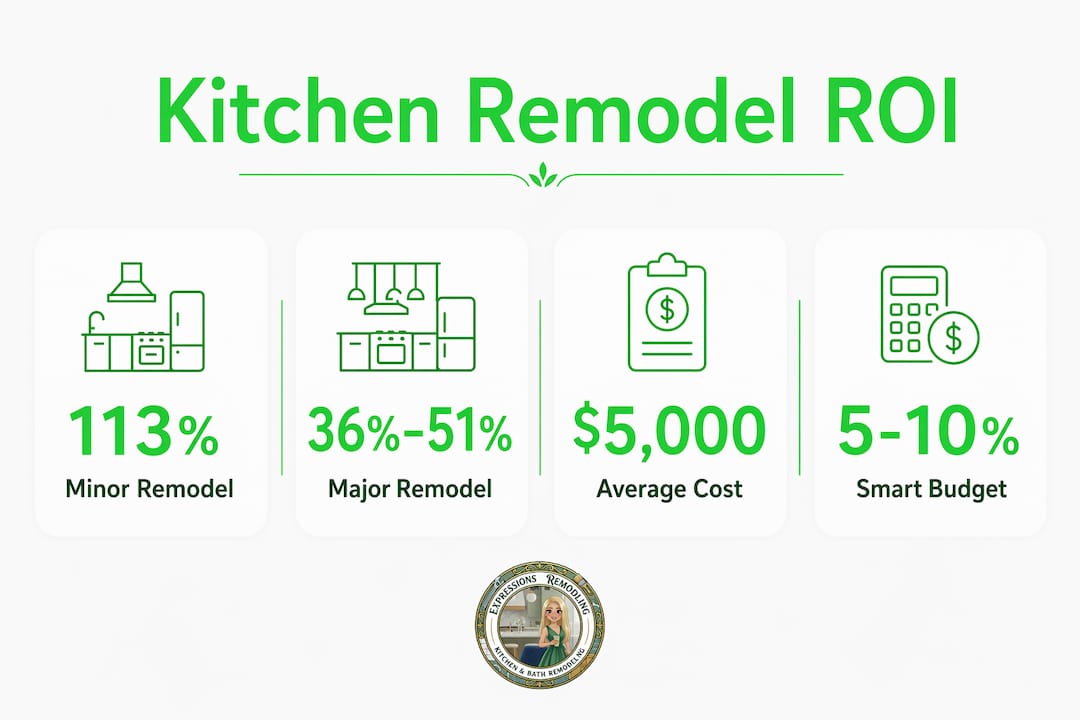
The financial evidence is clear. A minor kitchen remodel recoups approximately 113% of its cost nationally, making it one of the only interior projects to exceed 100% ROI. That means a $28,458 investment adds roughly $32,141 in resale value. No other single room delivers that kind of return.
Major upscale remodels tell a very different story. Upscale kitchen remodels recoup only 36%–51% of their cost, with projects ranging from $80,000 to over $160,000 adding only $41,600 to $82,000 in resale value. The gap between what you spend and what you recover widens dramatically as scope increases.
The table below shows why scope matters so much when planning for resale.
| Remodel type | Typical cost | Resale value added | Approximate ROI |
|---|---|---|---|
| Minor cosmetic remodel | $28,458 | $32,141 | ~113% |
| Midrange full remodel | $80,000 | $41,600–$55,000 | ~52%–69% |
| Major upscale remodel | $160,000+ | ~$82,000 | ~51% |
Cosmetic updates deliver better ROI because they address buyer perception without exceeding what the neighborhood supports. Structural changes and custom cabinetry add cost without adding proportional value in most markets.
What kitchen features buyers actually pay more for
Buyers want kitchens that feel clean, current, and functional. They do not want to walk in and immediately plan a renovation. Specific materials and finishes drive that “move-in ready” perception more than square footage or layout.
Stainless steel appliances are chosen by 72% of renovating homeowners because they signal modernity and are easy to photograph well for listings. Neutral color palettes on walls and cabinets appeal to the widest range of buyers. Quartz or granite countertops communicate quality without requiring explanation. Soft-close cabinet hardware costs very little but changes how a kitchen feels the moment someone opens a drawer.
The upgrades that most reliably attract buyers include:
- Stainless steel appliances for a current, cohesive look
- Quartz or granite countertops as the visual anchor of the space
- Neutral cabinet colors (white, gray, or warm greige) that photograph well
- Soft-close hinges and drawer pulls for a quality feel at low cost
- Updated lighting including under-cabinet strips and pendant fixtures
Over-personalizing kitchens with luxury or niche materials reduces resale appeal. A hand-painted tile backsplash or a custom range hood in an unusual finish may reflect your taste perfectly and still cost you buyers. Restraint is not a compromise. It is a financial strategy.
Pro Tip: Hardware updates can cost under $100 for an entire kitchen and produce an outsized visual impact. Replace builder-grade knobs with brushed nickel or matte black pulls before any other upgrade.
How to plan and budget a kitchen remodel for maximum resale value
Effective kitchen remodel ROI planning starts with one number: your home’s current market value. Cap your remodel budget between 5% and 10% of your home’s total value to avoid over-improving beyond what your neighborhood supports. On a $350,000 home, that means keeping your kitchen remodel between $17,500 and $35,000.
The neighborhood price ceiling is the single most misunderstood concept in remodeling for resale. Spending above 110%–120% of the median neighborhood sale price produces poor ROI regardless of how beautiful the result is. Buyers in a $300,000 neighborhood will not pay $450,000 for a kitchen with $80,000 in custom finishes. The market simply does not support it.
Sequence your spending by return, not by what excites you most. The right order is:
- Paint and hardware — highest ROI per dollar, immediate visual impact
- Lighting — recessed cans, pendants, and under-cabinet strips change the entire feel
- Cabinet refacing or painting — far cheaper than replacement, nearly identical visual result
- Countertops — quartz or granite at midrange price points, not premium slabs
- Appliances — replace only what is visibly dated or non-functional
- Layout changes — only if the current layout is genuinely dysfunctional and budget allows
Sequencing spending by ROI maximizes budget efficiency and prevents the common mistake of blowing the budget on appliances before addressing the surfaces buyers see first. A $12,000 refrigerator in a kitchen with 1990s laminate countertops does not add $12,000 in value.
Pro Tip: Before committing to a full remodel, get a step-by-step remodel plan in place. Knowing your sequence before you start prevents costly mid-project pivots.
Why minor remodels outperform major renovations at resale
The psychology of home buying explains the ROI gap between minor and major remodels better than any spreadsheet. Buyers prioritize functionality, cleanliness, and an updated appearance. They do not pay a premium for custom features they did not choose and may not want.
Minor remodels are the only interior projects exceeding 100% ROI nationally. That distinction matters because it means a targeted cosmetic update is not just “good enough.” It is the financially optimal choice for most homeowners selling within a few years. A full gut renovation, by contrast, often exceeds the neighborhood price ceiling before the first cabinet goes in.
A dated kitchen creates a measurable discount in buyer offers and extends time on market. Eliminating that discount through minor cosmetic updates, not a full renovation, is the highest-return move most homeowners can make before listing.
Staging and minor cosmetic improvements like deep cleaning, decluttering, and fresh paint can produce buyer impact similar to physical remodels at a fraction of the cost. Many sellers underestimate how much perception drives price. A kitchen that photographs well and smells clean will outperform a technically superior kitchen that looks cluttered in listing photos.
The common misconception is that luxury equals value. Lifestyle ROI and resale ROI are not the same thing. A $15,000 professional range may improve your daily cooking experience significantly and add almost nothing to your sale price. That is not a reason to avoid it. It is a reason to be honest about why you are buying it.
Key Takeaways
Minor kitchen remodels are the highest-ROI interior investment available to homeowners, returning over 100% of cost nationally when scoped and budgeted to match neighborhood expectations.
| Point | Details |
|---|---|
| Minor remodels beat major ones | A minor remodel returns ~113% of cost; major upscale remodels return only 36%–51%. |
| Budget to 5%–10% of home value | Spending beyond this range risks exceeding the neighborhood price ceiling and losing ROI. |
| Sequence upgrades by return | Start with paint and hardware, then cabinets and countertops, then appliances last. |
| Buyers want updated, not custom | Neutral finishes and functional layouts outperform personalized luxury features at resale. |
| Lifestyle ROI differs from resale ROI | High-end upgrades may improve daily life without adding proportional resale value. |
The honest truth about remodeling for resale vs. living
Most homeowners I work with come in thinking they need to gut the kitchen to get top dollar. Almost none of them do. The data is consistent: the kitchen that sells a house is clean, updated, and neutral. It is not the kitchen you would design for yourself if money were no object.
The mistake I see most often is conflating personal taste with market value. A homeowner spends $60,000 on a kitchen they love, lists the house, and then wonders why the offers do not reflect that investment. The neighborhood simply does not support it. Buyers are not paying for your choices. They are paying for a home that fits the market.
My honest recommendation: define your goal before you spend a dollar. If you are planning to sell within two years, keep the budget under 10% of your home’s value and focus entirely on what buyers see first. If you are staying for ten years, spend what makes the space work for your life, and accept that some of that investment is for your enjoyment, not your equity. Both are valid. Mixing them up is where homeowners lose money.
The best remodels I have seen for resale are the ones that modernize without rebuilding. New countertops, painted cabinets, updated hardware, and fresh lighting can make a 20-year-old kitchen feel current for well under $20,000. That is the sweet spot.
— Kierin
Expressions Remodeling can help you get the ROI right
Knowing which upgrades to make is one thing. Executing them well, on budget, and in the right sequence is where most homeowners need a professional.
Expressions Remodeling works with St. Louis homeowners to plan and complete affordable kitchen upgrades that target resale value without over-building. The focus is on mid-range, high-return projects: cabinet refacing, countertop replacement, updated lighting, and modern hardware. Every project is scoped to your home’s value and your neighborhood’s price ceiling, so you spend where it counts and hold back where it does not. If you are planning a kitchen remodel in the St. Louis area, Expressions Remodeling is the team to call before you commit to a budget.
FAQ
What is the average ROI on a kitchen remodel?
A minor kitchen remodel returns approximately 113% of its cost nationally, while major upscale remodels return only 36%–51%. The type and scope of the remodel determines the return far more than the quality of materials.
How much should I spend on a kitchen remodel before selling?
Cap your budget between 5% and 10% of your home’s current market value. Spending beyond that range risks exceeding the neighborhood price ceiling, which limits what buyers will pay regardless of the upgrade quality.
What kitchen upgrades add the most resale value?
Paint, hardware, cabinet refacing, and countertop replacement deliver the highest ROI per dollar spent. Stainless steel appliances and neutral color palettes also rank high because they directly influence buyer perception and listing photos.
Does a full kitchen gut renovation pay off at resale?
Rarely. Major upscale remodels typically recoup only about half their cost at resale. A targeted cosmetic update almost always produces a better financial return than a full structural renovation in most markets.
What is the neighborhood price ceiling in remodeling?
The neighborhood price ceiling is the maximum home value the local market supports, typically 110%–120% of the median sale price in your area. Spending on renovations that push your home’s value above that ceiling produces little to no additional resale return.