

If you want a remodel finished before the holidays, the window is closing but it is not shut. Interior projects like bathrooms, kitchens, basements and flooring can run all winter in St. Louis. Exterior work that depends on concrete, footings and dry ground is the work that needs to happen in the next few weeks or wait until spring. Today is October 18, and the average first fall frost in St. Louis is October 22, so the sorting matters now.
This guide helps you decide what to start this fall, what to book for January, and what to skip until April. It also covers permits, pricing and the questions to ask a contractor before you sign.
TL;DR
- Exterior work that involves concrete, footings or decks is the most winter-sensitive. Start it in the next few weeks or plan for spring.
- Interior remodels (bathroom, kitchen, basement, floors) are not weather-dependent once the house is closed in, so they can start now or in winter.
- Check for permits early. Structural changes and basement-to-living-space conversions need them, and historic districts in the city add review time.
- Our published starting points: kitchen remodeling from $10,000, full bathroom remodeling at $16,999 per project, and full basement remodeling from $40 per sq. ft.
- Heating comes first. Get your furnace checked before the first hard freeze, ideally before drywall and finishes go in.
Table of Contents
- Why fall is the deciding season in St. Louis
- Exterior work: why the clock matters
- Interior projects that work well in winter
- Get the heating side right first
- Permits: plan them before the weather turns
- What it costs, and what is driving prices
- Where to put your money: function over flash
- Our perspective
- Working with Expressions Remodeling
- A fall checklist before you call anyone
- Help for homeowners with limited budgets
- FAQ
- Sources
Why fall is the deciding season in St. Louis
Spring and early fall are the easiest months to build in Missouri. One 2026 cost guide puts the best renovation months at April through June and September through October, and says December through February are the hardest months to start exterior projects. Frozen ground causes delays, and concrete has to be kept above 40°F while it cures.
The same source notes that scheduling in peak seasons can run 5 to 15% higher because of contractor demand. That cuts both ways. Fall is busy, so good crews book up. Winter is quieter for interior work, so you may get a more flexible start date.
The practical split is simple:
- Weather-dependent: decks, patios, new footings, foundation repair, exterior paint and anything with a concrete pour.
- Weather-independent: bathrooms, kitchens, basements, flooring, home offices, garages that are already enclosed.
Exterior work: why the clock matters
St. Louis winters change how outdoor projects get built. A local deck contractor explains that footings generally need to go at least 36 inches below grade to get under the frost line. In winter, contractors also need concrete additives or protective blankets to keep pours warm enough. That adds labor and material cost.
If you have a deck, porch or addition planned, the choices are:
- Start now. You need a permit in hand and a contractor who can pour before temperatures drop.
- Prep now, build in spring. Finish design, drawings and permitting this winter, so you break ground the first dry week in April.
- Move the project inside. If the goal is more usable space, a finished basement or a converted storage room delivers it without waiting on weather.
We do not pretend every outdoor job can wait. If water is getting into your home, that is a repair, not a renovation, and it comes first.
Interior projects that work well in winter
Once the house is sealed, cold weather barely touches interior work. Here is how the main projects compare.
| Project | Weather sensitivity | Why it suits a fall or winter start |
|---|---|---|
| Bathroom remodel | Low | Contained space, and you are usually home anyway |
| Kitchen remodel | Low | Cabinet orders take time, so ordering now means installing in the new year |
| Basement finishing | Low, but moisture matters | Warm, dry months are over, but winter shows you where cold and damp really are |
| Flooring | Low | Fast to install, and indoor humidity is more stable |
| Home office or man cave | Low | Done before the post-holiday work-from-home push |
| Garage renovation | Medium | Depends on whether the garage is already enclosed and insulated |
Basement renovation before winter
The basement is the strongest candidate for a fall start. You can take advantage of the last dry weeks to find moisture problems, and winter will show you where the cold gets in. Before any framing, test for moisture and radon. We cover this in our guide to unfinished basement remodeling and why to test moisture and radon first.
Flooring is the usual place basement budgets go wrong. Our write-up on basement flooring that won’t fail from moisture walks through the options. If you are weighing a basement against a kitchen as your next project, see kitchen vs basement remodel tips for St. Louis homes. Our basement remodeling page explains what the work includes.
Our published rate for full basement remodeling is from $40 per sq. ft. On a 600 sq. ft. basement, that is a starting point of $24,000 before your specific scope, which is how we would frame a first conversation. Actual cost depends on layout, bathrooms, egress and finishes.
Bathroom remodeling
A full bathroom remodel is listed on our pricing page at $16,999 per project. Winter is a reasonable time because the work is contained, and the finished room is ready for the colder months. If you are planning a layout change, read our bathroom layout redesign guide first, and use the bathroom remodel checklist to line up decisions before demolition. Choosing a floor? See porcelain tile or vinyl for St. Louis bathrooms.
Kitchen remodeling
Kitchens start from $10,000 in our published pricing. The advantage of starting in fall is lead time: cabinets and special-order materials take weeks to arrive, so ordering in October means installing in the winter slow period. If you want a plan that protects your budget, see how to plan a kitchen remodel in St. Louis without overspending and what a kitchen remodel includes. For higher-end homes, including Ladue and the surrounding suburbs, our luxury kitchen remodeling guide and Ladue remodeling page show how we approach them.
Flooring
Flooring is one of the fastest ways to refresh a house before guests arrive. Vinyl flooring starts from $2 per sq. ft. in our pricing, and our floor replacement service covers other materials as well.
Get the heating side right first
A remodel that adds finished space also adds something to heat. Before you close up walls in a basement or addition, have the system checked. A St. Louis-area HVAC company explains what a fall tune-up covers and why it matters before winter. Doing this before the finish work means any duct changes or equipment swaps happen while walls are still open.
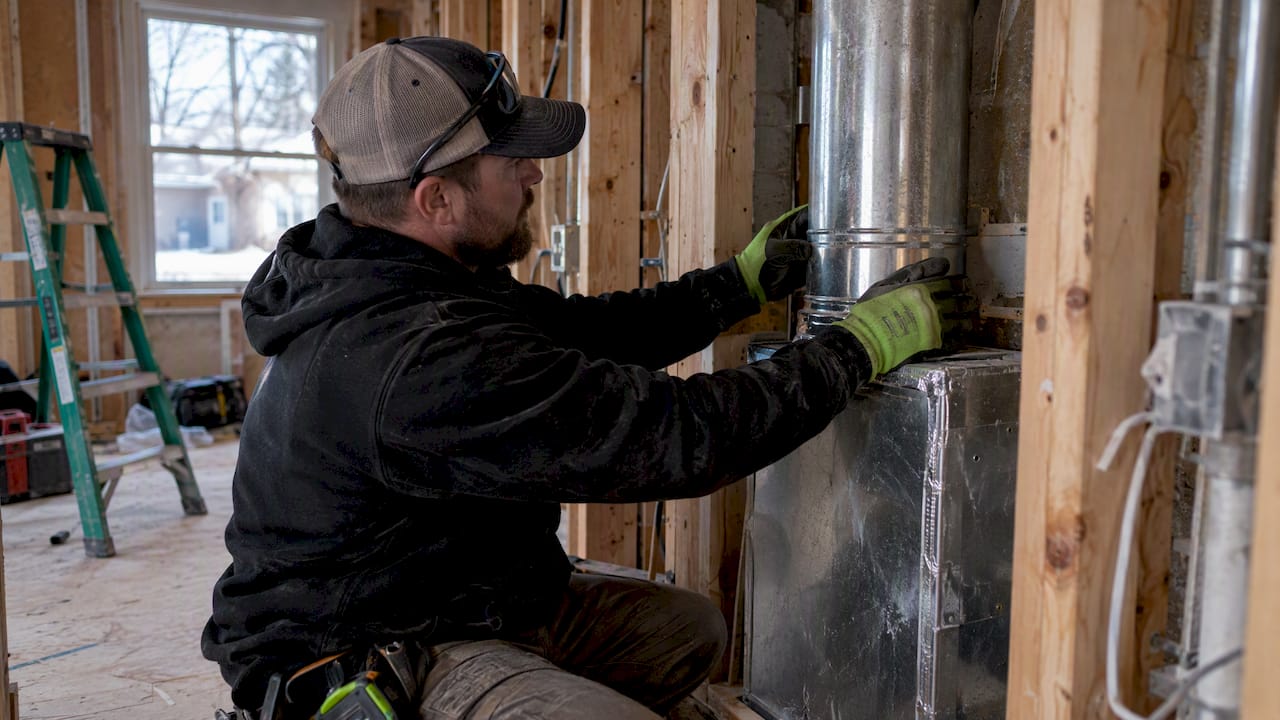
If you are interested in an energy-efficient remodel, the same logic applies. Insulation, air sealing and duct work are cheapest to improve when walls are open. Raise efficiency upgrades with your contractor during the design stage rather than after drywall.
Permits: plan them before the weather turns
Permit timing is the most common reason fall projects slip into spring. The City of St. Louis says that structural changes, additions and basement-to-living-space conversions need building permits, while ordinary work like painting, floor sanding and cabinet installation typically does not.
A few things to know if you live in the city:
- Many simple permits are approved the same day at the One-Stop-Shop in City Hall. More complex projects typically take 10 to 15 working days.
- For projects over $3,000, the city lists a $25 application fee plus $10 per thousand dollars of estimated construction cost.
- Remodels can trigger separate plumbing, mechanical or electrical permits even when the main permit is handled.
- Homes in local historic districts need additional Cultural Resources Office approval, which can push timelines past the standard window.
St. Louis County and individual municipalities have their own rules, so confirm with your city hall if you live in a suburb. Ask your contractor who pulls the permits and who schedules inspections. That should be written into the contract.
What it costs, and what is driving prices
Cost data for Missouri varies by source, so treat any average as a rough benchmark. A 2026 Missouri cost guide reports labor running below the national average. Material prices are less stable: a renovation forecast for 2026 names tariffs on steel and lumber as pressure on costs.
Our own published starting points are below, so you can compare them with other quotes.
| Service | Our published price |
|---|---|
| Kitchen remodeling | From $10,000 |
| Full bathroom remodeling | $16,999 per project |
| Full basement remodeling | From $40 per sq. ft. |
| Vinyl flooring | From $2 per sq. ft. |
Final pricing depends on your scope. Prices for services not listed above are quoted per project.
Where to put your money: function over flash
If you are renovating partly for resale or value, the guidance from industry analysis is consistent. According to a report citing Harvard’s Joint Center for Housing Studies, high home equity continues to drive remodeling even as the housing market is slow, and experts suggest focusing on function, such as kitchen and bath layouts or efficiency upgrades, over purely aesthetic luxury remodels.
For how to get more value from a kitchen specifically, see our design moves that maximize kitchen value.
Our perspective
Most homeowners ask us whether it is too late to remodel this year. Usually it is not, but the question we ask back is what the project is for. If the goal is a room you will use through the winter, a basement, bathroom or home office is a better fall project than anything outdoors.
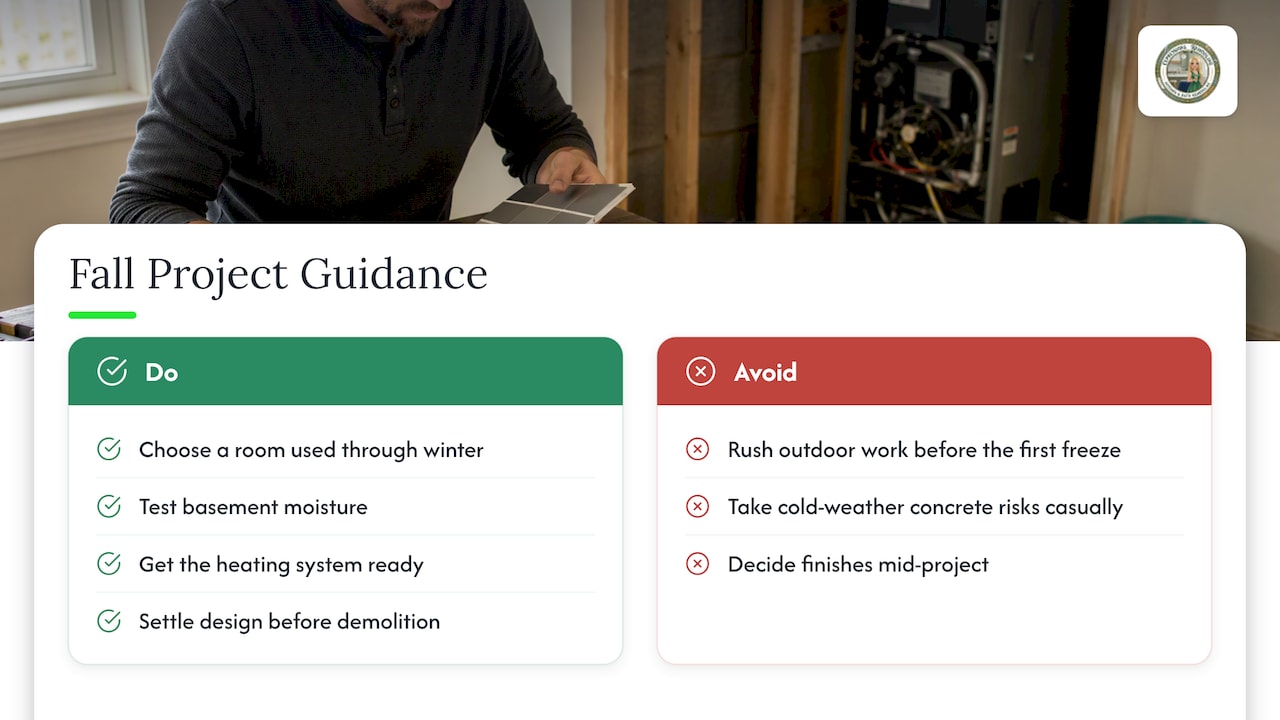
We would rather see a homeowner start with the work that wakes the house up, such as moisture testing in the basement, a layout that works, and a heating system that is ready, than rush an outdoor job against the first freeze. Concrete in cold weather is a risk we usually advise against taking casually.
We also encourage people to settle design before demolition. Our team works with 3D design visualization, so you can see the room before the first wall comes down, and decisions about cabinets, tile and lighting are made on paper rather than mid-project. That is where budgets are protected.
— Kierin
Working with Expressions Remodeling
We remodel kitchens, bathrooms and basements in St. Louis, and also handle home offices, man caves, storage rooms, garages and floors. If you want to start a project before the year ends, our pricing page shows where each service starts, and you can reach us through the Expressions Remodeling home page to talk through your scope and timing.
A fall checklist before you call anyone
- Sort urgent repairs from upgrades. Leaks, failing gutters and heating problems go first.
- Decide what is outdoors and what is indoors. Outdoor concrete work gets a hard deadline. Indoor work does not.
- Check permits. Ask whether your project needs structural, plumbing, electrical or mechanical permits, and whether you are in a historic district.
- Test the basement. Moisture and radon results should shape the plan.
- Order long-lead items now. Cabinets, fixtures and special tile can take weeks.
- Get the scope in writing. Include permits, cleanup, change-order rules and a payment schedule.
- Budget a cushion. Older St. Louis homes often show surprises once walls are opened, such as damaged subflooring or framing that needs repair.
Help for homeowners with limited budgets
Not every urgent project is a remodel. The City of St. Louis offers the Healthy Home Repair Program for low to moderate income households in the city, focused on health and safety repairs. Eligibility depends on residency, ownership and income. If you live outside the city limits, St. Louis County also runs a Home Improvement Program. Check current rules with each office before you apply.
FAQ
Is it too late to start a home renovation before winter in St. Louis?
Not for interior work. Bathrooms, kitchens, basements and floors can be done in cold months because they do not rely on outdoor conditions. Exterior projects involving concrete or footings are the ones that run out of time.
What is the best time of year to do home renovations in Missouri?
One 2026 cost guide lists April through June and September through October as the best months. Those months have milder weather and fewer delays. They are also busy, so booking ahead matters.
Do I need a permit for a basement remodel in St. Louis?
If you are converting a basement to living space, the City of St. Louis says a building permit is required. Painting and cabinet installation typically do not need one, but plumbing or electrical work can trigger separate permits. Confirm with your city or municipality, since rules differ between the city and the county.
Is winter a good time to remodel a bathroom or kitchen?
Yes, in most cases. The work happens inside, and a winter start can fit a slower season for some contractors. The main constraint is lead time on cabinets and materials, so order early.
Sources
- Frost Dates for Saint Louis, MO (Almanac)
- Missouri Construction Costs 2026 (HammerIO)
- Winter Ground & Deck Footings in St. Louis (Greenscape)
- Residential Construction Permit (City of St. Louis)
- Renovation Forecast 2026 (Lessen)
- Weak Housing Market Dampens Enthusiasm for Home Remodeling (The MortgagePoint)
- Healthy Home Repair Program (City of St. Louis)
- Home Improvement Program (St. Louis County)