
The strongest kitchen backsplash choices for a remodel right now fall into four camps: full slab and countersplash installations, handmade tiles like zellige, classic subway tile reworked with new grout and layout, and mixed-material focal walls. Each trades visual impact against upkeep and cost differently. This guide walks through the ideas, the material tradeoffs, and the care facts that should shape your decision.
TL;DR:
- Slab backsplashes and full-height installations are trending for their high-end, seamless look, but they cost more and require a reinforced, flat substrate.
- Handmade tiles like zellige add character but are best suited for small sections due to their textured, imperfect appearance.
- Porcelain and engineered quartz offer low-maintenance options for heavy cooking areas, while natural stone demands regular sealing and careful cleaning.
- Testing tile and slab samples in your kitchen’s actual light before purchasing is crucial, as screens can distort true color and undertones.
- A well-planned backsplash decision considers durability, cleanability, and how the material matches your cooking habits and overall kitchen design.
Table of Contents
- 1. Backsplash design directions worth considering
- 2. Material tradeoffs and what upkeep actually looks like
- 3. How to choose the right backsplash for your kitchen
- 4. Installation details that make or break the finished look
- 5. A contractor’s view on backsplash decisions
- 6. Why most backsplash advice gets the priorities backward
- 7. Let us help you bring the right backsplash to life
- FAQ
- Sources
1. Backsplash design directions worth considering
Before picking a material, it helps to see the full range of what other homeowners are choosing right now and why each style earns its place.
- Slab backsplashes and countersplashes. A single slab of quartz or stone running from counter to upper cabinet (or further) removes grout lines entirely and gives a kitchen a continuous, high-end look. Trend reporting for 2026 points to slab backsplashes and full-height installations as major directions, and Houzz’s 2026 Kitchen Trends Study found slab backsplashes now count for a significant minority of backsplashes in renovated kitchens. It suits kitchens where the countertop material itself is the star.
- Handmade and zellige tiles. These tiles carry visible texture, slight color variation, and an imperfect glaze that reads as handcrafted rather than mass-produced. They pair well with warm wood cabinetry and matte fixtures, and work best in smaller sections where their character stands out instead of overwhelming the room.
- Subway tile, reworked. Classic 3×6 subway tile still anchors plenty of kitchens, but the detail is in the grout and layout now: thin grout lines in a near-matching color for a cleaner look, or a herringbone or vertical stack for a less expected pattern. Running it full height behind the range turns a familiar material into a feature.
- Decorative and hand-painted tile. Patterned or wallpaper-emulating tiles work as a contained statement, usually behind a range or in a small accent run, so the pattern does not compete with cabinetry or flooring.
- Mixed-material treatments. Pairing tile with a metal trim strip, floating wood shelf, or an inset panel adds depth without committing an entire wall to one expensive material.
- Color approach. A soft, low-contrast palette keeps a kitchen feeling calm and resists dating quickly, while a bold focal wall behind the range concentrates color in one spot you can change later without redoing the whole kitchen.
Undertones matter more than the color name on a sample card. Warm white tile against a cool gray countertop can look muddy once both are installed under kitchen lighting, so pairing choices deserve attention before you commit. For more ways to refresh a kitchen without a full teardown, see our notes on modernizing a kitchen without a rebuild.
2. Material tradeoffs and what upkeep actually looks like
Material choice drives both the look and the maintenance routine you will live with for years.
- Porcelain and ceramic tile resist staining and scratching well and cost less than natural stone, but grout lines need periodic sealing and can discolor near the stove without regular cleaning.
- Natural stone (marble, granite, travertine) brings unmatched veining and depth, but porosity varies by stone type, so sealing frequency depends on the specific material.
- Engineered quartz and quartzite slabs offer the most consistent veining and the lowest required maintenance among slab options, which is part of why engineered quartz is the most popular slab material among homeowners, followed by quartzite at 33%.
Stone surfaces like granite and marble achieved greater than 5-log pathogen reduction after a simple wash and rinse, according to Natural Stone Institute cleanability testing, meeting FDA sanitizing criteria with basic care rather than specialized products. That is a useful fact if you are weighing stone against tile purely on hygiene grounds: both clean up well with routine care.
Sealing is not automatic. Natural Stone Institute guidance explains that sealers act as repellents rather than making stone stain-proof, and the right sealing schedule depends on the stone’s geology. Many granites are resin-treated at the factory to fill fissures, and these resined stones hold up well without strict sealing requirements, though sealing can still add stain resistance. For daily care on engineered surfaces, this guide to quartz countertop cleaning covers routine upkeep that applies to quartz backsplashes too.
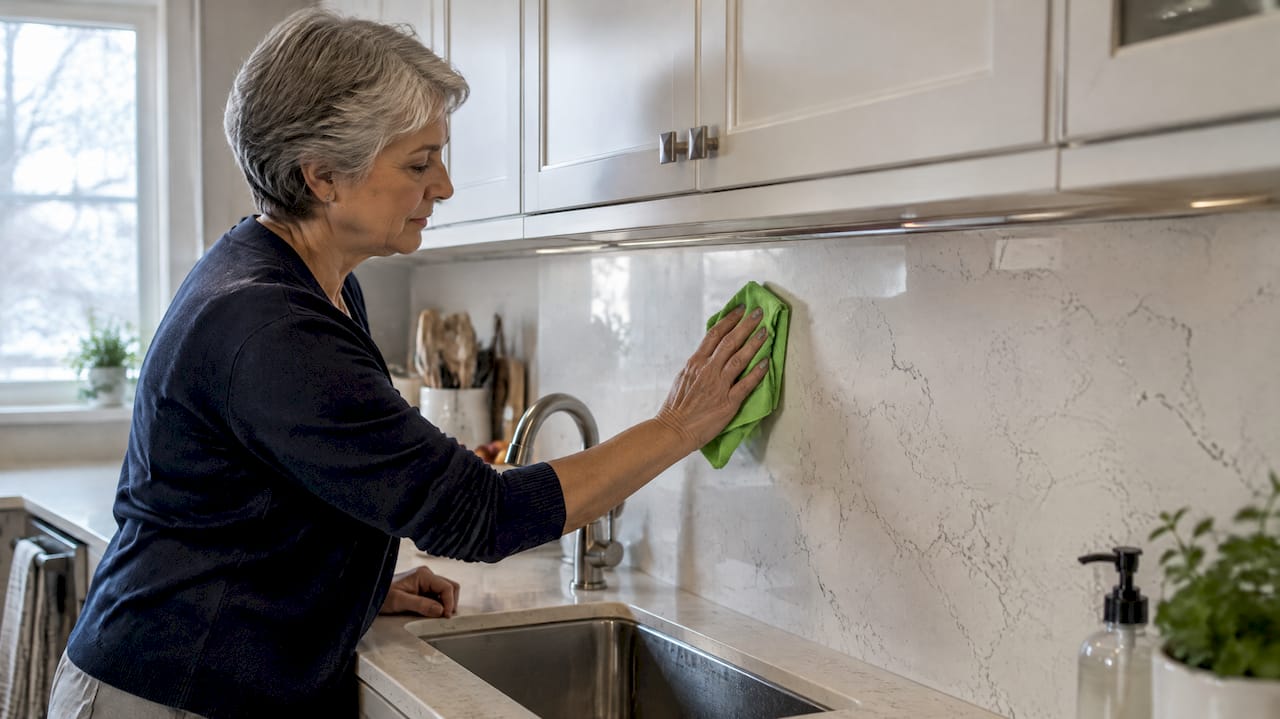
Maintenance checklist: use pH-neutral cleaners on stone and avoid vinegar or citrus-based products, which etch marble and limestone; reseal porous stone on the schedule your fabricator recommends; and call in a professional poultice treatment for any stain that does not lift with routine cleaning.
3. How to choose the right backsplash for your kitchen
A good decision framework keeps you from falling for a showroom sample that will not work in your actual kitchen.
- Match the material to how you cook. Heavy daily cooking near an open range favors low-maintenance porcelain or engineered quartz over porous, unsealed stone.
- Test samples in your own kitchen light. Bring tile and slab samples home and view them next to your countertop and cabinet finishes in both daylight and evening light before ordering.
- Set a budget tier first. Full-height slab installations cost more than a standard tile backsplash of the same square footage, largely because of fabrication and seam work; a smaller countersplash section can deliver a similar look at a lower cost.
- Decide on scale. A feature wall behind the range, a full-height treatment, or a modest countersplash each change the material quantity and labor involved.
- Ask installers direct questions. Confirm substrate prep, recommended grout type, whether movement joints are needed, and what warranty covers the installed work.
Pro Tip: Buy one extra tile or a small offcut of slab and keep it in a drawer. It makes future repairs or touch-ups far easier to match.
If your budget is tighter than your wish list, our guide to affordable kitchen upgrades covers where to spend and where to scale back.
4. Installation details that make or break the finished look
The small decisions around the edges of a backsplash often matter more than the material itself.
- Edge profiles and grout width change the whole feel of a tile job: a thin grout line in a matching color reads modern and continuous, while a wider, contrasting grout line emphasizes each tile.
- Coordinate with the hood, shelving, and lighting before tile goes up, since outlet placement and under-cabinet lights often need to shift to sit cleanly within the pattern.
- Extending to the ceiling usually means shorter upper cabinets or open shelving instead, so this decision needs to happen early in cabinet planning, not after tile is ordered.
- Substrate and waterproofing requirements differ by material. Slab installations need a flat, reinforced substrate, while tile needs a properly waterproofed backer board behind the range and sink.
- Timeline and trades typically involve a tile setter for tile work and a countertop fabricator for slab backsplashes, often on different days depending on your contractor’s schedule.
5. A contractor’s view on backsplash decisions
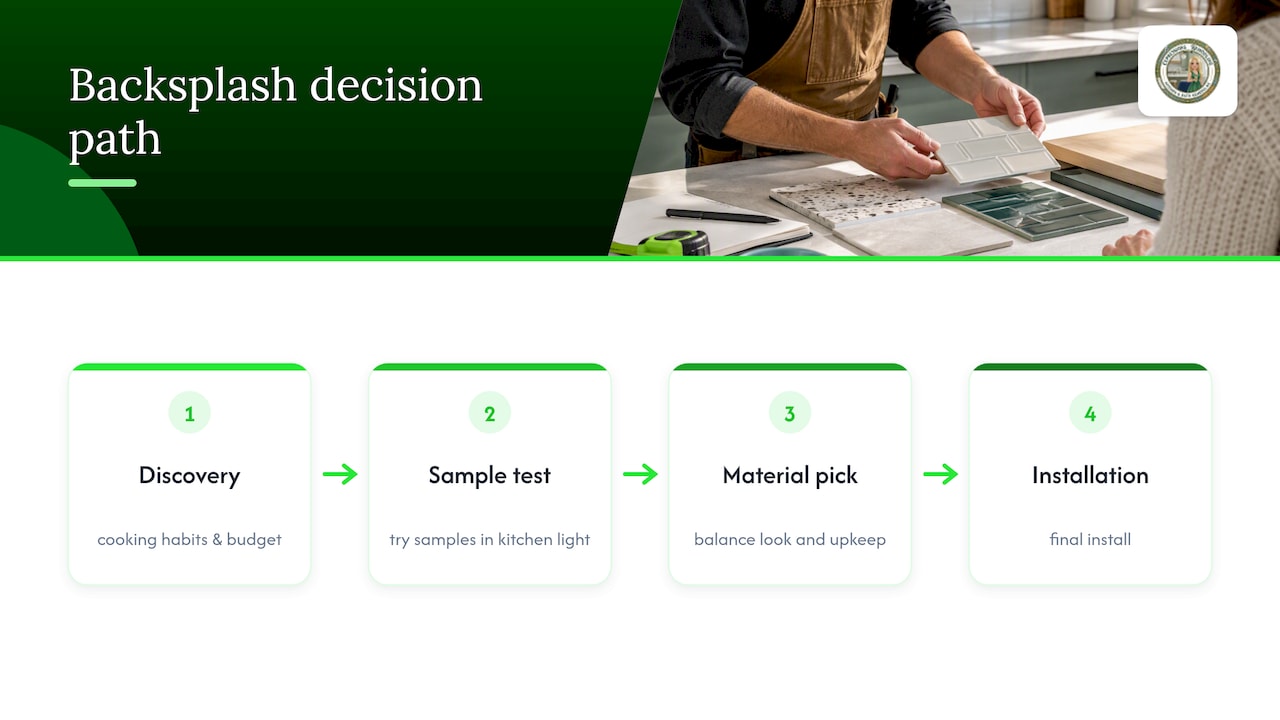
Across kitchen remodels, the backsplash decision tends to follow a repeatable path: discovery conversations about cooking habits and budget, physical sample testing in the client’s own kitchen light, material selection weighed against upkeep tolerance, and then installation. We approach every kitchen project with that same sequence, balancing design ambition against the maintenance reality a homeowner is actually willing to keep up with. The firms that get this right treat the backsplash as a functional decision first and a design statement second, which is the order that holds up over years of daily cooking. For a broader look at how design and durability come together across a full kitchen project, see our exceptional kitchen remodeling guide.
6. Why most backsplash advice gets the priorities backward
Most backsplash content ranks ideas by how they photograph, which is exactly backward for a homeowner planning a remodel. A zellige accent wall looks stunning in a magazine spread and can look dated or impractical within a few years if it was chosen without testing it against the room’s actual light and the homeowner’s actual cooking habits.
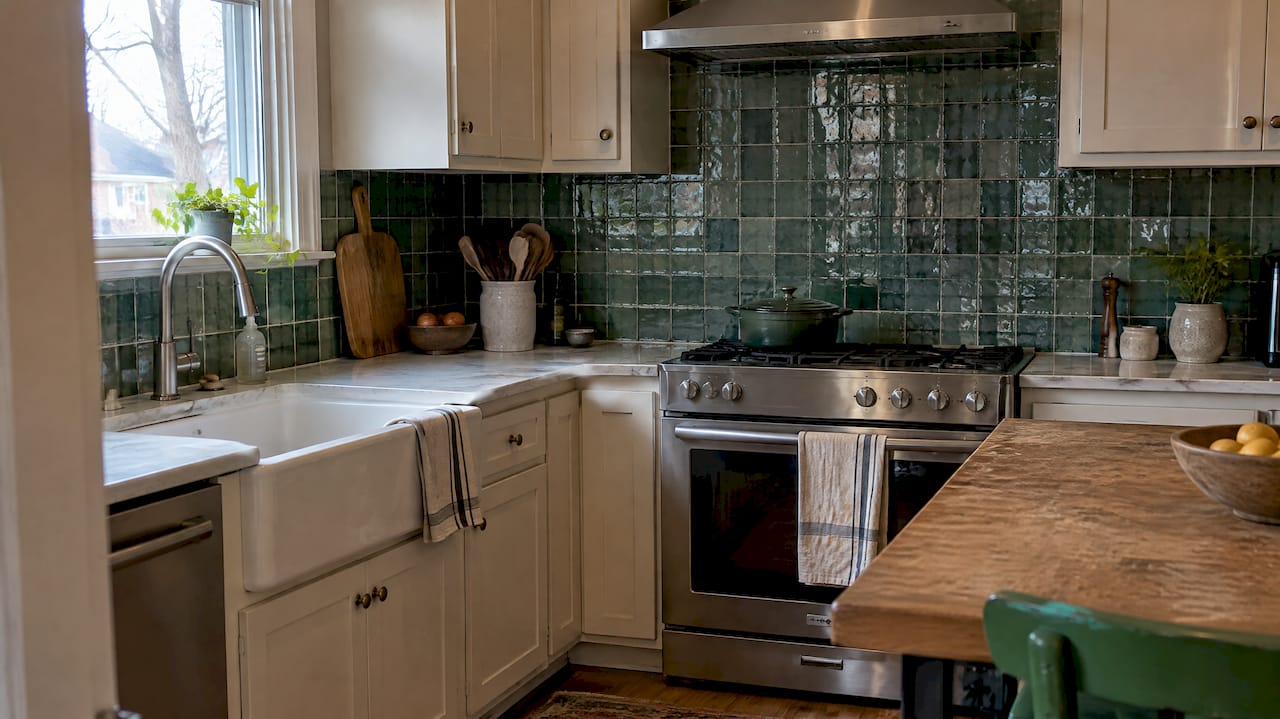
The research here points to a simpler priority order: durability and cleanability first, undertone match second, and visual drama third. Tile still makes up 72% of renovated kitchen backsplashes precisely because it is flexible, repairable, and forgiving of a design mistake in a way a single slab is not. That is not a knock on slab backsplashes; it is a reminder that the trend with the most visual impact is not automatically the right fit for every kitchen.
If there is one thing worth prioritizing above all else, it is physically testing samples together, backsplash, counter, and cabinet, in your own kitchen before ordering anything. Screens and showroom lighting lie.
— Kierin
7. Let us help you bring the right backsplash to life
Once you know the direction you want, the work of getting it built right still matters more than the inspiration photo. We handle kitchen remodeling from design consulting through full installation, with projects starting from $10,000, so the backsplash gets planned alongside cabinetry, lighting, and countertops instead of as an afterthought.
A first consultation typically covers:
- Your cooking habits and maintenance preferences, so material recommendations fit your real routine.
- Sample testing in your own kitchen light before anything gets ordered.
- A straightforward project scope and timeline, with design consulting available if you want 3D visualization first.
Ready to see your options laid out clearly? Reach out for a consultation and we will walk through the backsplash and the rest of your kitchen together.
FAQ
What is the current trend in backsplash?
Slab backsplashes and handcrafted tiles like zellige are leading current trends, alongside full-height installations that run tile or stone from counter to ceiling. Tile overall still makes up 72% of renovated kitchen backsplashes, with slab at 28% and growing.
Should a kitchen backsplash be lighter or darker than a countertop?
There is no fixed rule. Designers recommend testing samples together in your kitchen’s actual light and choosing a contrast level that feels intentional against your cabinetry and countertop rather than defaulting to lighter or darker.
What are the trends for backsplashes in 2026?
Trend coverage for 2026 points to slab backsplashes, full-height installations, handcrafted tiles like zellige, and vintage or wallpaper-emulating tile patterns as the major directions. Mixed-material accents, like metal trim or open shelving worked into a tile layout, are also showing up frequently.
What backsplash will not go out of style?
Classic subway tile in a simple layout with neutral grout remains one of the most durable choices stylistically, since it has stayed in steady use for decades. Neutral stone or quartz slabs with subtle veining also tend to age well because they avoid trend-specific patterns or colors.
How much should I budget for a kitchen backsplash?
Costs vary widely by material and scale, from a modest tile section to a full-height slab wall, so budgeting works best alongside your overall kitchen plan. Kitchen remodeling projects start from $10,000, which covers backsplash work within the context of a broader remodel.
Sources
- 2026 Houzz kitchen trends article
- Natural Stone Institute technical bulletin on stone cleanability
- Homes & Gardens — kitchen backsplash trends 2026