Choose the cabinet tier and core material that match your budget and timeline, then optimize for finish and storage. Start by measuring your space, setting a firm cabinet budget, and picking one or two priorities, whether that’s durability, a specific finish, or custom storage. Everything else, including door style and color, comes after those decisions are locked in.
TL;DR:
- Stock cabinets are the fastest and least expensive option, with delivery times of one to three weeks, suitable for tight budgets and quick projects.
- Semi-custom cabinets offer more size and finish options, taking four to eight weeks for delivery, ideal for most mid-range remodels.
- Custom cabinets have the longest lead times of eight to twelve weeks or more and are best for unique layouts or specific storage needs.
- Plywood is the most durable box material, especially in moisture-prone areas, while MDF and particleboard are cheaper but less resistant to water and wear.
- Neutral colors like white and soft gray are safest for longevity, with bold or dark tones better suited for accents like islands to avoid rapid trend obsolescence.
Table of Contents
- Materials, construction, and durability
- Stock, semi-custom, or custom cabinets: which tier fits your project
- Style, color, and finish: picking a look that lasts
- Budget, timeline, and where to buy
- How to choose: step-by-step checklist and questions to ask
- Practical advice on installation, coordination, and trade-offs
- Quick perspective: prioritize durability over trend chasing
- How Expressions Remodeling can help you choose and install cabinets
- FAQ
- Sources
Materials, construction, and durability
Cabinet boxes are usually built from plywood, MDF (medium density fiberboard), or particleboard, and each has a distinct role. Plywood offers strong fastener holding and resists warping, which makes it a common choice for cabinet boxes and shelving that take daily wear. MDF is smooth and economical for painted doors but weaker than plywood and vulnerable to swelling if liquid water sits on it, so it works best for flat door fronts rather than structural boxes. Particleboard is the budget option for interior panels not exposed to moisture or heavy loads. Solid wood still shows up on stain-grade doors and drawer fronts, though most shops now rely on engineered panel products as cabinet substrates rather than full solid wood boxes.
Construction style matters too:
- Frameless (full-access) construction removes the front frame for larger openings and more interior storage.
- Face-frame construction adds a wood frame across the box front, which affects hinge type and how doors sit.
- Inset doors sit flush within the frame for a custom look but need tighter tolerances and cost more to fabricate.
Door and drawer fronts come in veneer, solid wood, thermofoil, or laminate. Thermofoil resists moisture well but can peel near heat sources like ranges, while solid wood fronts can be sanded and refinished for decades. For sinks, dishwashers, and other moisture-prone zones, lean toward plywood boxes with solid wood or laminate fronts rather than MDF.
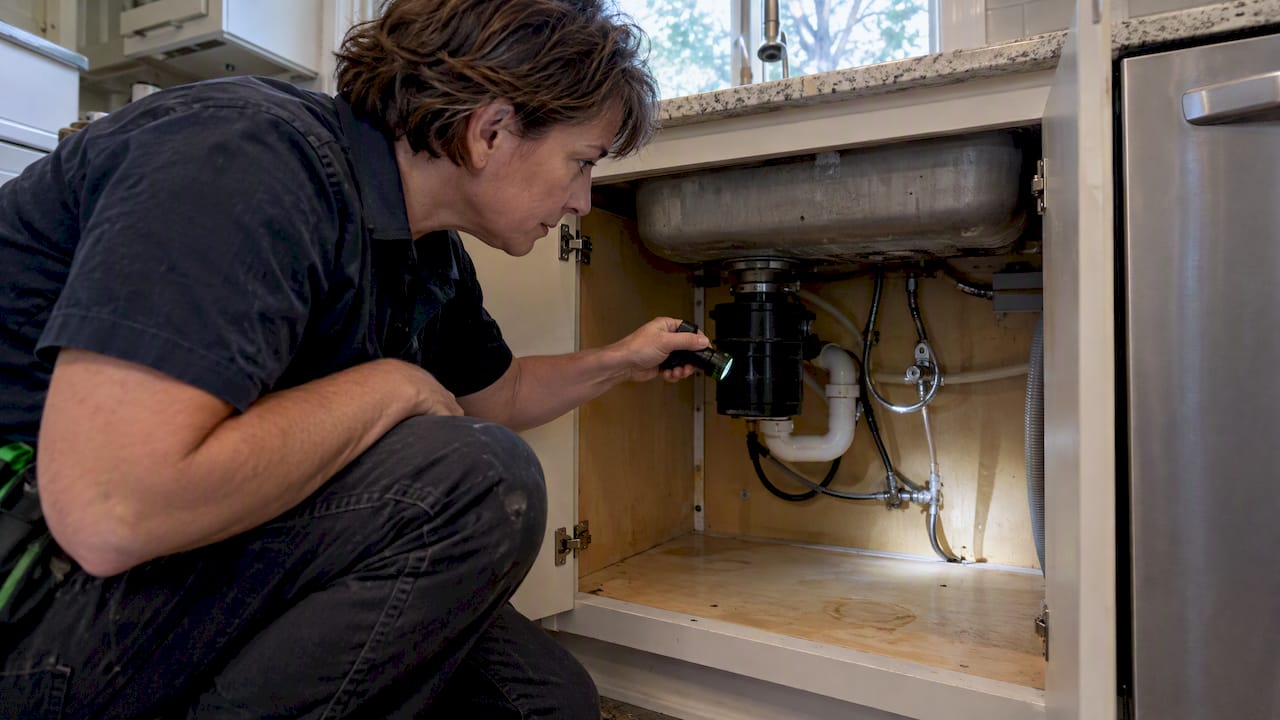
Pro Tip: Ask your contractor which substrate sits directly below the sink and dishwasher. That single detail predicts most long-term warping complaints.
For a deeper technical breakdown of box construction versus door profile choices, see our guide on cabinet construction and door styles.
Stock, semi-custom, or custom cabinets: which tier fits your project
Stock (premade) cabinets ship in fixed sizes and a limited set of finishes, custom cabinets are built to your exact dimensions and specs, and semi-custom sits in between, offering modified standard boxes with more size, finish, and storage options.
- Stock cabinets cost the least and often ship within one to three weeks, making them a fit for tight budgets or fast timelines.
- Semi-custom cabinets take several weeks longer to arrive but allow adjustments to width, height, and interior organization, which suits most mid-range remodels.
- Custom cabinets take the longest to produce and cost the most, but they solve awkward layouts, unusual ceiling heights, or specific storage requests that stock sizing cannot.
Mixing tiers is a common cost-saving move: stock cabinets for simple upper runs paired with a custom island or pantry wall often delivers the visual upgrade without pricing out the whole kitchen. Warranty coverage tends to scale with tier too. Stock lines usually carry shorter, more limited warranties, while semi-custom and custom manufacturers often back their finishes and hardware for longer periods, so ask for the warranty terms in writing before you commit to a tier.
Style, color, and finish: picking a look that lasts
White remains the most common cabinet color for many projects, largely because it resists feeling dated and pairs with almost any counter or backsplash.
- Choose neutral tones (white, warm wood, soft gray) for your main cabinet runs, where replacement is expensive and infrequent.
- Save bold colors or dark tones for an island or a single wall, where a future repaint is cheaper.
- Avoid high-gloss finishes in busy kitchens: they show fingerprints and scratches faster than matte or satin paint.
- Match your cabinet undertone (warm or cool) to your countertop and backsplash before ordering samples, not after.
Painted finishes remain the most common choice overall, while wood tones persist for lower cabinets in two-tone kitchens. For more on current direction, our piece on kitchen design trends covers specific pairings in open-concept layouts.
Budget, timeline, and where to buy
Cabinets are typically one of the largest single line items in a kitchen remodel, commonly estimated at around 4 to 6 percent of total construction cost in broader builder cost breakdowns, which is part of why cabinet decisions deserve their own budget line rather than a rough guess.
Lead times vary widely by tier. Stock cabinets can arrive in one to three weeks, semi-custom often runs four to eight weeks, and custom orders can take eight to twelve weeks or longer, so your cabinet order date often sets your entire project schedule.
Where you buy shapes both price and service:
- Factory direct often cuts out markup and is a channel builders and remodelers commonly use, with about 23% of builder cabinet purchases going this route.
- Specialty retailers offer design help and broader selection, usually at a higher price point.
- Lumber yards and wholesale distributors tend to serve contractors directly and may require a pro to place the order.
- Big-box home centers offer convenience and fast pickup, though selection skews toward stock and lower, semi-custom lines.
If budget is tight, consider refacing doors instead of full replacement, mixing stock boxes with a semi-custom finish, or choosing a simpler slab or Shaker profile to cut fabrication cost without sacrificing durability. Our guide to modernizing a kitchen without a full rebuild walks through several of these lower-cost paths.
How to choose: step-by-step checklist and questions to ask
Work through this sequence before you sign anything:
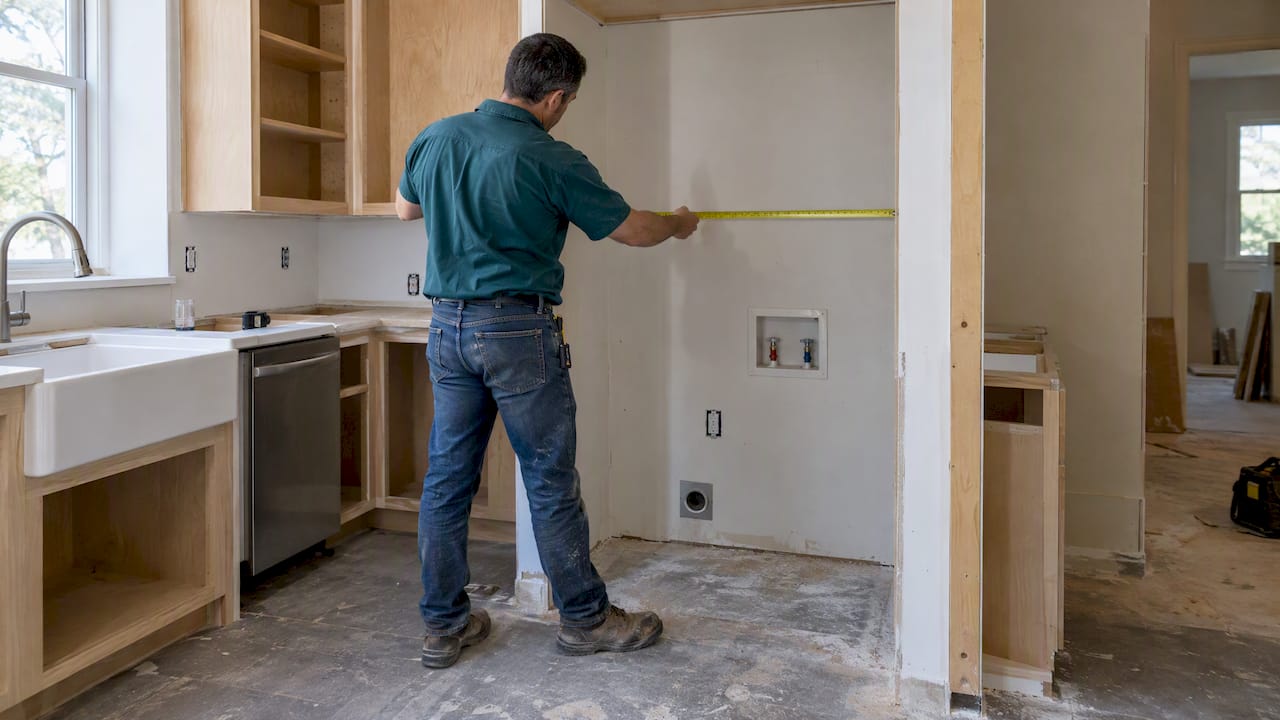
- Measure and document your current layout, including appliance dimensions and any plumbing or electrical that cannot move easily.
- Set your cabinet budget as a separate line from countertops, flooring, and labor.
- Choose tier and material based on your timeline and how hard the kitchen gets used day to day.
- Request physical samples of door color and finish, viewed in your own kitchen lighting, not just a showroom.
- Collect two to three bids that each spell out construction type, hardware, and installation scope in writing.
When comparing bids, ask each contractor the same set of questions: What’s the box material and construction type? Who handles installation, your team or a sub? What’s the warranty length and what does it actually cover? Can I get a sample door before ordering the full kitchen?
Watch for red flags: vague line items like “cabinets, various,” lead times that sound too short for the tier quoted, or a bid that omits installation labor entirely. Also compare hardware specifics directly, since soft-close mechanisms, drawer slide weight ratings, and hinge type vary by manufacturer and affect how the cabinets feel five years in.
Pro Tip: Request the same sample door finish from every bidder. It’s the fastest way to compare quality across quotes that otherwise look identical on paper.
For a broader project timeline that places cabinet ordering in context with the rest of the remodel, see how to plan a kitchen remodel step by step.
Practical advice on installation, coordination, and trade-offs
Bringing in a contractor before you order cabinets helps avoid the two most common mistakes: wrong appliance rough-in dimensions and doors that swing into walkways or open into each other. We generally recommend spending more on box construction and hardware, where daily wear shows up fastest, and saving on door style simplicity, since a plain Shaker profile costs less to fabricate than heavy ornamentation; for practical guidance on door styles and how they affect overall room style, consider reading how to choose an interior door style. Our process includes 3D visualization, sourcing, and full installation coordination so appliances, storage, and lighting work together from the start.
Quick perspective: prioritize durability over trend chasing
Trends fade faster than cabinets wear out. Build your main runs in a neutral, durable material and finish, and save bold color or an unusual door profile for a single accent, like an island, where a future change is cheap. That way a passing color trend never becomes a full-kitchen regret.
— Kierin
How Expressions Remodeling can help you choose and install cabinets
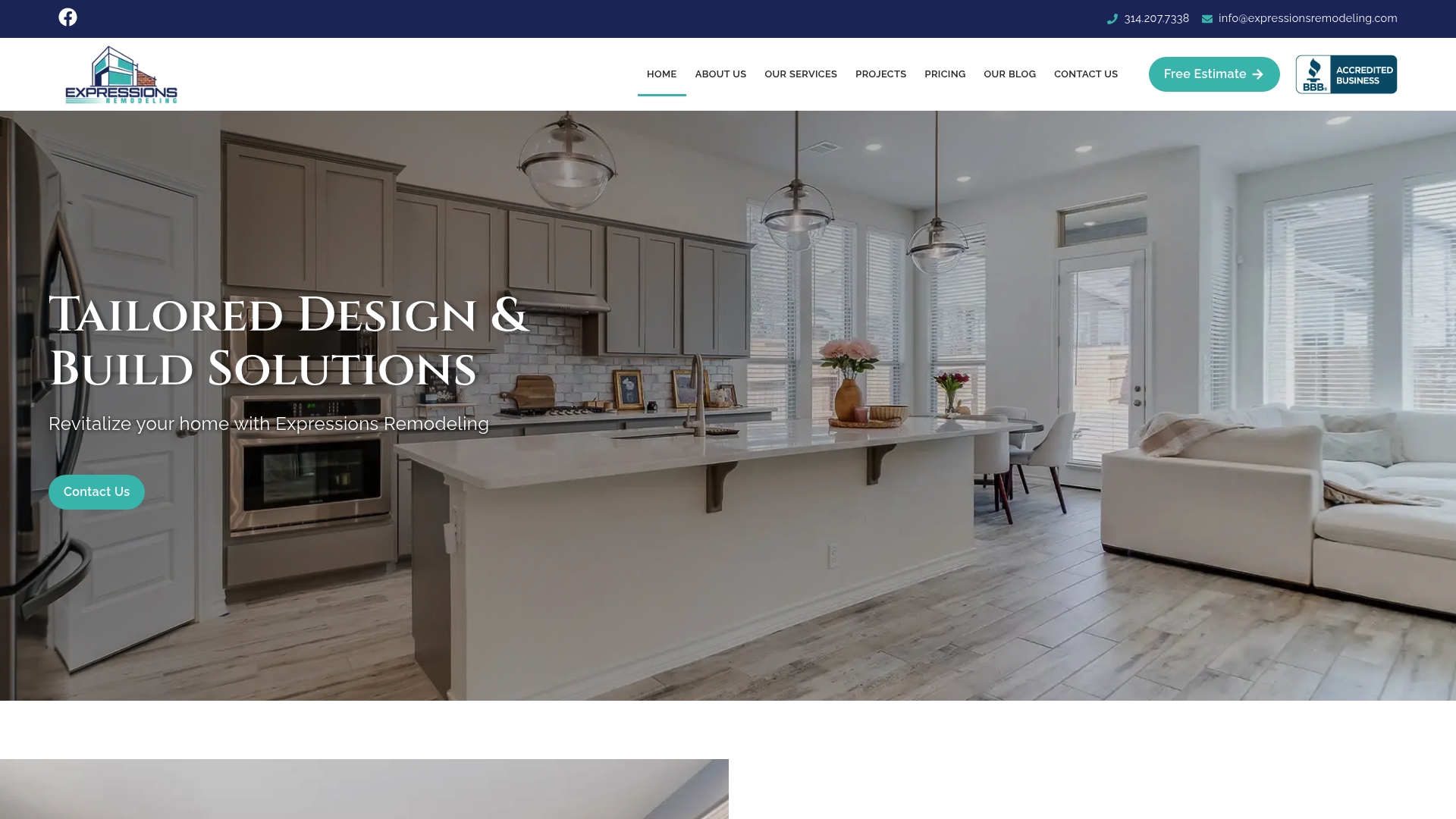
Picking the right tier and material is only half the job: getting them measured, sourced, and installed correctly is the other half, and it’s where most ordering mistakes actually happen. We handle design, sourcing, and installation together so appliance clearances, lighting, and storage all line up before anything gets ordered.
- We offer design visualization to help you preview finishes and layouts before committing.
- We coordinate sourcing and installation to streamline the process.
- Our kitchen remodeling services start from $10,000 and include full project guidance.
If you’d rather skip the trial and error, check our current pricing and 3D design examples and get a quote for your kitchen.
FAQ
What are the three grades of cabinets?
The three common grades are stock (premade, fixed sizes), semi-custom (modified standard boxes with more finish and size options), and custom (built to exact specifications). Stock costs the least and ships fastest, while custom costs the most and takes the longest to produce.
Is $10,000 enough for a kitchen remodel?
A budget around that level can cover cabinetry on its own, since kitchen remodeling services commonly start from $10,000 before counters, flooring, and labor are added. Whether it covers a full remodel depends on the scope, so getting a detailed quote for your specific kitchen is the most reliable way to know.
What is the most popular style of kitchen cabinets right now?
Shaker-style doors are the most widely chosen option, accounting for roughly 60 percent of door style choices in recent industry surveys. Transitional style leads overall kitchen remodels at 25%, and white remains the most common cabinet color at about a third of projects.
What colors to avoid in kitchen cabinets?
There’s no single color to avoid outright, but very dark or highly saturated colors across an entire kitchen can feel dated faster and make future resale harder to predict. A safer approach is a neutral main run with bold color limited to an island or accent wall, which keeps long-term flexibility while still allowing a current look.
Should I hire a professional for cabinet selection and installation?
Most homeowners do: about 86% of homeowners work with a professional on kitchen remodeling projects. A pro helps avoid common ordering errors like incorrect appliance dimensions or poor door swing clearance, both of which are costly to fix after installation.
Sources
- 2025 U.S. Houzz Kitchen Trends Study (summarized)
- Composite panel products, Part II: Medium density fiberboard | Woodworking Network