

Renovation is defined as updating or refreshing an existing space without changing its structure or layout, while remodeling means altering the structure, layout, or purpose of a room or home. Most homeowners use these terms interchangeably, but the difference between renovation and remodeling has real consequences for your budget, timeline, and permit requirements. Getting this distinction right before you hire a contractor can save you thousands of dollars and weeks of unnecessary delays. This article gives you renovation vs remodeling explained in plain terms, so you can make confident decisions about your next home improvement project.
What is a renovation in home improvement?
Renovation focuses on refreshing or updating a space within its existing footprint. No walls move. No plumbing lines shift. You are improving what is already there, not redesigning how it works. That distinction keeps costs lower and timelines shorter than a full remodel.
Common renovation projects include:
- Painting walls and ceilings in updated colors or finishes
- Replacing light fixtures, faucets, and cabinet hardware for a fresh look
- Cabinet refacing to update kitchen appearance without new cabinetry
- Installing new flooring over the existing subfloor
- Updating countertops without moving the sink location
- Replacing a vanity in a bathroom without relocating plumbing
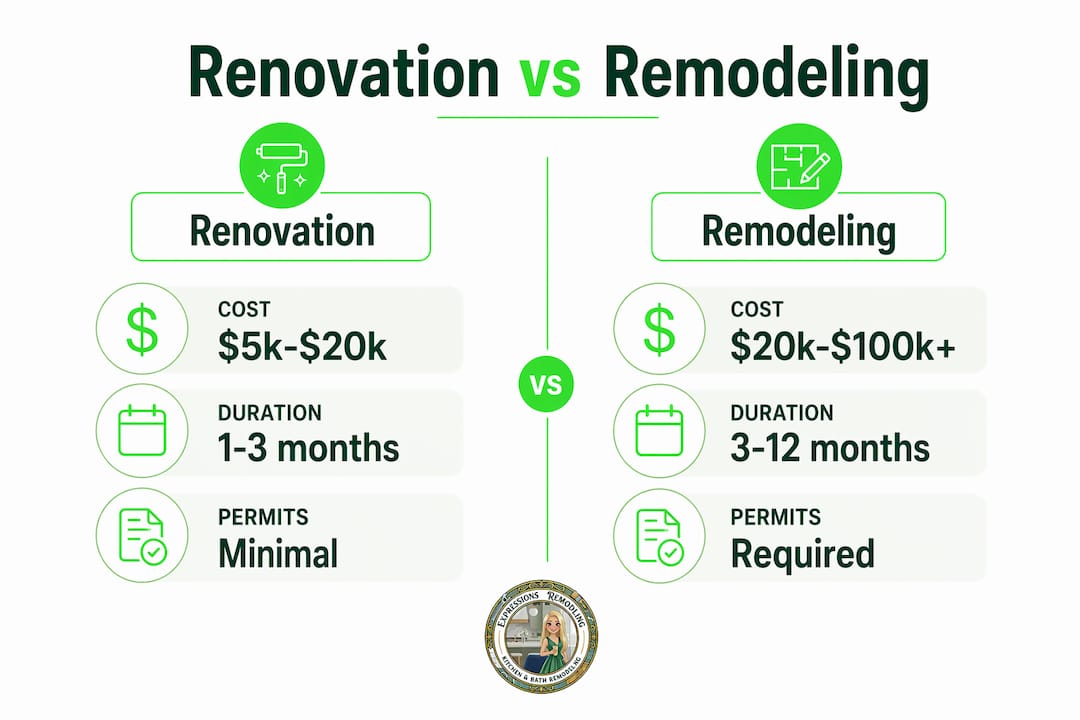
Renovations typically take 1–3 months, depending on scope. That shorter timeline reflects the absence of structural work, which is the biggest driver of delays in any home project.
The financial case for renovation is strong. Refresh projects recoup 80–120% of cost at resale, compared to 40–60% for full remodels. That gap exists because renovation work appeals to a broader pool of buyers and carries lower upfront investment.

Permits for renovations are usually simpler or not required at all. The exception is any work touching electrical panels or plumbing rough-ins. Replacing a light fixture rarely needs a permit. Running new circuits to add outlets does. Knowing that boundary helps you plan accurately.
Pro Tip: Before calling a contractor, write down exactly what you want changed. If your list contains only cosmetic updates with no mention of moving walls or pipes, you need a renovation quote, not a remodeling quote.
What is remodeling and how does it differ from renovation?
Remodeling involves structural changes, layout modifications, or repurposing a space entirely. The definitive test for remodeling is whether walls move or plumbing and electrical infrastructure is relocated. If either happens, you are in remodeling territory, and that triggers permit requirements and architect plan submissions.
Typical remodeling projects include:
- Removing or adding walls to open up a floor plan
- Relocating a kitchen sink or bathroom plumbing to a new position
- Converting a garage into living space or a basement into a bedroom
- Adding square footage through a room addition or bump-out
- Combining two small rooms into one larger, functional space
Remodels cost 50–100% more than renovations for equivalent spaces. A kitchen remodel averages around $30,000, a bathroom remodel around $11,000, and a full addition around $50,000. Those figures reflect the cost of demolition, structural work, licensed trades, and permit fees.
Remodel timelines run 3–6 months for a single room and 6–12 months for a whole-house project. Structural changes require architect plans and permits, which alone can add several weeks before a single tool is picked up. Homeowners who do not account for permit lead times routinely end up with delayed start dates and frustrated contractors.
DIY-friendly work is usually renovation; remodels require licensed professionals. Moving a load-bearing wall without a structural engineer is not just a permit violation. It is a safety risk.
Pro Tip: Ask your contractor directly: “Does this project involve moving any walls, plumbing lines, or electrical panels?” A yes to any of those means you need a remodeling contract, not a renovation agreement.
How do you decide between renovating and remodeling?
The best choice depends on whether your home’s current layout works for your life. Renovate when the layout functions well; remodel when the layout is outdated, inefficient, or no longer fits how you live. Use this step-by-step process to reach a clear decision:
-
Assess layout functionality. Walk through your home and identify what frustrates you daily. If the kitchen feels cramped because of a wall, that is a layout problem requiring remodeling. If it feels dated because of old cabinets and countertops, that is a renovation fix.
-
Set a realistic budget. Renovations cost roughly half of what equivalent remodels cost. If your budget is limited, a well-planned renovation often delivers more visible improvement per dollar spent.
-
Check your timeline. If you need the project finished in under three months, a full remodel is almost certainly off the table. Permit approvals alone can consume four to six weeks.
-
Understand permit requirements. Contact your local building department before finalizing scope. Knowing what triggers a permit helps you avoid surprises mid-project.
-
Define scope in writing before hiring. Precise language in contracts specifying no structural changes protects you from contractors quoting remodel scope when only renovation is intended. That single step can save up to 50% on project costs.
-
Evaluate long-term goals. If you plan to sell within two years, renovation ROI typically outperforms remodeling. If you plan to stay for a decade, a remodel that fixes a genuinely poor layout pays off over time.
Reviewing your renovation financing options before committing to scope is a practical step most homeowners skip. Knowing what you can borrow shapes what you should plan.
Costs, timelines, and permit considerations
Understanding the financial and regulatory side of each project type sets realistic expectations before you sign anything.
| Factor | Renovation | Remodeling |
|---|---|---|
| Typical cost range | $5,000–$20,000 | $20,000–$100,000+ |
| Project timeline | 1–3 months | 3–12 months |
| Permits required | Rarely (except electrical/plumbing) | Almost always |
| Structural changes | None | Yes |
| Professionals required | Often DIY-friendly | Licensed trades required |
Permits add costs and several weeks to the schedule for remodeling projects. That is not a bureaucratic inconvenience. Permitted work protects your home’s resale value because buyers and their lenders verify that structural changes were inspected and approved.
Cost overruns are the most common complaint in remodeling projects. Homeowners frequently underestimate structural inspections and permit complexities, which leads to budget overruns and delays. The fix is straightforward: build a 15–20% contingency into your remodeling budget from day one, and get permit cost estimates from your local building department before finalizing your contractor agreement.
Renovation costs about half of remodel costs because utility locations stay fixed. Moving a kitchen sink three feet to the left requires a plumber to reroute supply and drain lines, a permit, and an inspection. Keeping it in place means none of that applies. That one decision can shift a project from $30,000 to $12,000.
Understanding how renovation timelines work in detail helps you plan around your household’s schedule, especially if you are living in the home during the project.
Contractors often use “remodel” as a marketing term to inflate project scope. Getting three written bids with identical scope descriptions is the most effective way to spot when a contractor is quoting remodel pricing for renovation work.
Key Takeaways
Renovation updates a space within its existing footprint at roughly half the cost of remodeling, which changes structure or layout and requires permits, licensed professionals, and significantly longer timelines.
| Point | Details |
|---|---|
| Core distinction | Renovation keeps walls and plumbing in place; remodeling moves them. |
| Cost difference | Remodels cost 50–100% more than renovations for equivalent spaces. |
| Timeline gap | Renovations finish in 1–3 months; remodels take 3–12 months. |
| Permit trigger | Moving walls or relocating plumbing and electrical always requires permits. |
| ROI advantage | Renovation projects recoup 80–120% at resale versus 40–60% for remodels. |
What I’ve learned from watching homeowners choose the wrong path
The single most expensive mistake I see homeowners make is letting a contractor define the project scope for them. A contractor who leads with “you really need to open up this whole space” may be right. But that recommendation should come after you have clearly stated your goals, not before. When you walk in without a written scope, you are handing someone else the pen.
The second mistake is treating renovation and remodeling as a spectrum rather than two distinct categories with different regulatory, financial, and logistical profiles. A homeowner who thinks they are renovating a bathroom but agrees to move the toilet six inches has just crossed into remodeling territory. That shift means permits, inspections, and a timeline that doubles. Knowing where the line sits before the conversation starts puts you in control.
My honest advice: spend one hour writing down what bothers you about the space and what you want it to do differently. If your answers are all about appearance, you need renovation. If your answers are about how the space flows or functions, you may need remodeling. That one hour of clarity is worth more than any contractor consultation. You can also review how remodeling contracts work to understand exactly what language protects you before you sign.
— Kierin
How Expressions Remodeling helps St. Louis homeowners get it right
Expressions Remodeling works with homeowners across St. Louis, MO to plan projects that match their actual goals, not an inflated scope. Whether you need a focused renovation or a full structural remodel, the team starts by understanding what you want the space to do before recommending any work.
Every project includes a complimentary 3D design consultation so you can see the finished result before any work begins. That visualization step alone prevents the most common source of mid-project regret: realizing the layout you approved does not feel the way you imagined. Expressions Remodeling covers kitchen upgrades, bathroom improvements, and basement finishing across the St. Louis area. If you want a clear plan with honest scope and no surprises, view service options and pricing to get started.
FAQ
What is the main difference between renovation and remodeling?
Renovation updates a space within its existing layout without moving walls or plumbing. Remodeling changes the structure, layout, or purpose of a space and requires permits and licensed professionals.
Does remodeling always require a permit?
Remodeling almost always requires permits because it involves structural changes, wall removal, or utility relocation. Some minor renovation work, such as painting or fixture replacement, typically does not.
Which costs more, renovation or remodeling?
Remodeling costs 50–100% more than renovation for equivalent spaces. A kitchen remodel averages around $30,000, while a kitchen renovation typically runs significantly less because plumbing and walls stay in place.
How do I know if my project is a renovation or a remodel?
Ask whether any walls will move or any plumbing or electrical lines will be relocated. If the answer is yes to either, the project is a remodel. If everything stays in its current position, it is a renovation.
Which option gives better return on investment?
Renovation projects recoup 80–120% of cost at resale, compared to 40–60% for remodels. Renovation ROI is higher because upfront costs are lower and the finished result appeals to a broader pool of buyers.