
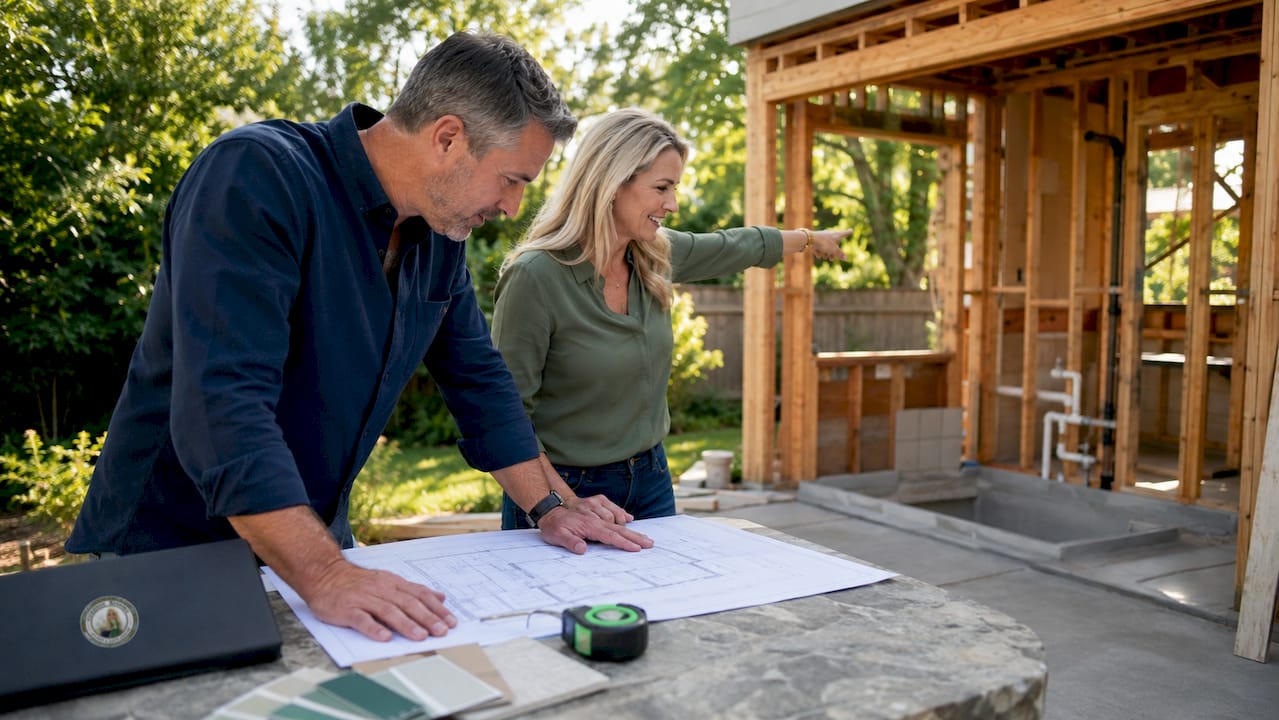
A bathroom addition is defined as a structural home improvement that creates a new, fully functional bathroom where none previously existed. This single upgrade does more for daily family life than almost any other renovation. Families with two or more children sharing one bathroom know the morning standoff well. Bathroom additions reduce that conflict directly, and they do it while boosting your home’s value at the same time. The benefits of bathroom expansions reach far beyond convenience. They reshape how a household functions every single day.
Why bathroom additions help families with daily routines
The most immediate benefit of a bathroom addition is the end of morning congestion. Additional bathrooms reduce morning conflict and daily routine friction in busy, multi-person households and multi-generational families. That friction is not just annoying. It creates real stress that carries into the school day, the workday, and the mood of the entire household.
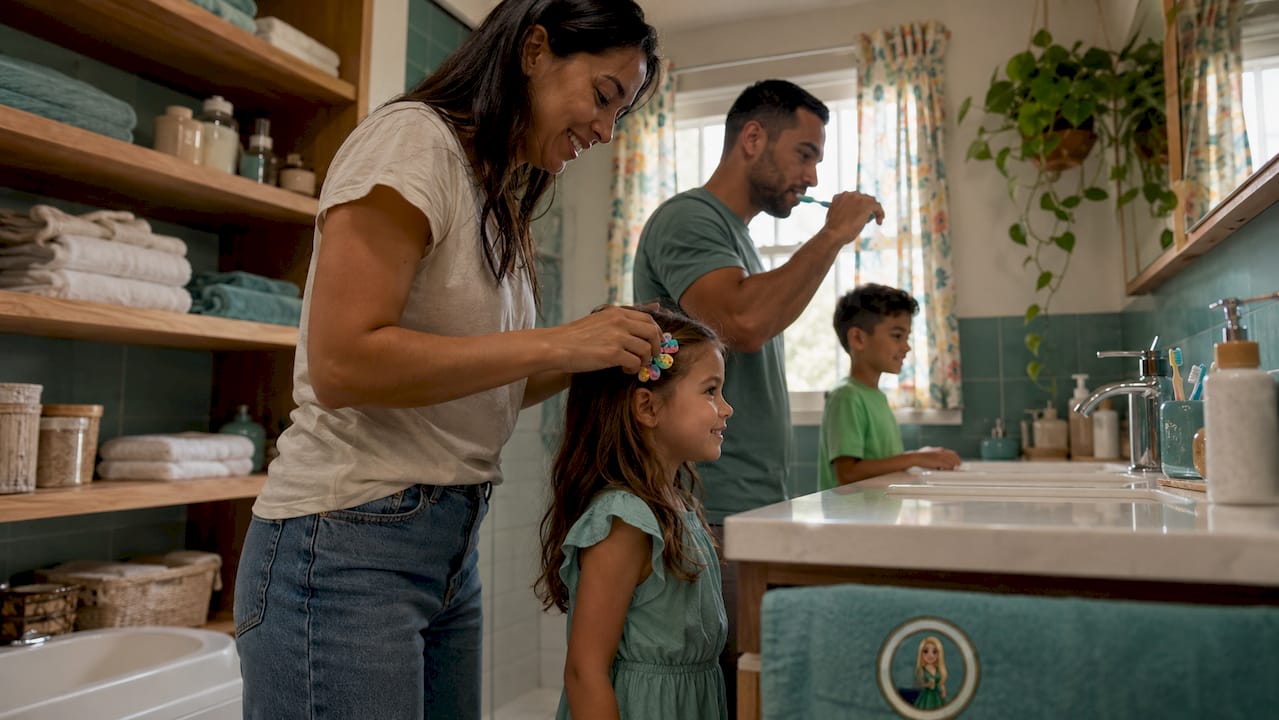
A second or third bathroom changes the math of the morning. Instead of five people competing for one sink and one shower, the household splits naturally into smaller groups. Parents get their own space. Kids share theirs. Guests stop feeling like an imposition.
The benefits extend well beyond the morning rush:
- Reduced wait times during peak hours, including evenings when kids need baths before bed
- Better privacy for teenagers who need personal space as they grow
- Guest accommodation without disrupting the family’s daily flow
- Multi-generational living support when grandparents or adult children move in
- Fewer arguments over bathroom schedules, which reduces household tension overall
Pro Tip: If your household has three or more bedrooms, a second bathroom is not a luxury. Buyers and families alike treat it as a baseline expectation.
The emotional relief is real. Families report bathroom additions as structural changes reflecting evolving household needs, not cosmetic upgrades. Expert Tricia Lahti Wiitanen notes that homeowners who delay adding bathrooms often express regret, specifically because the daily quality-of-life gains are so immediate once the project is complete.
What is the financial return on a bathroom addition?
The national average cost to add a bathroom is about $58,586, with ROI ranging from 32% to 90% depending on location and project quality. That is a wide range, and where you land on it depends heavily on your market and the quality of the work.
| Market Type | Typical ROI Range | Key Driver |
|---|---|---|
| West Coast and New England | Up to 90% | High buyer demand, limited housing stock |
| Midwest and Southeast | 35%–75% | Strong family home market, competitive pricing |
| Rural or low-demand areas | 32%–50% | Fewer buyers prioritizing multiple bathrooms |
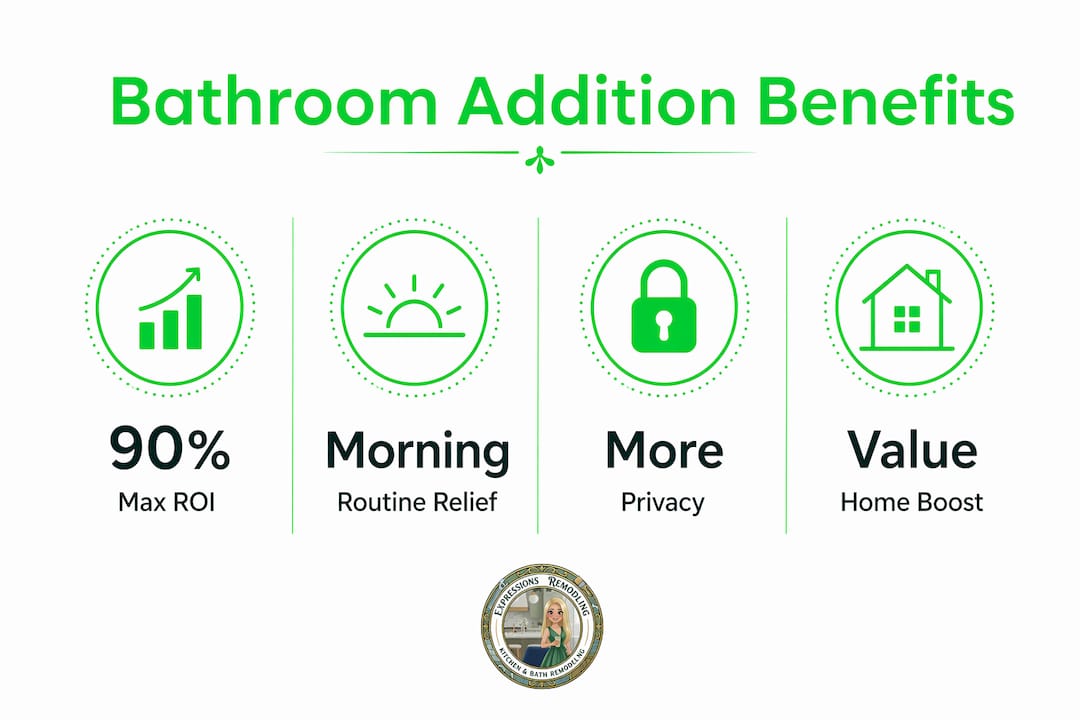
Multiple bathrooms are increasingly expected by buyers of family homes, directly influencing resale appeal. Households with three or more bedrooms especially benefit from a second or third bathroom. That expectation shapes what buyers will pay and how quickly a home sells.
The distinction between a remodel and an addition matters here. A remodel updates an existing bathroom. An addition creates a new one. Additions carry higher upfront costs but address a fundamentally different problem: the absence of enough bathrooms for the household’s size. Remodeling versus adding a bathroom requires a clear-eyed look at whether your current count meets your family’s actual traffic needs.
The financial case is strongest when the addition serves a high-traffic area of the home, such as the main floor or a finished basement. Those locations deliver the most daily use and the strongest resale signal to future buyers.
How to design a family-friendly bathroom that actually works
Family-friendly bathroom designs prioritize function over aesthetics, though the best projects deliver both. The goal is a space that works for a six-year-old, a teenager, and a grandparent without requiring constant reorganization.
Key design features for family bathrooms include storage for toiletries and toys, safety features like grab bars and non-slip floors, and easy-to-clean durable materials. Extra storage keeps clutter down and makes the space feel larger and more comfortable. That is not a minor point. A bathroom that feels chaotic discourages use and creates friction.
The most effective family bathroom design elements fall into three categories:
Storage and organization:
- Built-in shelving at multiple heights for adults and children
- Recessed medicine cabinets to keep counters clear
- Dedicated hooks and cubbies for each family member’s towels
Safety and accessibility:
- Zero-threshold showers that eliminate trip hazards
- Grab bars near the toilet and shower, installed into wall studs
- Non-slip tile or textured flooring throughout wet zones
- Wide doorways (at least 36 inches) for wheelchair or walker access
Durability and maintenance:
- Porcelain tile over natural stone for easier cleaning
- Matte finishes that hide water spots and fingerprints
- Solid-surface countertops that resist staining and chipping
Main floor bathrooms improve aging-in-place by reducing stair use, which lowers fall risk for elderly family members. Planning for accessibility now prevents a costly retrofit later. A grab bar installed during construction costs a fraction of what it costs to add after the fact.
Pro Tip: Design your new bathroom for the family member with the most specific needs. A space that works for a toddler and a grandparent will work for everyone in between.
When should you plan a bathroom addition?
Timing a bathroom addition well prevents the most common regret families express: starting too late. Planning bathroom additions early, such as when children are 9 to 10 years old, allows families to complete projects before peak household bathroom demand hits. By the time kids are teenagers, the window for a smooth, low-stress addition has often closed.
A practical planning sequence looks like this:
- Assess your current bathroom-to-bedroom ratio. One bathroom for three or more bedrooms is the clearest signal that an addition is overdue.
- Run a feasibility study. Identify where plumbing lines run, what structural changes are needed, and whether a bump-out or interior conversion makes more sense.
- Set a realistic budget early. Include a 15%–20% contingency for permit delays, material cost changes, and unexpected structural findings.
- Secure permits before scheduling contractors. Permit timelines vary by municipality and can add weeks or months to a project.
- Book your contractor well in advance. Early planning avoids contractor scarcity and costly delays. Starting discussions several years before peak family needs is the professional standard.
Bump-out additions provide cost-effective space for bathrooms by expanding just a few feet outward. They improve circulation, fixture spacing, and safety without requiring a full home extension. For families who need more room but want to control costs, a bump-out is often the most practical path.
Use your bathroom remodel checklist to track every decision from layout to fixture selection. A structured checklist prevents the scope creep that inflates budgets and delays timelines.
Key Takeaways
Bathroom additions deliver measurable improvements to family life, home value, and long-term accessibility when planned and designed with the household’s specific needs in mind.
| Point | Details |
|---|---|
| Daily routine relief | Extra bathrooms eliminate morning congestion and reduce household conflict immediately. |
| Strong financial return | National average ROI ranges from 32% to 90%, with the highest returns in high-demand markets. |
| Design for all ages | Zero-threshold showers, grab bars, and built-in storage serve every family member safely. |
| Plan before peak demand | Start planning when children are around 9–10 years old to avoid last-minute delays. |
| Unlock unused space | Adding a bathroom to a basement converts dead space into a fully functional family area. |
The benefit no spreadsheet can capture
I have worked with enough families to know that the ROI conversation, while useful, misses the point for most homeowners. The number that matters most is not the resale percentage. It is the number of mornings that start without an argument.
What I have seen consistently is that families underestimate how much a single bathroom shapes the emotional temperature of a home. When everyone has enough space and enough privacy, the house runs differently. Kids are less irritable. Parents are less rushed. Guests feel welcome instead of like a disruption.
[Adding a basement bathroom](https://expressionsremodeling.com/basement-finishing-ideas-that turn-underused-space-into-the-best-room-in-the-house) is one of the most underrated moves a family can make. Basements without bathrooms sit unused. Add a bathroom, and suddenly that space becomes a playroom, a guest suite, or a teenager’s retreat. The bathroom does not just serve itself. It activates the entire floor.
The families who regret bathroom additions are rare. The families who regret waiting are not. If your household is already feeling the squeeze, the right time to plan was two years ago. The second-best time is now.
— Kierin
Expressions Remodeling can help you add the right bathroom
Expressions Remodeling works with St. Louis families to design and build bathrooms that fit how their households actually live. Every project starts with a real conversation about your family’s daily routines, your home’s layout, and your budget.
The team at Expressions Remodeling handles everything from feasibility to final fixture, including permit coordination, layout planning, and material selection. Families get a bathroom designed for their specific needs, not a generic floor plan. Whether you need a main floor powder room, a full second bath, or a basement bathroom that opens up your lower level, professional bathroom remodeling starts with a plan built around your home. Reach out to Expressions Remodeling to schedule your consultation and see what the right addition can do for your family.
FAQ
Why do bathroom additions help families the most?
Bathroom additions reduce daily congestion, improve privacy, and eliminate scheduling conflicts in multi-person households. Families with three or more bedrooms gain the most immediate benefit from a second or third bathroom.
What is the average cost of adding a bathroom?
The national average cost to add a bathroom is about $58,586, with ROI ranging from 32% to 90% depending on location and project quality. West Coast and New England markets see the highest returns.
What design features matter most in a family bathroom?
The most effective features are built-in storage, non-slip flooring, grab bars, and zero-threshold showers. These elements serve children, adults, and elderly family members safely without requiring separate spaces.
When is the best time to plan a bathroom addition?
Planning when children are around 9 to 10 years old gives families enough lead time to complete the project before peak bathroom demand hits the teenage years. Early planning also prevents contractor scheduling delays.
Does adding a bathroom increase home resale value?
Multiple bathrooms are increasingly expected by buyers of family homes, and homes with three or more bedrooms that lack a second bathroom often sell at a disadvantage. A well-executed addition improves both desirability and sale price.