

Home remodeling is defined as the process of altering a home’s structure, layout, or intended function to improve its utility, appearance, or value. Unlike a simple refresh, remodeling changes how a space is built or used. Expressions Remodeling, based in St. Louis, MO, works with homeowners on exactly these kinds of projects, from opening up kitchens to finishing basements. Understanding what home remodeling actually means, how it differs from renovation, and how the process unfolds will help you plan smarter, spend wisely, and avoid the mistakes that derail most projects.
What is home remodeling, and how does it differ from renovation?
Home remodeling involves altering the structure, layout, or function of a space. Renovation, by contrast, focuses on cosmetic updates without touching the structure. That distinction matters more than most homeowners realize when they start planning a project.
A remodel might mean removing a wall between a kitchen and dining room, converting a garage into a home office, or moving plumbing to reconfigure a bathroom layout. A renovation covers work like repainting walls, replacing flooring, or updating cabinet hardware. Both improve your home, but they require different permits, budgets, and timelines.
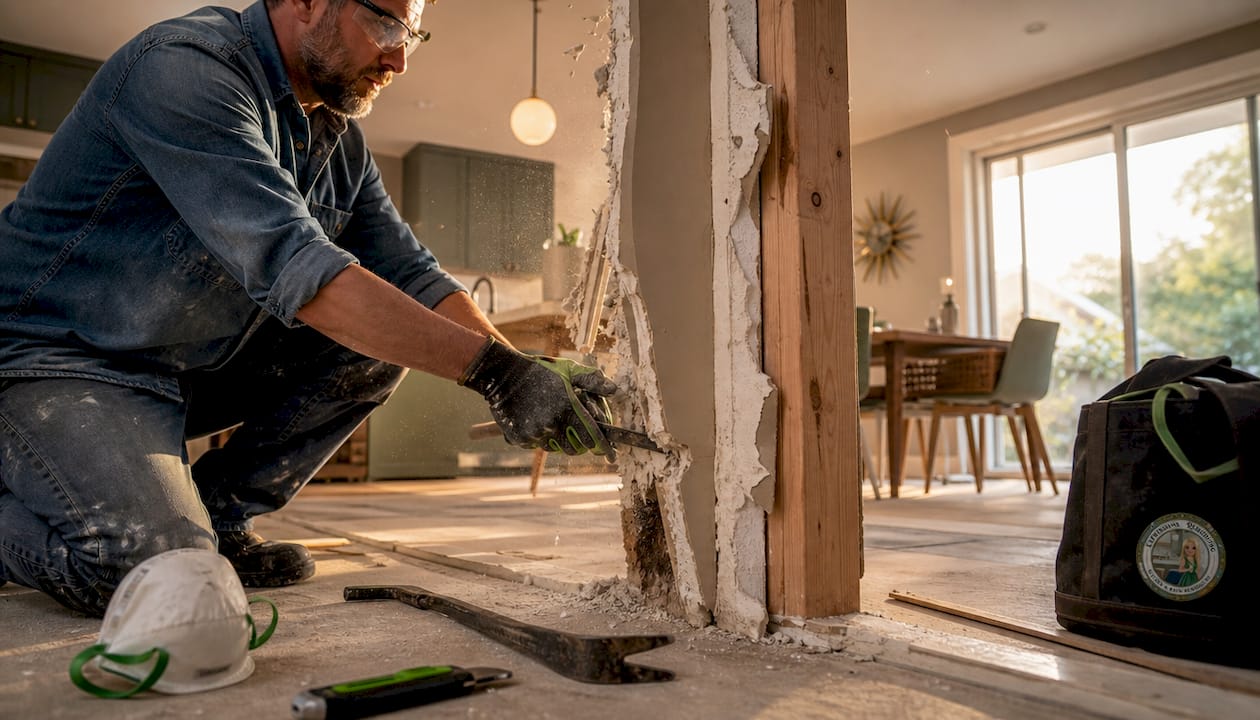
The confusion between the two terms leads homeowners to underestimate costs and scope. Someone expecting a renovation budget often discovers mid-project that their plans actually require structural changes, which means permits, inspections, and significantly more money. Knowing which category your project falls into before you hire anyone is the single most useful thing you can do at the start.
| Category | Remodeling | Renovation |
|---|---|---|
| Scope | Structural or layout changes | Cosmetic updates only |
| Examples | Removing walls, moving plumbing | Painting, new flooring, hardware |
| Permits required | Usually yes | Rarely |
| Cost range | Higher | Lower |
| Impact on home value | Significant | Moderate |
Pro Tip: Before you request any contractor quotes, write down exactly what you want to change about how the space functions, not just how it looks. That single step will tell you whether you need a remodel or a renovation.
How does the home remodeling process typically unfold?
The home renovation process spans 5 to 14 months from the first conversation to move-in, depending on project scope. Smaller single-room remodels sit at the lower end. Whole-house remodels or additions push well past a year. Most homeowners are surprised by how much time happens before a single wall comes down.
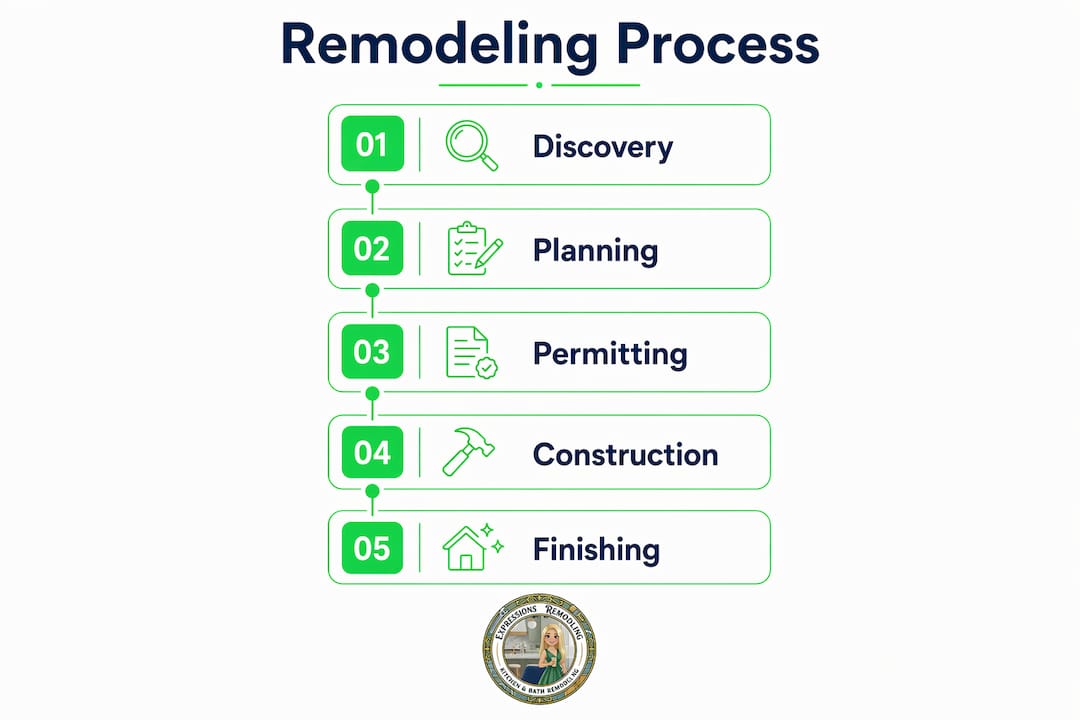
The process breaks into two major phases: pre-construction and construction. Pre-construction alone takes 4 to 12 or more weeks and covers discovery, design, bidding, and permitting. Construction then runs 2 to 12 or more months based on the size and complexity of the work. A good renovation timeline guide will show you exactly what to expect at each stage.
The typical remodeling sequence looks like this:
- Discovery and goal-setting. You define what you want to change and why. This shapes every decision that follows.
- Design development. An architect or designer translates your goals into drawings and specifications.
- Contractor selection and bidding. You collect bids, compare scope, and select a contractor.
- Permitting. Your contractor submits drawings to the local building department. Approval times vary by municipality.
- Material selection and procurement. You finalize every finish, fixture, and fitting before demolition begins.
- Demolition. Existing structures are removed to prepare for new work.
- Rough construction. Framing, rough plumbing, and rough electrical are installed.
- Inspections. Inspections occur at multiple sub-stages, not just at the end. Framing must be inspected before mechanical work begins. Mechanical work must be inspected before walls close.
- Finishing. Drywall, tile, cabinetry, flooring, paint, and fixtures are installed.
- Final inspection and punch list. The building department signs off, and remaining items are completed.
Rushing early phases like discovery, design, and permitting causes 80% of timeline failures in remodeling projects. That statistic explains why so many projects run over schedule. The work that happens on paper before any tools come out determines whether the construction phase runs smoothly or stalls repeatedly.
Pro Tip: Ask your contractor for a phase-by-phase schedule in writing before signing any contract. A contractor who cannot produce one is a contractor who has not planned your project yet.
What financing options are available for home remodeling?
Home equity financing is the most common way homeowners fund large remodeling projects. The term “home equity remodeling” refers to using the equity built up in your property as collateral to borrow money for improvements. Three main products exist: home equity loans, home equity lines of credit (HELOCs), and cash-out refinancing.
Home equity loans deliver a lump sum at a fixed interest rate, with repayment terms typically running 5 to 30 years. That fixed structure makes budgeting predictable. HELOCs work more like a credit card, giving you a revolving line you draw from as needed, which suits projects with phased spending. Cash-out refinancing replaces your existing mortgage with a larger one and gives you the difference in cash.
Key facts about borrowing limits and qualifications:
- Equity requirement. Most lenders require you to retain 15–20% equity in your home after borrowing.
- Borrowing cap. Lenders typically cap loans at 80–85% of your home’s value minus your existing mortgage balance.
- Debt-to-income ratio. Lenders check this ratio to confirm you can handle the added payment.
- Interest rates. Home equity products carry lower rates than credit cards because your home secures the debt.
- Tax considerations. Interest on home equity loans used for home improvements may be tax-deductible. Consult a tax advisor to confirm eligibility.
Using home equity for remodeling carries real risk alongside its benefits. If you miss payments, the lender can foreclose on your home. That risk is not hypothetical. Homeowners who borrow at the top of their limit and then face a job loss or unexpected expense can find themselves in serious financial trouble. Borrow conservatively, and build a repayment plan before you sign any loan documents.
Statistic to know: Borrowing limits are capped at 80–85% of home value minus the existing mortgage. That ceiling defines your maximum budget before you factor in any savings or other funding sources.
What are common challenges and practical tips for a successful remodel?
Most remodeling projects hit at least one significant obstacle. Knowing which problems appear most often lets you prepare for them rather than react to them.
The most common challenges include:
- Permit delays. Municipal building departments vary widely in processing speed. Some approve permits in two weeks; others take two months or more.
- Back-ordered materials. Confirming material availability before demolition begins is critical. Fixtures or finishes that become discontinued or back-ordered mid-project can stall construction for weeks.
- Change orders. Changing your mind after construction starts costs significantly more than making the same decision during design. Every change order adds cost and time.
- Inspection scheduling. Inspections at multiple construction stages require coordination between your contractor and the building department. Missing an inspection window means waiting for the next available slot.
- Contractor communication gaps. Projects stall when homeowners and contractors are not aligned on decisions, timelines, or expectations.
Practical steps that reduce these risks:
Set a contingency fund of 15–20% of your total project budget before construction begins. Unexpected conditions inside walls, like outdated wiring or water damage, appear regularly and require immediate decisions. Without a contingency, those discoveries force you to cut scope elsewhere or go back to the lender.
Finalize every material selection before demolition starts. This single discipline prevents the most common mid-project delays. Work with your contractor to confirm that every tile, fixture, cabinet, and fitting is in stock and reserved. Reviewing contractor interview questions before you hire helps you identify which contractors actually enforce this practice.
Pro Tip: Build your project management plan before you start talking to contractors. Knowing your scope, timeline, and budget ceiling in advance puts you in a stronger negotiating position and filters out contractors who are not a good fit.
Key Takeaways
Home remodeling is a structural process that requires more planning, permitting, and budget than most homeowners initially expect, and the projects that succeed are the ones where decisions are made before demolition begins.
| Point | Details |
|---|---|
| Remodeling vs. renovation | Remodeling changes structure or function; renovation covers cosmetic updates only. |
| Timeline reality | Full projects span 5–14 months; pre-construction alone takes 4–12 or more weeks. |
| Financing limits | Home equity borrowing is capped at 80–85% of home value minus your mortgage balance. |
| Plan before you demolish | Finalize all materials and selections before demolition to prevent costly project stalls. |
| Contingency fund | Set aside 15–20% of your budget for unexpected conditions discovered during construction. |
Why patience is the most underrated remodeling skill
Homeowners come to remodeling projects with energy and excitement, which is exactly right. What catches most people off guard is how much of the process requires waiting, deciding, and waiting again before anything visible happens.
I have seen homeowners rush through the design phase because they are eager to get to construction. That urgency almost always costs them money. The decisions made quickly during design become the change orders that blow budgets during construction. The permit that felt like a bureaucratic delay was actually protecting them from building something that would fail inspection later.
The question worth asking before any remodel is whether you are doing this primarily as a financial investment or primarily to improve how you live in your home. Both are valid motivations, but they lead to different decisions. An investment-focused remodel prioritizes features that buyers value. A lifestyle-focused remodel prioritizes what makes your daily life better. Trying to optimize for both simultaneously often produces a project that fully achieves neither.
Partnering with a contractor who is transparent about timelines, costs, and trade-offs makes the patience easier. Vague answers to direct questions about schedule or budget are a warning sign worth taking seriously. The best remodeling relationships are built on clear communication from the first conversation. Learning how to plan a remodel that balances style, function, and long-term value is the foundation every successful project is built on.
— Kierin
Expressions Remodeling: kitchen, bath, and basement projects in St. Louis
Expressions Remodeling works with homeowners across St. Louis, MO on kitchen, bathroom, and basement projects built around each client’s specific goals and budget. Every project starts with a clear conversation about what you want to change and why, so the design reflects how you actually live.
Whether you are planning affordable kitchen upgrades or a full bathroom overhaul, Expressions Remodeling brings the planning discipline and craftsmanship that keeps projects on schedule and on budget. The team handles permitting, inspections, and material coordination so you are not managing those details alone. Explore the full range of remodeling services to find the right starting point for your project.
FAQ
What is the difference between remodeling and renovating?
Remodeling changes the structure, layout, or function of a space, such as removing walls or moving plumbing. Renovation covers cosmetic updates like painting or new flooring without structural changes.
How long does a home remodeling project take?
A full remodeling project typically spans 5 to 14 months from initial planning to completion. Pre-construction phases alone take 4 to 12 or more weeks before construction begins.
What does home equity remodeling mean?
Home equity remodeling means using the equity in your home as collateral to borrow funds for improvements. Common products include home equity loans, HELOCs, and cash-out refinancing, with borrowing limits capped at 80–85% of home value minus the existing mortgage.
How much should I budget for unexpected costs?
Set aside a contingency fund of 15–20% of your total project budget. Unexpected conditions inside walls, like outdated wiring or water damage, are common and require immediate spending decisions.
Do I need permits for a home remodel?
Most structural remodeling projects require permits from your local building department. Work that changes layout, plumbing, or electrical systems almost always triggers a permit requirement, and inspections are required at multiple stages throughout construction.