
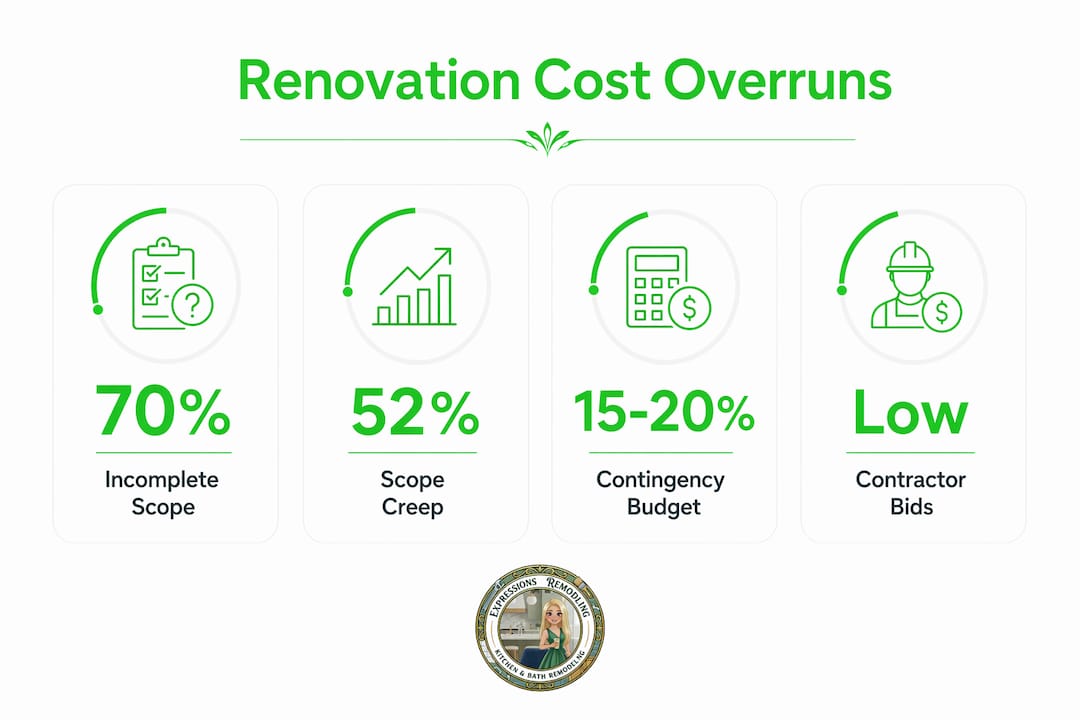
Renovation cost overruns are defined as project expenses that exceed the original agreed budget, and they affect the vast majority of homeowners who remodel. 80–91% of residential renovations exceed their original budgets, with typical overruns averaging 10–33% above initial estimates. Kitchen and bathroom projects carry the highest risk, with cost increases commonly ranging from $1,800 to $12,500 per project. The three primary causes are incomplete scope definitions, scope creep from mid-project changes, and unforeseen site conditions discovered after demolition begins. Understanding why renovation costs overrun is the first step to keeping your project on track.
Why renovation costs overrun: incomplete scope and poor estimates
Incomplete project scope is the single largest driver of renovation budget overruns. 70% of renovation cost overruns stem from incomplete initial scope definitions. That number means most budgets fail before a single wall comes down.
A scope gap happens when the original plan leaves out details that contractors must eventually address. Common omissions include permit fees, disposal costs, temporary housing during major work, and finish selections that were never priced. When those gaps surface mid-project, the contractor issues a change order, and the homeowner pays a premium for work that should have been in the original bid.
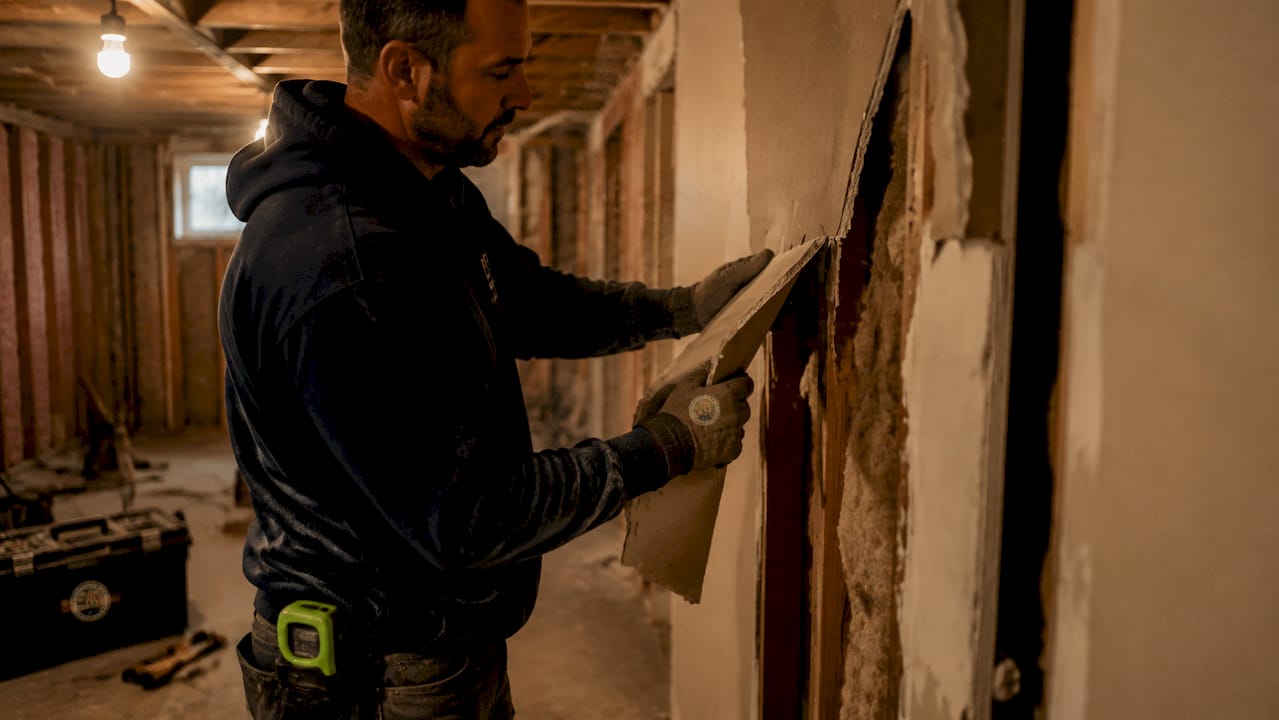
Inaccurate labor and material estimates compound the problem. A contractor who prices a kitchen remodel using national average figures may be off by 40% or more in a high-cost metro area. Starting with a budget number instead of a detailed, vetted plan is a leading cause of overruns. National cost calculators rarely reflect local market realities.
The fix is a fully itemized bid before any contract is signed. A proper bid breaks down labor, materials, permits, and contingency by phase or trade category. Detailed, itemized bids help homeowners audit costs and catch gaps before work begins. Lump sum or vague estimates make cost control nearly impossible.
Key items a complete scope document should include:
- All permit and inspection fees by jurisdiction
- Demolition and debris removal costs
- Finish selections with allowances locked in writing
- Regional labor rates confirmed with local subcontractors
- A line item for each trade: plumbing, electrical, tile, cabinetry, and painting
Pro Tip: Ask every contractor to provide a line-item bid, not a single total. If a contractor refuses or says it is not their practice, treat that as a red flag and move to the next candidate.
How does scope creep silently inflate your renovation budget?
Scope creep is the gradual addition of work beyond the original project plan, and it accounts for 52% of budget inflation in residential renovations. It rarely arrives as one large decision. It shows up as a series of small ones: upgrading cabinet hardware, adding a second electrical outlet, swapping a standard tub for a freestanding model.
Each individual change feels minor. The problem is the ripple effect. A $3,000 feature addition can cost $5,000 once you factor in trade callbacks and management overhead. The plumber has to return. The tile setter has to adjust. The project manager has to reschedule. Every callback carries a labor charge.
The most effective way to control scope creep is to lock all design decisions before demolition starts. Making all design decisions before construction avoids costly rework and change orders. Changing fixtures after rough-ins are complete can double labor costs because walls must be reopened.
A formal change order process also protects your budget. Every addition to the scope, no matter how small, should be submitted in writing, priced before approval, and signed by both parties. This creates a paper trail and forces homeowners to weigh the real cost of each decision.
- Finalize all finish selections, fixtures, and appliances before signing the construction contract.
- Require written change orders for every scope addition, with a cost and timeline impact stated upfront.
- Set a personal change order budget of no more than 5% of the total project cost.
- Schedule a weekly check-in with your contractor to catch creeping additions early.
- Treat the original scope as a contract, not a starting point.
Pro Tip: Create a “wish list” document for ideas that come up during construction. Review it only after the project closes. This keeps good ideas from becoming expensive mid-project detours.
What hidden site conditions drive unexpected renovation expenses?
Hidden site conditions are problems that exist inside walls, floors, or ceilings and only become visible after demolition. They are the most unpredictable factor in renovation budget overruns. Common discoveries include outdated knob-and-tube wiring, galvanized pipes near the end of their service life, mold from slow leaks, inadequate structural support, and asbestos in older insulation or floor tiles.
These issues are not rare. Homes built before 1980 carry a high probability of at least one hidden condition that requires remediation before new work can proceed. Code compliance requirements add another layer of cost. Many jurisdictions require that any opened wall or ceiling be brought up to current electrical or insulation standards, even if the original project did not include that work.
The standard guidance for kitchen and bathroom contingency reserves is 15–20% of the total project budget. Treat that reserve as mandatory insurance, not optional padding. A homeowner who skips the contingency and then discovers cast iron drain pipes that need full replacement faces a genuine financial crisis mid-project.
| Hidden condition | Typical cost impact | Risk level in pre-1980 homes |
|---|---|---|
| Outdated electrical wiring | $3,500–$8,000 | High |
| Galvanized plumbing replacement | $2,000–$6,000 | High |
| Mold remediation | $1,500–$5,000 | Moderate |
| Asbestos abatement | $1,200–$3,000 | Moderate |
| Structural reinforcement | $2,500–$10,000 | Variable |
Pro Tip: Commission a pre-demolition inspection by a licensed home inspector before finalizing your budget. A $400 inspection can prevent a $10,000 surprise.
Does contractor selection really affect your renovation budget?
Contractor selection directly determines whether your budget holds or collapses. Low contractor bids often exclude scope elements or use low-quality materials, with profits recovered through expensive change orders after work starts. The lowest bid is not a deal. It is frequently a deferred cost.
The contract type matters as much as the contractor’s reputation. Fixed-price contracts reduce overruns compared to charge-up, or cost-plus, models. Charge-up contracts give contractors a financial incentive to add work, because more hours and materials mean more revenue. Charge-up contracts often run 10–25% over fixed-price equivalents for the same scope.
When evaluating contractors, focus on these factors:
- License and insurance: Verify both are current in your state before any conversation about price.
- References from similar projects: Ask for three references from kitchen or bathroom projects completed in the past 18 months.
- Bid format: Reject any bid that does not itemize labor, materials, permits, and contingency separately.
- Change order policy: Confirm in writing that all scope changes require written approval before work proceeds.
- Payment schedule: Avoid contractors who demand more than 10–15% upfront. Progress payments tied to completed milestones protect you.
Selecting a contractor based on price alone is the most reliable path to a blown budget. The right contractor costs more at the start and less by the end. Learning how to plan a home remodel with a vetted contractor and a complete scope is the most effective way to avoid overruns.
What soft costs and regional factors do homeowners miss?
Soft costs are indirect project expenses that are not tied to physical construction but still appear on the final bill. Most homeowners budget for materials and labor, then get surprised by everything else. Permit and inspection fees range from $500 to $5,000 depending on project scope and jurisdiction. Skipping permits can void homeowner’s insurance and create legal problems at resale.
Regional labor cost variation is the most underestimated factor in renovation budgeting. Labor rates vary by up to 4x across US regions, and high-cost states carry 40–55% higher overall project costs due to labor market conditions and local code requirements. A kitchen remodel priced at $40,000 in a mid-tier market can cost $65,000 or more in a high-cost metro area for identical work.
Soft costs that regularly get left out of initial budgets include:
- Design and architectural fees (typically 8–15% of construction cost)
- Engineering reports for structural or load-bearing changes
- Permit application fees and plan review charges
- Permit delay costs: permits add 4–8 weeks to timelines, which can extend temporary housing or storage rental costs
- Final inspection fees and certificate of occupancy charges
Understanding how renovation timelines work helps homeowners account for delay costs before they happen. A project that runs four weeks longer than planned carries real carrying costs, especially for property investors managing financing.
Key Takeaways
Renovation budget overruns are predictable and largely preventable when homeowners address scope, contingency, and contractor selection before construction begins.
| Point | Details |
|---|---|
| Incomplete scope causes most overruns | 70% of overruns trace back to missing details in the original project plan. |
| Scope creep multiplies costs | A $3,000 addition can cost $5,000 after trade callbacks and management overhead. |
| Contingency is mandatory | Budget 15–20% for kitchens and bathrooms to cover hidden site conditions. |
| Fixed-price contracts protect budgets | Charge-up contracts run 10–25% higher than fixed-price equivalents for the same scope. |
| Soft costs are real budget items | Permits, design fees, and regional labor rates can add thousands to any project. |
What I’ve learned about renovation overruns after years of watching them happen
Most homeowners treat a renovation budget like a shopping list. They add up the items they can see and assume that covers it. It never does. The costs that blow budgets are almost always the ones nobody wrote down: the permit that takes six weeks instead of two, the 1960s wiring hiding behind the kitchen tile, the contractor who bid low and then charged full rate for every change.
The pattern I see most often is this: a homeowner gets three bids, picks the middle one because it feels reasonable, and signs a contract that is vague on scope. Six weeks in, the change orders start arriving. Each one feels small. By the end, the project is 25% over budget and the homeowner is convinced renovation is just inherently unpredictable. It is not. Budget blowouts are the result of cumulative small decisions, not bad luck.
The single habit that prevents most overruns is finishing your design before you start your build. Every fixture, every tile, every cabinet pull should be selected and priced before demolition day. Late decisions force expensive rework. I have watched a single faucet upgrade, chosen after rough-in, cost four times its retail price once the plumber’s return visit was factored in.
Renovation project management is a skill, and most homeowners are learning it for the first time on a six-figure project. That is a tough place to learn. The homeowners who come out on budget are the ones who asked hard questions before signing anything, built a real contingency into their plan, and treated every change order as a budget decision, not a minor adjustment.
— Kierin
How Expressions Remodeling keeps your project on budget
Budget overruns are not inevitable. They are the result of gaps in planning, and those gaps are closable before construction starts.
Expressions Remodeling works with St. Louis homeowners to define complete project scopes before a single wall opens. Every project starts with a detailed plan that accounts for permits, regional labor rates, and contingency reserves. Fixed-price contracts mean the number you agree to is the number you pay. Whether you are planning a kitchen remodel, a bathroom upgrade, or a basement finish, Expressions Remodeling builds the budget guardrails in from day one. Reach out to start a conversation about your project.
FAQ
What is the most common reason renovation costs exceed budgets?
Incomplete initial scope definitions cause 70% of renovation cost overruns. When the original plan omits permit fees, disposal costs, or finish selections, those gaps surface as expensive change orders during construction.
How much contingency should I budget for a kitchen or bathroom remodel?
Budget a contingency of 15–20% of the total project cost for kitchens and bathrooms. These spaces have the highest density of hidden infrastructure, including plumbing, electrical, and structural elements, that only become visible after demolition.
Are fixed-price contracts better than cost-plus contracts for homeowners?
Fixed-price contracts reduce overrun risk compared to cost-plus models. Charge-up contracts can run 10–25% higher than fixed-price equivalents because they give contractors a financial incentive to add work and hours.
What soft costs do homeowners most often forget to budget for?
Permit fees, design fees, engineering reports, and inspection charges are the most commonly missed soft costs. Permit fees alone range from $500 to $5,000, and permit review delays can add 4–8 weeks to a project timeline.
How do I know if a contractor’s bid is complete?
A complete bid itemizes labor, materials, permits, and contingency by trade or phase. Any bid that provides only a single total number without a breakdown makes cost auditing impossible and signals a higher risk of mid-project surprises.