For most homeowners, a heavy-duty modular steel system delivers the best mix of strength, cost, and DIY-friendly installation, and something like the Gladiator Flex Cabinet System IV shows why. Custom built-ins cost more upfront but win on longevity, fit, and resale appeal, especially in odd-shaped garages. DIY shelving remains the budget option if you already own tools. The rest of this guide walks through costs, materials, installation, and safety so you can match the approach to your garage.
TL;DR:
- Modular steel systems like the Gladiator Flex Cabinet System IV can support dense tool collections and handle heavy loads, making them suitable for most garage storage needs.
- Custom built-ins are better for irregular wall shapes, utility obstructions, and integrated finishes but require longer installation times and higher upfront costs.
- DIY shelving is the most budget-friendly option if you already own tools and need quick installation, but it often cannot match the load capacity and durability of modular or custom systems.
- Proper installation depends on accurate measurements, anchoring into studs or ceiling joists, and planning for vehicle clearance and structural obstructions to prevent sagging or accidents.
- Garages are unsuitable for storing sensitive documents, wine, pet food, or electronics due to temperature fluctuations and humidity, and chemicals should always be kept in ventilated, approved cabinets away from ignition sources.
Table of Contents
- What Are the Main Types of Garage Storage Built-Ins?
- Is It Cheaper to Build or Buy Garage Shelving?
- Which Materials Hold Up Best in a Garage?
- How Do You Plan and Install Garage Storage Built-Ins?
- What Shouldn’t You Store in a Garage?
- Why a Design-First Approach Beats DIY Guesswork
- Get a Custom Garage Built-In Plan From Expressions Remodeling
- Sources
- FAQ
What Are the Main Types of Garage Storage Built-Ins?
Three approaches dominate the garage storage built-ins market, and they solve different problems.
Custom built-ins are cabinets and shelving designed and fabricated for your specific garage, often by a remodeling contractor. They fit oddly-shaped walls, work around utility panels, and get built to match your storage volume exactly.
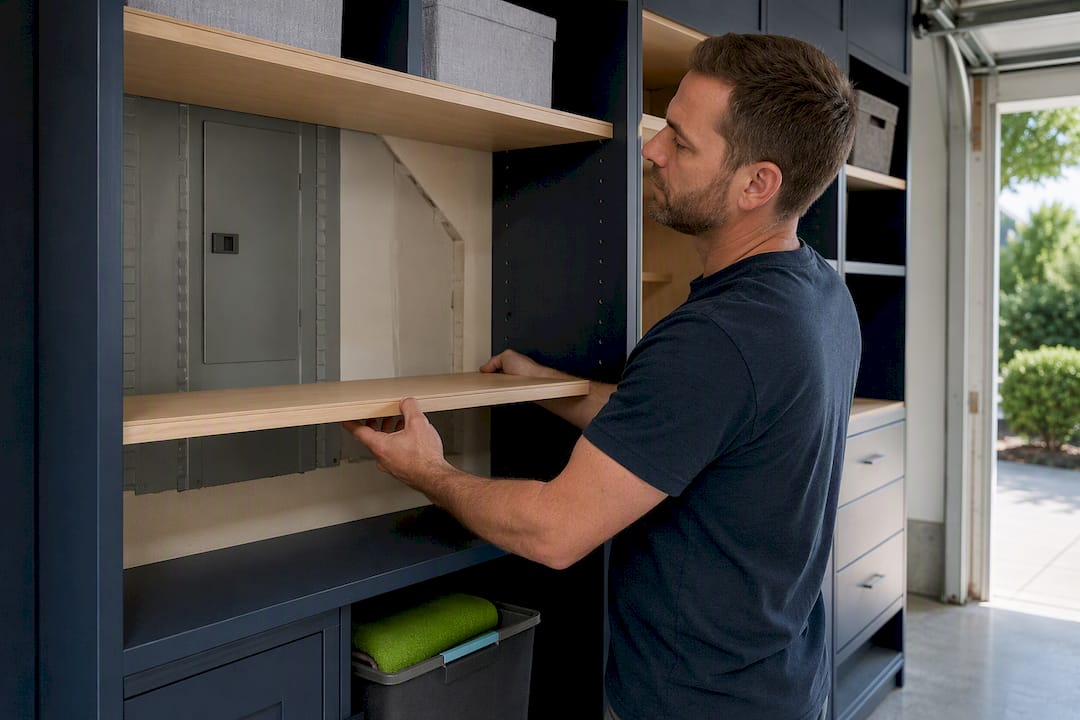
Modular steel systems are preassembled or near-preassembled cabinet units, like the Gladiator Flex Cabinet System IV, that bolt together and mount to the wall in a weekend. They come in standard widths, so you configure a layout from set pieces rather than a custom design.
DIY shelving covers everything from bolt-together wire shelving to plywood units you build from lumber-yard cuts.
Beyond those three, two accessory systems fill in the gaps:
- Slatwall or GearWall panels hold hooks, baskets, and small tool mounts for hand tools and sports gear.
- Overhead ceiling racks anchor into joists and store seasonal bins or bulky items without eating floor space.
Custom builds typically take one to three days of professional installation. Modular systems install in a single weekend. DIY shelving can take anywhere from an afternoon to several weekends, depending on your carpentry skills and how much you’re building from scratch.
Is It Cheaper to Build or Buy Garage Shelving?
The honest answer depends on what you already own. If your toolbox is empty, buying almost always wins. If you’ve got a miter saw and a drill already, building can undercut store-bought pricing.
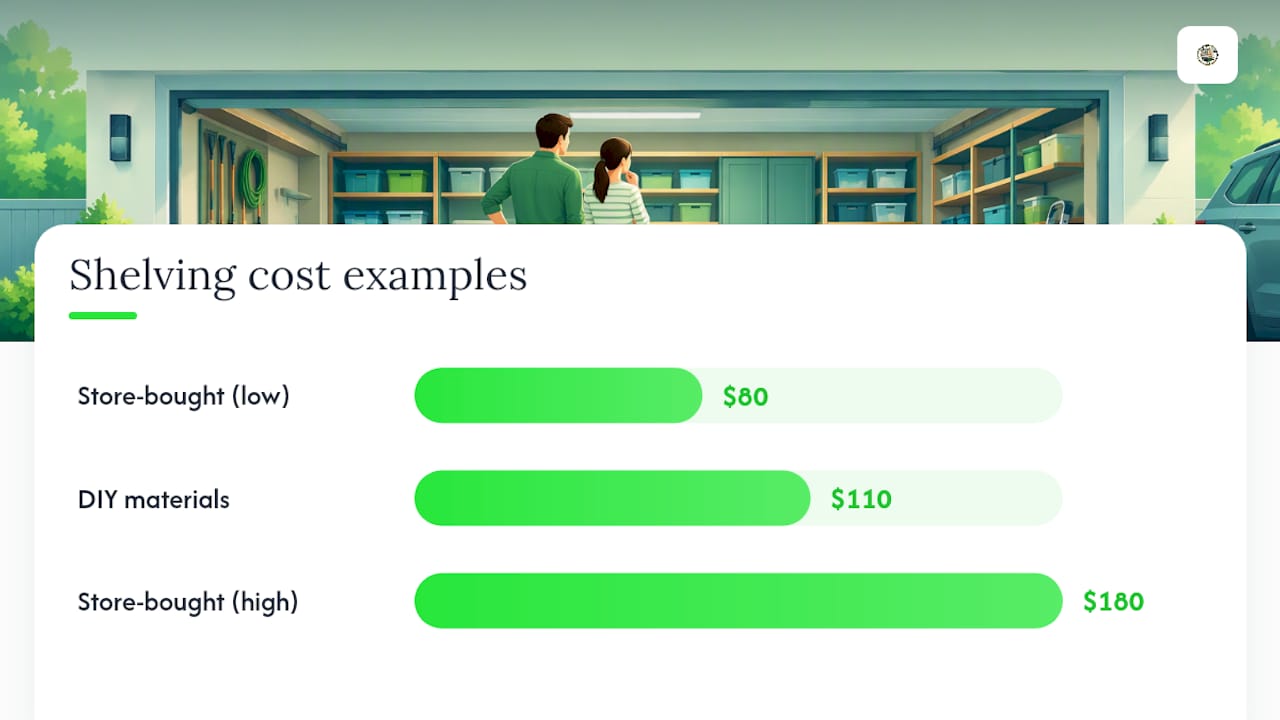
Cost data from GarageSecret puts a basic DIY shelving unit at roughly $110 in materials, against $80 to $180 for a comparable mid-range store-bought unit. That’s a narrow gap, and it can flip either direction once you factor in tool purchases, wasted lumber from measuring mistakes, or the hours you spend building instead of doing something else.
Custom built-ins live in a different cost tier entirely; if you’re exploring local options, check out home organization systems for quick-install closet and cabinet solutions. Full garage renovation projects that include cabinetry, layout redesign, and finish work run well beyond a shelving budget, but they also solve problems modular and DIY options can’t: odd wall angles, integrated lighting, and a finished look that holds up at resale.
Before you pick a lane, run through this quick checklist:
- Do you already own basic power tools? If not, buying shifts the math in your favor immediately.
- Do you need heavy load capacity for power tools or a workshop? Welded steel systems handle that better than open shelving.
- Does the garage have unusual dimensions or utility obstructions? That points toward custom.
- Do you want a finished, matched look rather than a patchwork of bins? Custom or premium modular both beat DIY here.
- How soon do you need it done? Modular wins on speed; custom takes longer but needs less of your labor.
Here’s a number worth planning around: quality modular cabinets from a line like the Gladiator Flex Cabinet System IV carry manufacturer weight ratings high enough to hold dense tool collections without sagging shelves, according to the product specifications. That capacity is exactly what open DIY shelving usually can’t match once you load it with cast iron or full toolboxes.
Which Materials Hold Up Best in a Garage?
Garages are hard on materials. Concrete slabs wick moisture upward, temperatures swing wide, and dust is constant. What you build with matters more here than in almost any other room of the house.
Welded steel with a powder-coat finish resists moisture, dents, and scratches better than anything else on this list, which is why it dominates the premium modular category. Cabinet-grade plywood holds up well if sealed properly, but standard construction-grade plywood or particleboard absorbs moisture from slab proximity and warps within a few years, a failure mode documented in Family Handyman’s review of Gladiator cabinets. MDF splits the difference: fine for dry, upper-level storage, risky at floor level.
When comparing systems, prioritize:
- Weight capacity ratings printed by the manufacturer, not estimated by the retailer.
- Multi-point locking on tall cabinets holding tools or chemicals. Single-point locks pry open far more easily.
- Soft-close drawers and hinges, which reduce wear from daily slamming.
- Integrated bins or slatwall/GearWall attachments that let you reconfigure storage as your needs change.
Pro Tip: *Never plan storage loads against a cabinet’s maximum rating.
How Do You Plan and Install Garage Storage Built-Ins?
Good installation starts before a single bracket goes on the wall.
- Measure and map the space. Record wall widths, ceiling height, and the location of garage door tracks, electrical panels, and windows. Note every obstruction that could block a cabinet run.
- Locate your studs. A stud finder is non-negotiable here. Any built-in heavier than a light shelf needs to anchor into wood framing, not just drywall.
- Plan for car clearance. Measure your vehicle’s mirror-to-mirror width and door swing before finalizing cabinet depth along the drive-in wall.
- Anchor overhead racks to ceiling joists, never drywall alone. Joist-mounted brackets rated for the rack’s load are what actually keep bins from crashing down.
- Level everything before final tightening. Garage floors slope toward the door for drainage, which throws off “level” if you eyeball it against the floor instead of using a level tool.
- Check permit requirements if you’re converting garage space into a finished storage room or adding electrical for lighting. A straightforward cabinet install rarely needs one; structural or electrical changes often do.
Professionals handle steps most DIYers underestimate: precise cabinet prep, faster installation timelines, and anchoring calibrated to your specific wall material. A garage renovation service typically bundles design, prep, and install into one timeline instead of several separate weekend projects.
What Shouldn’t You Store in a Garage?
Unconditioned garages swing in temperature and humidity, which rules out more than people expect.
- Important documents and photos degrade from humidity and temperature swings.
- Wine suffers from the same instability; garages run too hot in summer for proper storage.
- Pet food attracts pests once the seal is broken.
- Certain electronics with sensitive batteries shouldn’t sit through freeze-thaw cycles.
For flammables and chemicals, RealSimple’s storage guidance recommends approved containers inside a ventilated metal cabinet, kept on a low shelf and away from water heaters, furnaces, or anything with a pilot light.
Run three checks once a year: confirm cabinet anchors haven’t loosened, keep walking paths clear for exit routes, and verify locking mechanisms on cabinets holding chemicals still engage fully.
Why a Design-First Approach Beats DIY Guesswork
Most garage storage failures trace back to two mistakes: anchoring into drywall instead of studs, and choosing construction-grade plywood that warps within a few years near a concrete slab. A design-first approach catches both before installation starts, because the layout accounts for stud spacing, moisture exposure, and load distribution from day one instead of after a shelf sags.
Expressions Remodeling brings that same thinking to garage renovations and storage room renovation projects across St. Louis, treating a garage build like any other room worth doing right the first time.
— Kierin
Get a Custom Garage Built-In Plan From Expressions Remodeling
If you want the fit and finish of custom cabinetry without guessing at anchoring or material choices, Expressions Remodeling is the direct alternative to piecing together modular parts or a weekend DIY build. Their garage renovation service handles the layout, cabinet fabrication, and installation as one project, so you’re not troubleshooting warped shelving five years in.

Their team also handles storage room renovation for adjacent spaces, and if the project grows into a full garage overhaul, you’ll find current project pricing on their pricing page. Homeowners who’ve had a plywood shelf sag under a toolbox understand the appeal of getting it engineered correctly the first time. If you’re ready to talk layout, load needs, and finish options, reach out through the garage renovation page to start a design consult.
Sources
- Is it cheaper to buy or build garage shelves? — GarageSecret
- 10 things you should never store in the garage — RealSimple
- Gladiator garage cabinets review — Family Handyman
FAQ
Is It Cheaper to Build or Buy Garage Shelving?
It depends on your tool inventory. If you already own basic power tools, DIY materials run around $110 versus $80 to $180 for a comparable store-bought unit, but buying wins once you count tool purchases and your own labor time.
How Much Does It Cost to Put Storage in a Garage?
Costs range widely: basic DIY shelving starts around $110 in materials, modular steel cabinet systems run higher per unit but install fast, and full custom built-in projects cost the most upfront while lasting the longest. A garage renovation through Expressions Remodeling gives you an exact project quote based on your layout and storage needs.
What Is the Best Storage System for a Garage?
For most homeowners, a heavy-duty modular steel system like the Gladiator Flex Cabinet System IV offers the strongest balance of load capacity, speed of installation, and durability. Homeowners with irregular garage layouts or long-term resale plans typically get more value from custom built-ins.
What Shouldn’t You Store in a Garage?
Skip important documents, photos, wine, pet food, and sensitive electronics, since temperature swings and humidity damage all of them over time. Flammables and chemicals need approved containers inside a ventilated metal cabinet, positioned away from any ignition source.