
Most St. Louis homeowners budget from about thirty thousand dollars to mid-five figures for a kitchen, several thousand to mid-five figures for a bathroom depending on size, and from low five figures to close to two hundred thousand dollars for a whole-house remodel. Your final number depends heavily on permit jurisdiction and the condition of your home’s existing systems. Before you commit to a number, request two or three itemized bids and confirm whether your address falls under City or County permitting, since the fee structures and inspection timelines differ.
TL;DR:
- Remodeling costs in St. Louis vary significantly, with kitchens typically costing around $30,641 for mid-range updates and up to $83,026 for larger, higher-end projects.
- Structural work, moving plumbing or electrical lines, and custom cabinetry significantly increase labor costs and overall project prices.
- Hidden issues in older homes, such as outdated wiring or moisture damage, can cause bids to differ by tens of thousands of dollars, making inspections critical.
- Permits depend on whether the property is in the City or County, with fees based on construction value and non-refundable once paid.
- Accurate budgeting requires itemized bids, early ordering of long-lead items, and understanding that contingency funds should be 10% to 20% of the project cost.
Table of Contents
- What do kitchens, bathrooms, and whole-house remodels cost in St. Louis?
- Why do remodeling bids vary so much in St. Louis?
- How are St. Louis building permits calculated?
- How should you budget and finance a remodel?
- How long does a St. Louis remodel actually take?
- What should you ask contractors before signing?
- Expressions Remodeling: local expertise that controls cost and execution
- Negotiation and planning advice from the field
- Get an accurate, itemized quote for your St. Louis remodel
- Sources
- FAQ
What do kitchens, bathrooms, and whole-house remodels cost in St. Louis?
Local cost data gives a clearer picture than national averages, which tend to run high for a market like St. Louis. According to TheFatBook’s local cost index, a typical combined kitchen remodel in the city runs $30,641, with a fair range of $27,968 to $33,521 once labor, materials, and a permit line item are factored in. That figure covers a mid-range remodel: new cabinets, countertops, and appliances without moving walls or plumbing.
RemodelerIQ’s 2026 kitchen guide shows a wider band, with a typical project near $83,026 and a range from about $31,135 to $166,051 depending on finish level and square footage. The gap between the two sources comes down to scope assumptions: TheFatBook models a smaller, cosmetic-focused job, while RemodelerIQ’s baseline includes a larger kitchen with higher-end finishes.
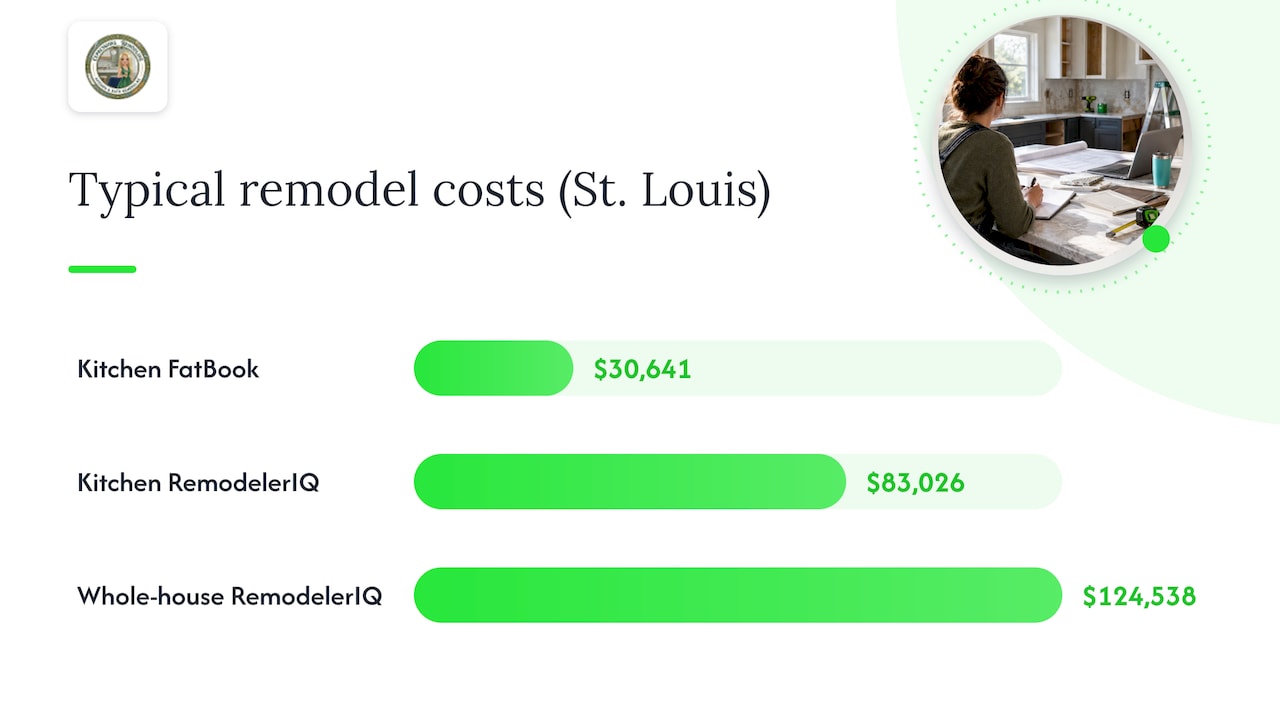
Bathroom costs follow a similar spread. A powder room refresh sits at the low end, a full guest bathroom in the middle, and a master suite with a curbless shower, double vanity, and heated flooring at the top. Whole-house remodels, per RemodelerIQ’s guide, average $124,538 with a range of $70,053 to $186,808, and St. Louis pricing runs slightly below national medians.
Use these bands as a starting point for your own scope:
- Kitchen, cosmetic update: cabinet refacing, new counters and appliances, no layout changes.
- Kitchen, full replacement: new cabinets, layout tweaks, upgraded electrical and lighting.
- Kitchen, structural remodel: wall removal, plumbing relocation, custom cabinetry.
- Bathroom, powder or small full bath: new fixtures, tile, and vanity in the existing footprint.
- Bathroom, master suite: larger footprint, custom shower, double vanity, and premium finishes.
- Whole-house: combines multiple rooms, often phased over several months, priced per square foot of finished scope.
A bathroom remodel breakdown with local examples is available in our St. Louis bathroom cost guide, and kitchen-specific budgeting tactics are covered in our kitchen planning guide.
Why do remodeling bids vary so much in St. Louis?
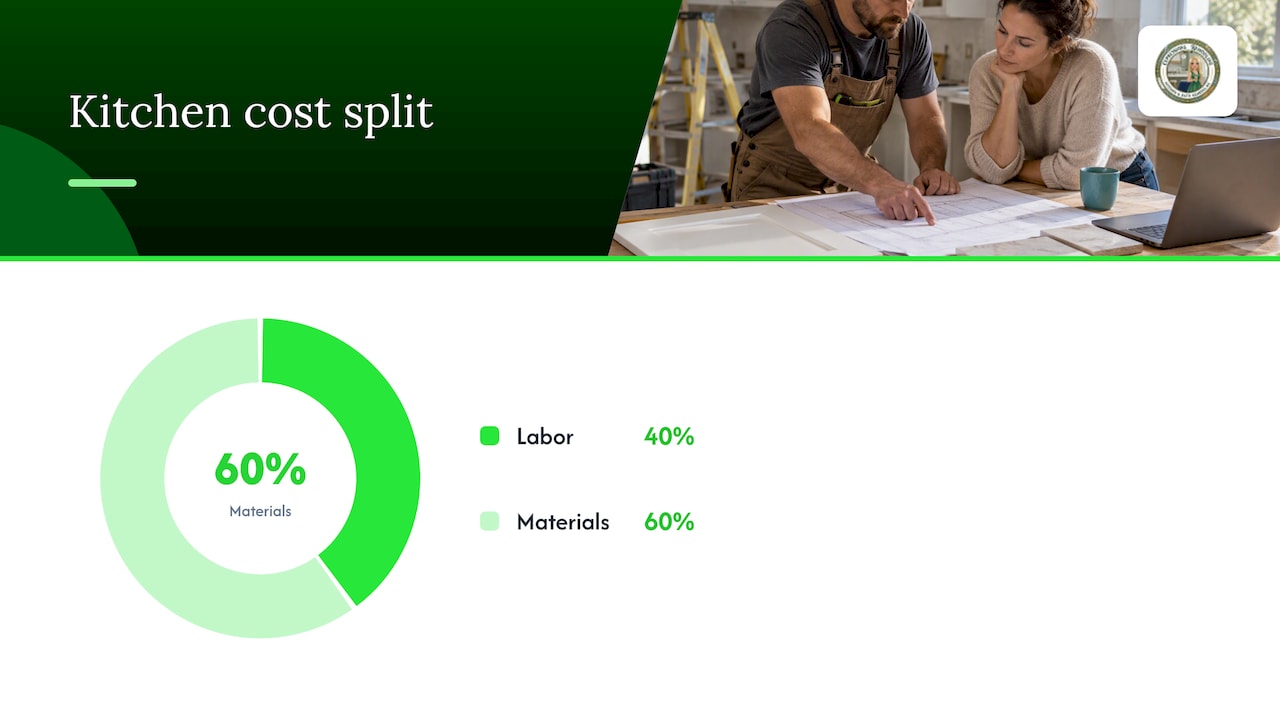
Labor and materials typically split close to 40% labor and 60% materials for kitchen projects, according to RemodelerIQ’s cost guide, though that ratio shifts when a project involves heavy structural work. Moving plumbing or electrical lines, removing load-bearing walls, custom cabinetry, and masonry repairs on older brick homes all push labor costs higher, since these tasks require licensed trades and inspection sign-off at each phase.
Hidden costs are the other reason two bids for the “same” project can differ by tens of thousands of dollars. Older St. Louis homes, especially pre-1960 brick construction, often hide outdated wiring, galvanized plumbing, or moisture damage behind walls that only surface once demolition starts. A pest inspection before demolition is a low-cost way to catch termite or wood-rot damage before it becomes a change order. Pre-renovation pest inspections are worth scheduling for exactly this reason.
Ways to keep costs in check:
- Keep the existing footprint instead of relocating plumbing or electrical runs.
- Choose stock or semi-custom cabinets rather than fully custom builds.
- Stage the project by phase (kitchen this year, bathroom next) instead of tackling everything at once.
Pro Tip: Ask your contractor to open one wall or inspect the crawl space before finalizing your bid. It’s the cheapest way to avoid a mid-project surprise.
How are St. Louis building permits calculated?
The City of St. Louis building-permits page lays out a fee structure based on estimated construction cost: a base application fee plus a per-thousand-dollar valuation fee, with smaller fixed steps for lower-cost projects. These fees are non-refundable once paid, regardless of whether the project changes scope midway through.
Where your property sits matters just as much as what you’re building. A remodel inside the City of St. Louis follows the city’s fee schedule and inspection process, while a home in St. Louis County falls under a different jurisdiction with its own fee table and timeline. Confirming this early prevents a budget built on the wrong numbers.
A few practical steps:
- Confirm your jurisdiction (City versus County) before pricing permits into your budget.
- Add a specific permit line item rather than folding it into a general contingency.
- Check the current fee table on your jurisdiction’s building department page before signing a contract, since fee schedules are updated periodically.
How should you budget and finance a remodel?
A working budget needs more than the contractor’s quote. Build it in layers:
- Base construction cost from your itemized bid.
- Design fees, if you’re working with an architect or designer separately.
- Permit fees, based on your confirmed jurisdiction.
- Contingency, typically 10% to 20% of the base cost.
Older homes and projects with structural unknowns warrant the higher end of that contingency range. A 1920s brick two-flat with original plumbing carries more risk than a 1990s subdivision home with updated systems.
A typical mid-range kitchen remodel in St. Louis costs in the low thirty-thousands, according to TheFatBook’s cost index. Add a 15% contingency for a home with older systems, and your working budget lands closer to $35,200, before permits and design fees.
Financing options homeowners commonly use include savings, personal loans, a home equity line of credit, or a cash-out refinance. Savings avoid interest entirely but tie up liquidity. A HELOC often carries a lower rate than a personal loan but puts your home up as collateral. Credit cards work for smaller allowances like fixtures or hardware but carry high interest if not paid off quickly.
How long does a St. Louis remodel actually take?
A typical remodel moves through five phases: design and planning, permitting, demolition, rough-in work (plumbing, electrical, framing), and finish work followed by final inspection. Each phase has its own timeline, and delays in one push back everything after it.
Seasonality and lead times matter more than most homeowners expect. Custom cabinets and specialty appliances can take several weeks to arrive, and ordering them late is one of the most common causes of a stalled project.
To avoid rush costs and schedule gaps:
- Order long-lead items early, especially cabinets, windows, and specialty appliances.
- Lock in your finish selections before demolition starts, not during it.
- Agree on a milestone payment schedule tied to completed phases, not calendar dates.
Early design work through a free 3D design process helps lock in decisions before construction begins, which reduces the change orders that extend timelines.
What should you ask contractors before signing?
Comparing bids fairly means comparing scope, not just the bottom-line number. Follow this process:
- Request an itemized, line-item bid that separates labor, materials, and allowances from fixed-price items.
- Ask who pulls the permits, whether the contractor carries subcontractor insurance, and what warranty covers the finished work.
- Get a written payment schedule tied to milestones, along with a defined change-order process for anything discovered mid-project.
- Check references and past project photos for work similar in scope to yours, and confirm any professional affiliations through a source like the NARI remodeler directory.
Pro Tip: If a bid comes in dramatically lower than the others, ask specifically what’s excluded. It’s almost always the permit fee, the dumpster, or a finish-level downgrade buried in the fine print.
Watch for red flags: a very low bid with vague scope language, a large upfront deposit before any work begins, or a contractor who can’t produce references from recent local projects. Legitimate remodelers expect these questions and answer them without hesitation.
Expressions Remodeling: local expertise that controls cost and execution
Expressions Remodeling specializes in transforming homes in St. Louis, MO with a focus on quality craftsmanship, personalized design, and attention to the details that often become hidden costs on other projects. Their work spans the categories most homeowners budget for:
- Kitchen, bathroom, and basement remodeling, along with custom projects built around each homeowner’s specific needs.
- Design that reflects individual style, backed by attention to detail and customer service throughout the project.
- A track record built on client relationships, reflected in testimonials that highlight reliability and consistent follow-through.
A local, full-service remodeler who scopes the job in person, accounts for St. Louis-specific permit rules, and flags aging systems before they become mid-project surprises is one of the more reliable ways to keep a bid close to the final invoice.
Negotiation and planning advice from the field
Three habits separate homeowners who stay on budget from those who don’t. First, arrive at every contractor meeting with the local cost ranges already in hand: it signals you know the market and shifts the conversation toward specifics. Second, insist on itemized bids every time, even if it means asking twice. Third, stage the expensive unknowns, an old panel, questionable plumbing, into a separate line item instead of hoping they don’t surface.
Confirm your permit jurisdiction before you budget a single dollar, and lean on a local remodeler who already knows the difference between a City inspection and a County one.
— Kierin
Get an accurate, itemized quote for your St. Louis remodel
Guesswork is the biggest reason remodels run over budget. They build itemized quotes tied to your actual scope and include a free 3D design so you can see the finished space before demolition starts.
- Itemized pricing across kitchen, bathroom, and basement projects, visible before you sign anything.
- Free 3D design that locks in your layout and finishes early, reducing costly mid-project changes.
- Permit handling managed for you, so you’re not tracking City versus County rules on your own.
If you’re ready to see real numbers for your project, visit our pricing page to request an itemized quote or schedule a consultation.
Sources
- Residential Construction Permit
- St Louis kitchen remodel cost (TheFatBook cost index)
- 2026 Cost to Remodel a Kitchen in St. Louis | RemodelerIQ
FAQ
How much would it cost to renovate a 2,000 square foot house?
A whole-house remodel in St. Louis typically runs $70,053 to $186,808, with a midpoint around $124,538, according to RemodelerIQ’s 2026 guide. The exact figure depends on finish level and scope of layout changes.
What is the average cost of a bathroom remodel in St. Louis?
Bathroom costs vary widely by size and scope, from a simple powder room refresh to a full master suite renovation. For local examples and a detailed breakdown, see our St. Louis bathroom remodel cost guide.
What is the most expensive part of a home remodel?
Structural changes, moving plumbing or electrical lines, and custom cabinetry typically drive the highest costs in any remodel. Labor makes up a large share of kitchen budgets specifically, with RemodelerIQ noting roughly a 40/60 labor to materials split in typical local projects.
How much does it cost to build a 2,000 square foot house in Missouri?
New construction costs are not covered by the remodeling figures in this guide, since building a new house involves a different cost structure than renovating an existing one. For an accurate estimate, consult a local builder directly about current material and labor pricing.
How do I know if my project needs City or County permits?
Your permit jurisdiction depends on whether your property sits within the City of St. Louis or St. Louis County, each with its own fee schedule and inspection process. Check your address against the City of St. Louis permit page before finalizing your budget.