

Resale value remodeling is defined as the practice of improving a home specifically to increase its market price relative to the cost of the renovation. Not every upgrade pays off equally. The Cost vs. Value report published annually by Zonda and the Journal of Light Construction tracks exactly which projects return the most money at sale. Understanding how resale value remodeling works means knowing that appraisers, not renovation invoices, set the final number. Your market, your neighborhood’s price ceiling, and buyer preferences all shape what a project is actually worth.
How resale value remodeling works: ROI by project type
The single most important rule in remodeling for resale is this: the cost of a renovation rarely equals the value it adds. Some projects return more than you spend. Most return less. A few return almost nothing.
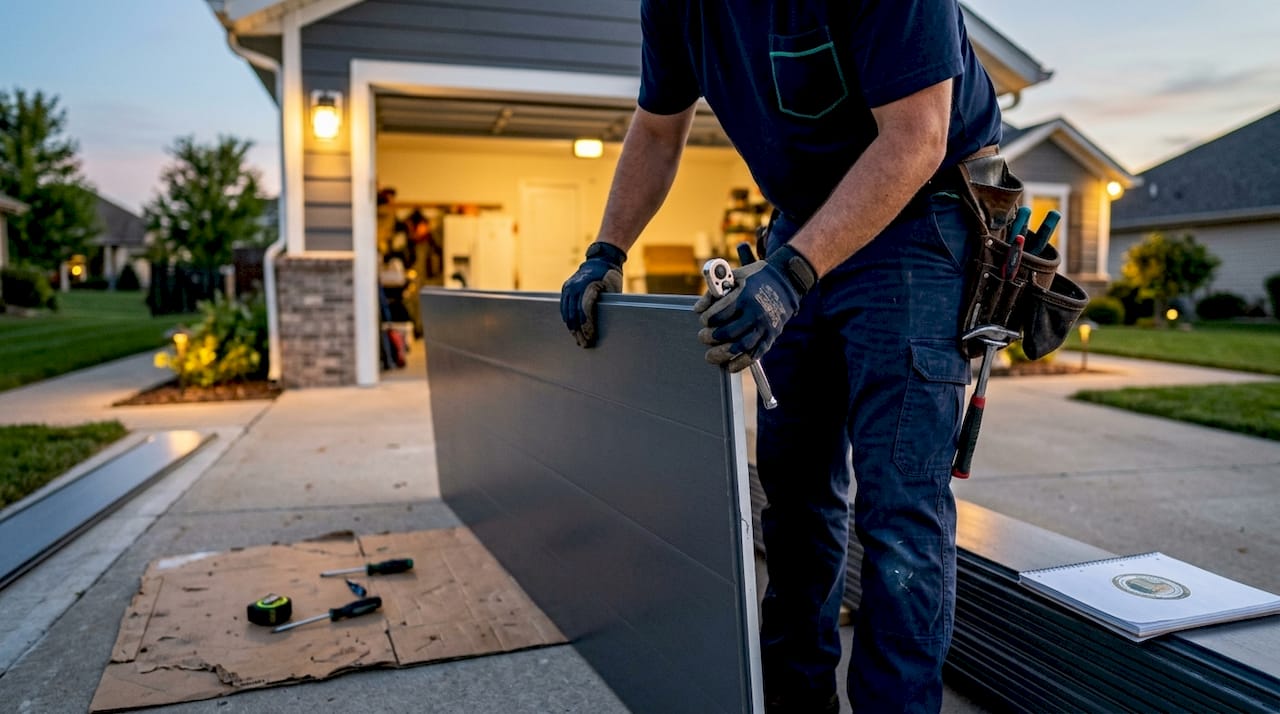
The garage door replacement is the top-performing project in current industry data. A replacement costing roughly $4,672 adds approximately $12,526 in resale value, a return of 268%. That result is not intuitive. A new garage door costs a fraction of a kitchen remodel, yet it outperforms nearly every interior renovation because curb appeal drives first impressions and buyer competition.
Kitchen remodels tell a more complicated story. A minor kitchen remodel costing around $28,458 returns approximately $32,141 at sale, a 113% ROI. A major kitchen remodel costing $80,000 to $160,000 returns only around 50% of its cost. The gap is significant. Buyers pay for functional, updated kitchens. They do not pay dollar-for-dollar for custom cabinetry, imported stone, or professional-grade appliances in a mid-range neighborhood.
Bathroom remodels sit in the middle of the ROI spectrum. A well-executed bathroom upgrade in a St. Louis home typically returns a solid portion of its cost, especially when it addresses dated fixtures, poor lighting, or worn tile. The key is keeping the scope proportional to the neighborhood’s price range.
Projects with the strongest and weakest returns
| Project | Approximate cost | Approximate resale value added | ROI |
|---|---|---|---|
| Garage door replacement | $4,672 | $12,526 | 268% |
| Minor kitchen remodel | $28,458 | $32,141 | 113% |
| Steel entry door replacement | ~$2,000 | ~$2,800 | ~100% |
| Bathroom remodel (mid-range) | ~$25,000 | ~$18,000 | ~70% |
| Major kitchen remodel | $80,000+ | ~$40,000 | ~50% |
| Upscale primary suite addition | $150,000+ | ~$60,000 | ~40% |
The pattern is clear. Exterior projects and minor interior refreshes consistently outperform large-scale additions and luxury finishes. Understanding return on investment remodeling before you commit to a budget is the single best financial decision you can make as a homeowner.
How does the appraisal process work for remodeled homes?
Appraisers do not simply add your renovation receipts to your home’s previous value. The appraisal process for remodeled homes uses two core methods: paired sales analysis and contributory value.
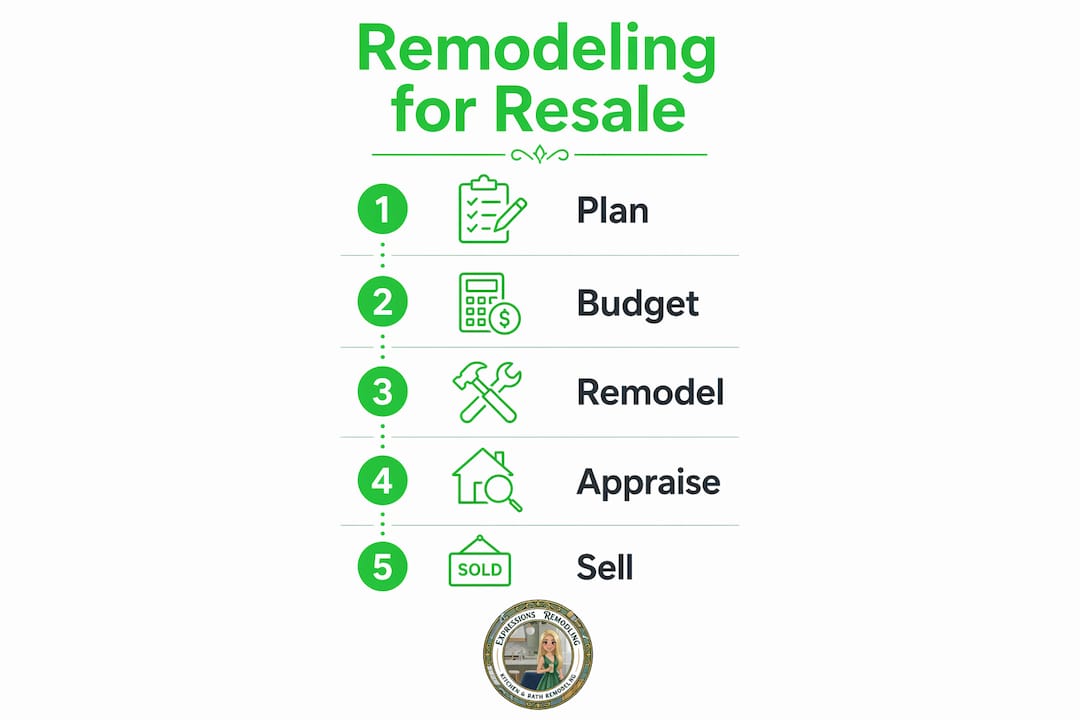
Paired sales analysis compares your renovated home to similar homes in your neighborhood, both renovated and unrenovated. The difference in sale prices tells the appraiser what buyers actually paid for that upgrade in your specific market. Renovation costs do not directly equal appraisal value. A $50,000 kitchen remodel in a neighborhood where homes sell for $250,000 will not add $50,000 to your appraisal. Buyers in that market simply will not pay for it.
For renovation financing, such as a Fannie Mae HomeStyle loan, the appraisal process works differently. The appraiser estimates an as-completed value before any work begins. This requires a detailed scope of work, itemized contractor bids, and architectural drawings when structural changes are involved. That estimated future value determines how much the lender will finance. Vague renovation plans produce conservative appraisals, which limits your loan amount.
- Get itemized contractor bids before applying for renovation financing.
- Provide floor plans or drawings for any structural or layout changes.
- Confirm that your planned finishes match the neighborhood’s typical buyer expectations.
- Ask your appraiser which comparable sales they plan to use before the appraisal is finalized.
Pro Tip: Request a pre-renovation consultation with a local appraiser. Spending $300 to $500 upfront can prevent you from over-investing in a project that the market will not reward.
Common mistakes that kill your remodeling ROI
The most expensive mistake in remodeling for resale is called superadequacy. Superadequacy occurs when a renovation pushes a home’s features or price well above what buyers in that neighborhood expect or will pay for. A $100,000 custom home theater in a $300,000 neighborhood is a textbook example. The feature is impressive. The buyer pool willing to pay for it is nearly zero.
Here are the four most common remodeling mistakes that reduce or eliminate ROI:
- Renovating to personal taste instead of buyer preference. Niche design choices, bold colors, and highly specific layouts narrow your buyer pool. Neutral, broadly appealing finishes attract more offers and stronger prices.
- Assuming renovation cost equals added value. Appraisers focus on what buyers pay, not what you spent. A $30,000 renovation in a market where buyers pay $15,000 more for that upgrade is a $15,000 loss.
- Skipping the baseline evaluation. Selling as-is or getting a market offer before remodeling gives you a real number to work from. Evaluating renovation math after an offer helps you decide whether the project actually pencils out.
- Over-improving relative to the neighborhood price ceiling. Every neighborhood has a ceiling. No amount of renovation pushes a home past what comparable homes in the area sell for.
“Remodeling should prioritize market appeal over individual preferences to attract a broader buyer pool.” — Industry appraisal guidance on resale-focused renovations
The insight behind that principle is practical. Buyers pay for homes that feel move-in ready and broadly appealing. They discount homes that feel over-customized, even when the quality is high. Removing buyer friction through cleaning, minor repairs, and neutral updates often yields better ROI than luxury finishes that exceed neighborhood standards.
Practical strategies to maximize your remodeling return
The highest-leverage moves before a sale are often the cheapest. Basic landscaping adds 5–11% in perceived value and can return up to 200% of its cost. Fresh exterior paint, a new front door, and clean hardscaping cost a fraction of interior renovations and directly influence the buyer’s first impression.
Non-renovation strategies deserve serious attention before you commit to a full remodel. Professional home staging raises sale price by 5–13% and speeds up sales by up to 32%, for an investment of $200 to $500. Professional photography costs even less and directly affects how many buyers schedule showings. These are not substitutes for a genuinely outdated home, but they are often the better financial choice when the home is structurally sound.
When a remodel is the right call, budget-conscious upgrades with broad appeal outperform luxury finishes every time. Refinishing existing cabinets instead of replacing them, swapping outdated fixtures for modern brushed nickel or matte black hardware, and replacing worn flooring with durable LVP (luxury vinyl plank) all deliver visible impact at controlled cost. For kitchens specifically, modernizing without a full rebuild is often the smarter path.
- Get a market offer or agent evaluation before committing to any major renovation.
- Prioritize exterior projects and curb appeal first.
- Use neutral finishes that appeal to the widest buyer pool.
- Track every renovation dollar against the expected resale improvement.
- Finish underused spaces like basements for budget-friendly value before adding square footage.
Pro Tip: Ask a local real estate agent to walk your home before you plan any renovation. Agents see dozens of homes a month and can tell you exactly what buyers in your price range expect to see.
Key takeaways
Resale value remodeling works when projects align with buyer demand, neighborhood price ceilings, and appraisal methodology, not with renovation cost alone.
| Point | Details |
|---|---|
| Exterior projects lead ROI | Garage door replacement returns 268%, outperforming most interior renovations. |
| Minor beats major in kitchens | A minor kitchen remodel returns 113% of cost; a major remodel returns roughly 50%. |
| Appraisers use market data | Paired sales and contributory value, not renovation receipts, determine appraised value. |
| Superadequacy destroys returns | Over-improving beyond neighborhood norms reduces buyer pool and lowers ROI. |
| Low-cost upgrades often win | Staging, landscaping, and minor repairs frequently outperform expensive luxury finishes. |
What I’ve learned from watching homeowners get remodeling wrong
Homeowners consistently overestimate how much their renovations will return. I have seen it repeatedly. A family spends $90,000 on a kitchen remodel in a neighborhood where homes top out at $350,000, then lists at $440,000 and sits on the market for four months. The kitchen is beautiful. The math is brutal.
The data backs this up, but data alone does not change behavior. What changes behavior is understanding that an appraiser is not going to reward your taste. They are going to look at what similar homes sold for and calculate what buyers in your market actually paid for that upgrade. That number is almost always lower than what you spent.
The projects I have seen deliver the best outcomes are targeted, proportional, and buyer-focused. A refreshed bathroom with new tile, updated fixtures, and better lighting. A kitchen with refinished cabinets, new countertops, and modern hardware. A finished basement that adds usable square footage without exceeding the neighborhood’s price ceiling. These are not glamorous renovations. They are financially sound ones.
My honest advice: get a market offer before you remodel. Know your baseline. Then decide whether the renovation math actually works in your favor. Most of the time, modest and targeted beats expensive and ambitious.
— Kierin
Remodeling for resale value in St. Louis: how Expressions Remodeling can help
Homeowners in St. Louis who want to remodel with resale in mind need a contractor who understands both design and market reality. Expressions Remodeling specializes in kitchen, bathroom, and basement projects that are proportional to your home’s value and your neighborhood’s expectations.
Their team works with you from the planning stage to make sure every dollar you spend has a clear purpose. Whether you are looking at affordable kitchen upgrades that attract buyers without blowing your budget, or a bathroom refresh that checks every box for modern buyers, Expressions Remodeling brings the craftsmanship and local market knowledge to make it count. Reach out to discuss your project and get a clear picture of what your renovation can realistically return.
FAQ
What remodeling project has the highest ROI?
Garage door replacement currently leads all remodeling projects with a 268% ROI, adding roughly $12,526 in resale value for a cost of approximately $4,672.
Does remodeling always increase home value?
No. Renovations that exceed neighborhood price ceilings, reflect niche personal taste, or cost more than buyers will pay can reduce net proceeds at sale.
How does the appraisal process work after remodeling?
Appraisers use paired sales analysis and contributory value to determine how much buyers in your market actually paid for similar upgrades, not the cost of your renovation.
Is a minor or major kitchen remodel better for resale?
A minor kitchen remodel returns approximately 113% of its cost, while a major remodel returns only around 50%. Minor updates almost always produce better financial outcomes for resale.
Should I remodel before selling or sell as-is?
Getting a market offer or agent evaluation first gives you a real baseline. Many sellers find that low-cost staging and minor repairs outperform expensive renovations when the home is structurally sound.