

Replacing your windows is worth it once you’re dealing with drafts, fogged glass, or a heating bill that keeps climbing. Expect to pay somewhere between $300 and $1,500 per window, depending on material and installation method. Skip the guesswork: get an in-home measurement and two or three written quotes before you decide anything else.
TL;DR:
- Full-frame replacement costs can exceed $1,200 to $1,500 per window, especially if rot or structural issues are discovered during installation.
- The choice of window style should prioritize function, with casements ideal for tight or hard-to-reach spots and picture windows suited for maximum views and light.
- Pocket insert installations are faster and less invasive but only suitable when existing framing is sound, while full-frame replacements are necessary for rot, resizing, or historic accuracy.
- Contractors’ measurement precision and proper sealing are critical for energy savings, which depend on both product quality and correct installation.
- For projects involving additional home upgrades, hiring a full-service remodeler ensures coordinated work, better timing, and comprehensive scope management.
Table of Contents
- What Drives Window Replacement Cost?
- Which Window Type Fits Which Room?
- Pocket Insert or Full-Frame Installation?
- How to Choose a Window Replacement Contractor
- What Happens on Installation Day?
- How Much Energy Will New Windows Actually Save?
- Breaking Down the Bill: Financing and Incentives
- Do You Need a Permit for Window Replacement?
- How a Full-Service Remodeling Contractor Approaches Window Projects
- Combine Window Replacement With Your Bigger Remodel
- Where to Verify These Numbers Yourself
- Sources
- FAQ
What Drives Window Replacement Cost?
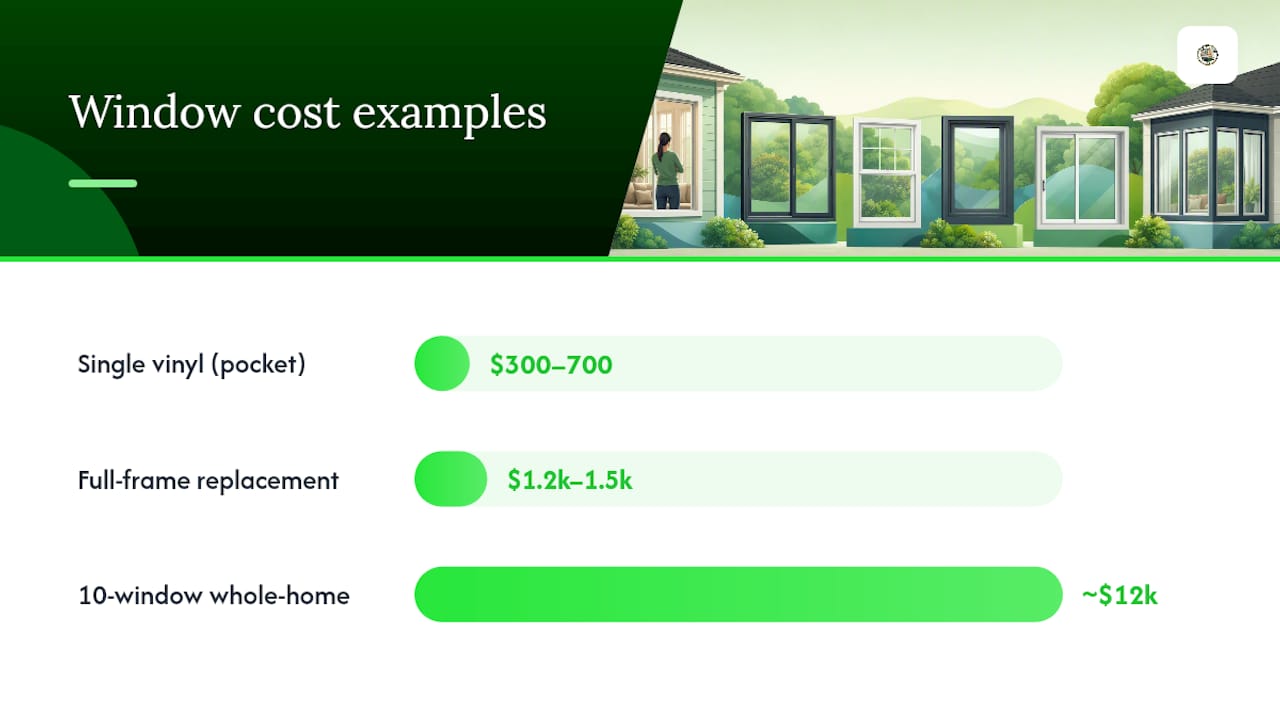
Most homeowners get sticker shock not from the window itself, but from the spread between quotes. A single vinyl replacement window installed as a pocket insert might run $300 to $700. Full-frame replacement on that same opening, especially if there’s rot behind the trim, can push past $1,200 to $1,500 per window. A 10-window whole-home project usually lands in the low thousands to around twelve thousand dollars, though custom shapes or oversized picture windows can raise the cost significantly on their own.
Material is the first fork in the road. According to Consumer Reports, vinyl is generally the most budget-friendly frame option, while wood and composite frames cost more but bring different aesthetics and durability trade-offs. Fiberglass sits in between on price but tends to hold paint and resist warping better than vinyl over decades.
Labor typically constitutes a significant portion of the total bill, especially on full-frame jobs where crews have to rebuild the opening. Beyond material and labor, a few things quietly inflate the number on your estimate:
- Glazing upgrades like low-E coatings and argon gas fills add cost but improve comfort and efficiency.
- Custom shapes, arches, or non-standard sizes require specialty manufacturing and longer lead times.
- Hidden wood rot or water damage discovered mid-install adds labor and materials the original quote didn’t cover.
- Grid patterns, tinted glass, and upgraded hardware finishes all carry a la carte pricing.
- Ordering during peak spring and summer season often means longer waits and less room to negotiate than booking in late fall or winter.
If a quote comes in dramatically lower than the others, ask what’s being left out. It’s usually disposal fees, trim work, or a downgrade in glass package.
Which Window Type Fits Which Room?
The right window style depends less on what looks good in a showroom and more on what each room actually needs: ventilation, egress, or an unobstructed view.
Double-hung windows remain the default for bedrooms and traditional home facades. Both sashes slide, they tilt in for cleaning, and they satisfy egress codes in most bedrooms. Casement windows crank outward and seal tighter against wind, which makes them a smart pick for hard-to-reach spots like over a kitchen sink. Consumer Reports notes that experts often favor casements specifically for ventilation in awkward locations where a double-hung sash is tough to reach.
Sliding windows work well in low-clearance spots, like over a bathtub or in a basement, since there’s no sash swinging into the room. Picture windows are fixed, meaning zero ventilation but maximum glass and unbroken views, ideal for a living room wall facing a backyard. Awning windows hinge at the top and stay functional even during light rain, a good match for basements or bathrooms where you want airflow but not a straight shot of weather. Bay and bow windows project outward to add floor space and natural light, but they cost more and need structural support underneath.
- Double-hung: traditional look, good ventilation, easiest to clean, widely code-compliant for egress.
- Casement: tightest seal against air infiltration, best for reaching over counters or sinks.
- Sliding: simple mechanism, minimal maintenance, fits tight vertical spaces.
- Picture: no ventilation, but the best glass-to-frame ratio for views and light.
- Awning: rain-tolerant ventilation, common in basements and above kitchen sinks.
- Bay/bow: adds interior space and curb appeal, higher cost and structural planning required.
Frame material interacts with all of this. A wood casement offers a classic profile but needs repainting every few years; a vinyl casement skips that maintenance but offers fewer finish colors.
Pro Tip: If soundproofing matters, don’t just upgrade the glass. A tighter-sealing operable style like casement, paired with double-pane low-E glass, usually cuts more outside noise than a picture window with the same glazing.
Pocket Insert or Full-Frame Installation?
Installers choose between two fundamentally different approaches, and the right one depends on the condition of your existing frame, not just your budget.
- Pocket (insert) replacement slides a new window into the existing frame, leaving the exterior trim and siding untouched. It’s faster, less invasive, and cheaper, but it only works when the old frame is square, dry, and structurally sound.
- Full-frame replacement strips the window down to the studs, including exterior trim, and rebuilds the opening from scratch. It’s necessary when there’s rot, when you’re resizing the opening, or when a historic home needs original proportions restored.
- Time on site varies accordingly. Pella’s installation guidance estimates roughly one hour per window for a straightforward pocket insert. Full-frame replacement work often takes several hours per opening once trim, flashing, and insulation are included.
- A typical 8 to 12 window home running pocket inserts can often finish in a single day. The same house with full-frame replacement usually requires a few days, sometimes longer if carpentry repairs are needed.
Installation method also affects warranty coverage. Manufacturers frequently require full-frame installation, or at least proper flashing and insulation, to honor certain performance warranties. If your installer suggests a pocket insert to save money on a frame that’s already rotting, that’s a shortcut that can void coverage down the line, not a genuine savings.
How to Choose a Window Replacement Contractor
Picking a contractor for window installation matters more than picking a brand. A great window installed poorly will underperform a mediocre window installed correctly, every time.
Start with credentials. Confirm the contractor holds an active state or local license, carries general liability and workers’ comp insurance, and can name specific local addresses where they’ve installed the exact type of window you’re considering. Ask to see photos or drive by if they’ll let you.
At the estimate visit, ask these questions directly:
- How do you measure, and do you take a final confirming measurement before ordering?
- Who actually performs the installation: your employees or a subcontracted crew?
- What happens if you find rot or damage once the old window comes out?
- What’s your change-order policy if the scope shifts mid-project?
- What does daily cleanup look like, and what’s the total timeline from signing to final walkthrough?
Measurement precision is not a minor detail. Even small errors in the opening measurement can cause fit and sealing problems that show up as drafts or leaks months later, which is why reputable installers measure multiple points and confirm dimensions before cutting an order. Manufacturers like Milgard treat this as a non-negotiable step, not an optional upgrade.
Get warranty terms in writing, and understand there are two separate warranties: the manufacturer’s product warranty covering glass and hardware defects, and the installer’s labor warranty covering workmanship. A contractor offering a strong product but a vague or nonexistent labor warranty is only giving you half the protection you’re paying for.
Pro Tip: A red flag worth walking away from: a contractor who won’t put the payment schedule, warranty terms, and change-order policy in writing before you sign. Verbal promises don’t hold up when something goes wrong at month eight.
What Happens on Installation Day?
The night before, clear window treatments, move furniture and breakables away from each opening, and make sure crews have clear access to both the interior and exterior of the home.
- Setup and protection. Crews lay down drop cloths and protect flooring and landscaping near each window before starting.
- Removal. Old windows come out one at a time, and the crew inspects the exposed opening for rot, water damage, or insect damage before proceeding.
- Installation. New units get set, leveled, and secured, then insulated and sealed around the perimeter to block air infiltration.
- Finish work. Interior and exterior trim goes back on, caulk lines get cleaned up, and hardware is installed and tested.
- Cleanup and walkthrough. Crews remove debris and old windows, then walk the homeowner through every opening.
The most common surprise is hidden rot behind old trim. A professional crew documents it with photos, quotes the repair before proceeding, and gets your sign-off rather than just absorbing or hiding the extra work, a step industry guidance treats as standard practice for a reason.
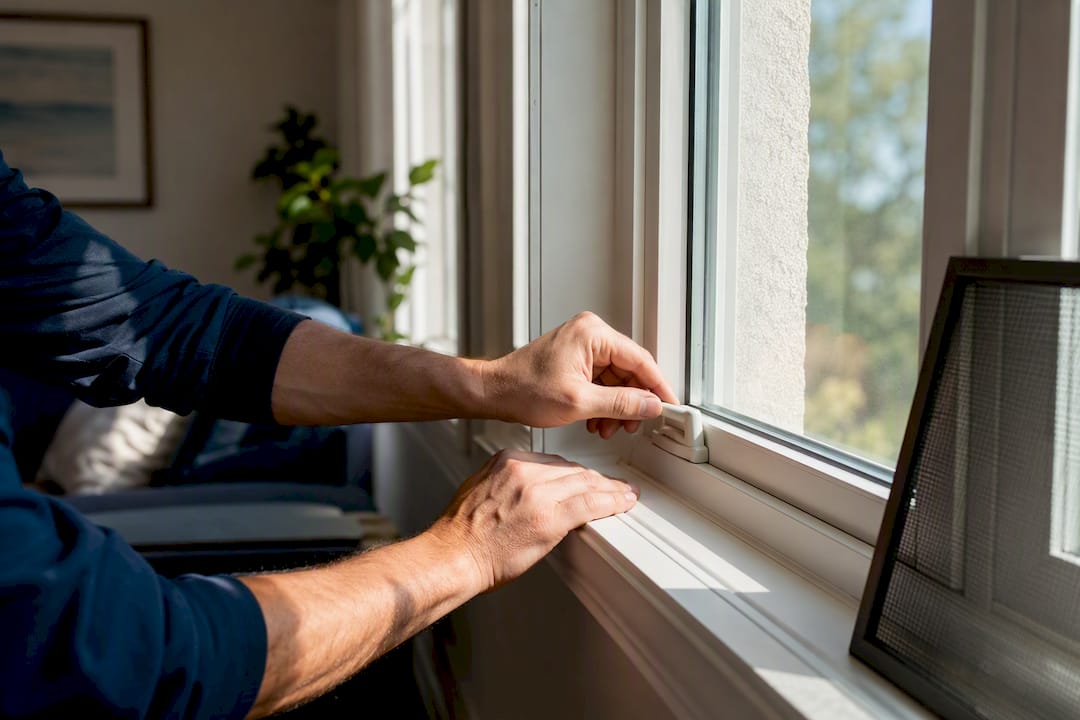
At the final walkthrough, open and close every window yourself, check that locks engage properly, inspect caulk lines from inside and outside, and confirm screens are installed and undamaged. This step is the last real quality check you get, and it’s worth taking seriously before the crew leaves your property.
How Much Energy Will New Windows Actually Save?
New windows help, but the savings depend as much on installation quality as on the product label. The Department of Energy is direct about this: replacing genuinely inefficient windows improves comfort and lowers energy use, but correct installation, meaning proper sealing and insulation around the frame, matters just as much as which window you buy.
ENERGY STAR certified windows are built to meet specific efficiency thresholds and can lower heating and cooling costs when installed correctly, but the agency is clear that certification and proper installation work together. A great window poorly sealed still leaks air.
When comparing glass packages, look for low-E coatings, which reflect heat while letting light through, along with argon or krypton gas fills between panes. Two numbers matter more than marketing language: U-factor, which measures how well a window resists heat flow (lower is better), and SHGC, or solar heat gain coefficient, which measures how much solar heat gets through (lower is better in hot climates, higher can help in cold ones).
Savings vary by region and by how bad your old windows actually were. A home in a cold climate replacing 40-year-old single-pane windows will see a bigger swing than a home replacing 15-year-old double-pane units in a mild climate. Verify any product’s certification directly on the ENERGY STAR product list rather than trusting a sticker alone, and pair the upgrade with broader energy-efficient remodeling choices if you’re trying to cut utility costs across the whole house.
Breaking Down the Bill: Financing and Incentives
A typical window replacement invoice separates into a few predictable line items: the window units themselves, labor for removal and installation, interior and exterior trim or finish work, disposal of the old windows, and any required permit fees. Full-frame jobs may include additional carpentry repair costs if rot or damage is discovered during installation.
Most homeowners cover a multi-window project one of three ways:
- Home equity loans or lines of credit, which usually offer the lowest interest rate but put your home up as collateral.
- Personal loans, faster to secure but typically at a higher rate than home equity products.
- Contractor-arranged financing, convenient and often promoted as zero-interest for a promotional period, but worth reading the fine print on deferred interest terms.
Federal and state energy incentives shift year to year, so check current terms directly on Energy.gov or your state energy office before assuming a tax credit applies to your purchase. Some utility companies also run their own rebate programs for certified efficient windows, separate from federal credits.
On timing, scheduling your project in late fall or winter, outside the peak spring and summer rush, can shrink lead times and sometimes gets you better pricing as crews fill slower calendar weeks. Bundling window replacement with other planned work, like trim or flooring upgrades, can also reduce the total labor cost per project compared to scheduling each job separately.
Do You Need a Permit for Window Replacement?
Most jurisdictions require a permit when window replacement changes the size of the opening, alters the structural header, or involves egress windows in bedrooms and basements. A straight swap, same size opening, same window type, often qualifies for a simpler process or no permit at all in many areas, but this varies significantly by city and county.
Local building codes typically govern a few specific things: egress requirements for bedroom and basement windows (minimum opening size for fire escape), energy code compliance tied to U-factor and SHGC ratings, and structural requirements when a full-frame replacement touches the header or framing around the opening.
Historic districts add another layer. If your home falls within a designated historic zone, you may need approval for frame material, grid pattern, or even glass tint before a permit gets issued, regardless of whether the opening size changes.
The safest approach is simple: ask your contractor directly whether your project requires a permit, and confirm they’ll pull it rather than skip it to save time. Skipping a required permit can create problems later, particularly at resale, when a buyer’s inspector or the title company flags unpermitted work. A licensed local contractor should already know your municipality’s specific rules and build permit costs into the estimate rather than surprising you after the contract is signed.
How a Full-Service Remodeling Contractor Approaches Window Projects
Window replacement rarely happens in isolation. Trim, siding, interior paint, and sometimes flooring all touch the same opening, which is exactly where a full-service remodeler earns its keep over a single-trade window company.
Expressions Remodeling approaches every project the same way regardless of scope: understanding what the homeowner actually wants before a single measurement gets taken, then matching craftsmanship and design decisions to that vision rather than a standard package. That personalized approach, paying close attention to a client’s specific goals and coordinating the finish details around them, is the same philosophy that shapes how a remodeler scopes a window project alongside other trades.
The practical difference between hiring a window-only specialist and a full-service remodeler comes down to coordination. A specialist installs windows well. A remodeler manages the window install alongside the trim carpentry, paint, and any structural changes it triggers, so you’re not juggling three separate contractors and three separate schedules for one connected job.
— Kierin
Combine Window Replacement With Your Bigger Remodel
If your window project is tangled up with trim work, siding repairs, or a larger interior refresh, hiring a single-trade window company just adds another contractor to manage. Some full-service remodelers coordinate window replacement alongside associated carpentry, paint, and finish work, so clients avoid scheduling multiple separate crews for connected projects.

This is an adjacent option, not a requirement. If you just need windows swapped with no other work involved, a dedicated window installer may be the simpler path. But if you’ve been putting off a broader update to the room or the exterior around those windows, a full-service remodeler can fold the whole scope into one plan and one timeline. Expressions Remodeling’s pricing and project page lays out how consultations work, and their homeowner quality checklist shows what to expect from a final walkthrough on a coordinated project. Reach out to request a consultation and get a scoped estimate for the full picture, not just the windows.
Where to Verify These Numbers Yourself
Confirm efficiency claims directly on ENERGY STAR’s product pages and the Department of Energy’s window guidance rather than a sales brochure. Consumer Reports offers independent testing and buying guidance on materials and brands, while USA TODAY’s cost reporting tracks national pricing trends. Manufacturer installation guides, like Pella’s, show what a proper install sequence actually looks like.
Sources
- How much it costs to replace your windows in 2026 | USA TODAY
- Choosing replacement windows | Consumer Reports
- Window installation: what to expect | Pella
FAQ
How Much Should a Replacement Window Cost?
Most homeowners pay between $300 and $1,500 per window, with the low end covering standard vinyl pocket inserts and the high end covering custom shapes or full-frame installations. Get in-home measurements and multiple written quotes, since material, glazing package, and installation method all shift the price significantly.
What’s the Difference Between Vinyl and Other Frame Materials?
Vinyl is generally the most cost-effective frame material, while wood and composite frames cost more but offer different durability and aesthetic trade-offs, according to Consumer Reports. Fiberglass sits between vinyl and wood in price while holding paint finishes better over time than vinyl.
How Much Does It Cost to Have Windows Installed?
Installation labor typically makes up 30% to 50% of a project’s total cost, with full-frame replacement running higher than pocket inserts because it involves rebuilding the opening. National per-window pricing generally falls in the $300 to $1,500 range depending on the material, glazing, and complexity of the install.
Is It Worth Replacing 20-Year-Old Windows?
Often yes, especially if you’re noticing drafts, condensation between panes, stiff operation, or rising energy bills, all common signs that windows have degraded. The Department of Energy notes that replacing genuinely inefficient windows improves comfort and can lower energy costs, provided the new units are installed correctly.
Should I Hire a Window Specialist or a Remodeling Contractor?
A window specialist works well for a straightforward, isolated window swap with no other trade work involved. A full-service remodeling contractor can be a better choice when window replacement overlaps with trim, siding, or interior finish work, since one team can coordinate the entire scope instead of juggling separate contractors.